The Pool in the Desert
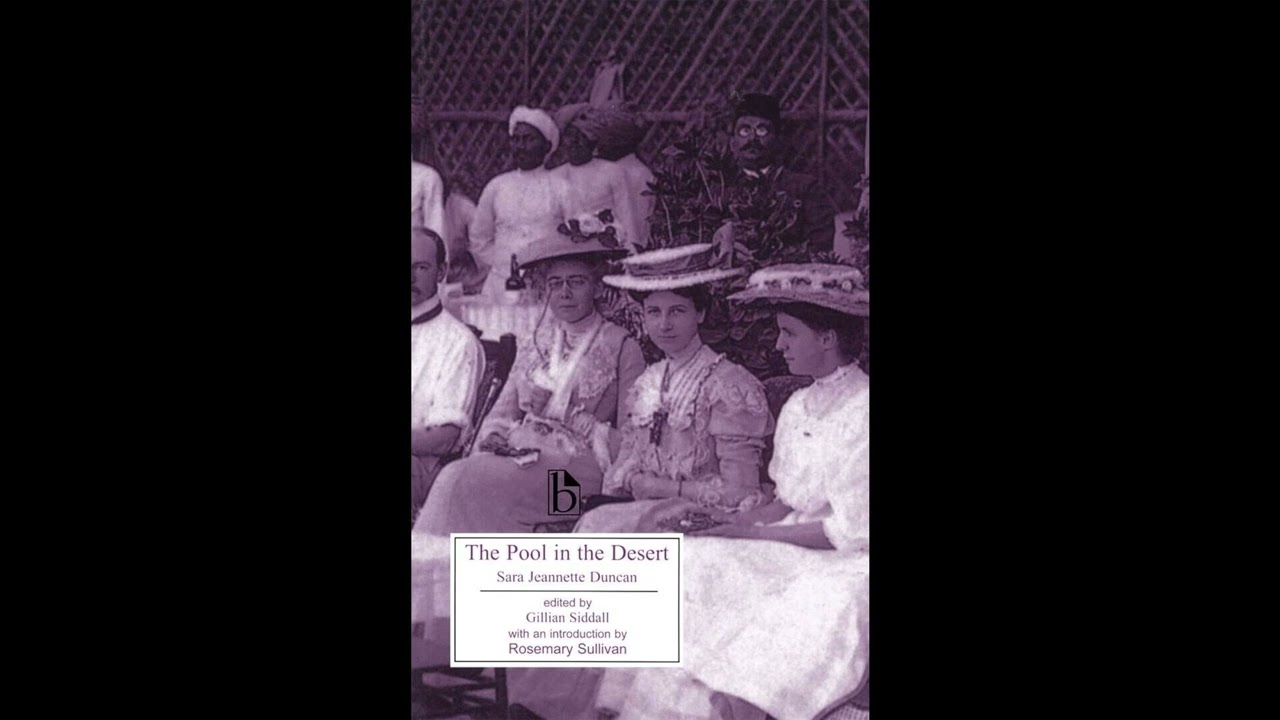
Step into the sun-drenched, often melancholy world of British India at the turn of the twentieth century with Sara Jeannette Duncan’s collection, The Pool in the Desert. This is not simply a historical curiosity; it is a shrewd and often poignant examination of human connection, social pressures, and the enduring search for meaning in a land far from home. Duncan’s observant eye cuts through the exotic veneer of colonial life to reveal the psychological landscapes of her characters, offering a mirror to our own contemporary struggles with identity, belonging, and the quiet compromises of love. For anyone curious about the inner lives of women navigating an imperial landscape, or those who appreciate keen social commentary wrapped in elegantly constructed prose, this collection offers both insight and intellectual pleasure. The narratives gathered under the evocative title, The Pool in the Desert, plunge listeners into the isolated, rigidly structured society of the British cantonments and hill stations of India. We meet women like Mrs. Dodd, Mrs. Feilden, and Mrs. Gammidge, often wives of British officers or civil servants, whose lives are defined by their social roles, the relentless heat, and the peculiar blend of privilege and confinement that characterizes expatriate existence. The central conflict frequently arises from the clash between individual desires—for genuine affection, intellectual companionship, or personal freedom—and the unyielding expectations of "the Service" and "the Station." These characters find themselves adrift in an emotional desert, seeking momentary respite, a "pool" of understanding or shared experience, only to discover that such oases are often temporary or even illusory. Through these interconnected stories, Duncan sketches the daily rhythms and underlying tensions of colonial life. We witness the elaborate social rituals, the whispered gossip, the casual racism of the colonizers, and the profound sense of cultural displacement experienced by those who called India home for decades yet remained perpetually foreign. The narratives unfold with a quiet dramatic tension, often building to moments of profound, albeit subtle, realization or resignation. Love affairs simmer beneath the surface of decorum, friendships are tested by ambition and envy, and the very foundations of accepted morality are subtly questioned, all against the backdrop of a land that is both beautiful and profoundly indifferent to the human dramas played out upon it. Duncan masterfully evokes the atmosphere of the British Raj, focusing intently on the emotional reverberations within her characters rather than external action. Sara Jeannette Duncan, born in Brantford, Ontario, in 1861, was a journalist and novelist whose career spanned the late Victorian and early Edwardian periods. A pioneer in Canadian letters, she began her writing life as a teacher before finding her voice as a journalist, covering social issues and politics with wit and sharpness. Her early career saw her writing for newspapers like The Globe and The Week, often using the pseudonym "Garth." A pivotal moment in her life came when she married Theodose F. C. Cotes, a civil servant in the Indian Imperial Customs. She spent many years living in India, an experience that profoundly shaped her literary output and provided the rich setting for many of her most celebrated novels and stories. Duncan’s literary output includes significant works like A Social Departure: How Orthodocia and I Went Round the World by Ourselves (1890), a lively account of two independent women traveling the globe, which established her as a voice for the "New Woman." Her satirical novel The Imperialist (1904) offers a nuanced look at Canadian politics and identity, cementing her place as a significant voice in early Canadian literature. She was not merely an observer but a participant in the intellectual currents of her time, often engaging with themes of colonialism, national identity, gender roles, and social satire. Duncan possessed a unique perspective, seeing the British Empire not just from the metropolitan center but from its distant outposts, offering a critical lens that was both insider and outsider. Her novels often blend social realism with a sharp, ironic humor, aligning her with contemporaries who scrutinized societal conventions. The stories in The Pool in the Desert are particularly significant for their thematic depth. One prominent theme is the disillusionment with colonial life, revealing that for many expatriates, the exotic allure often gave way to emotional barrenness. Mrs. Dodd’s quiet yearning for intellectual stimulation beyond the petty gossip of the cantonment, for example, illustrates how the gilded cage of imperial privilege could become a prison of the spirit. Another key theme is the limitations placed upon women within the rigid hierarchy of the British Raj. Characters are often defined by their marital status or their husband's position, and their personal aspirations frequently come into conflict with these societal constraints. A young woman’s romantic inclinations might be stifled by the pragmatic need for a respectable match, or an intelligent woman’s potential might wither in the absence of meaningful engagement. Furthermore, the collection subtly but powerfully addresses the psychology of displacement and the creation of an artificial society. The characters constantly compare their current lives to memories of England, creating a sense of being neither here nor there, perpetually in transit emotionally. The "pool" itself becomes a metaphor for fleeting moments of connection or self-deception, offering temporary solace from the vast "desert" of loneliness and cultural alienation. Duncan also touches upon the interplay of duty and desire, particularly as it manifests in marriage and illicit affairs, examining how the demands of reputation and imperial service often override personal happiness. Her ability to weave these complex psychological states into seemingly simple narratives provides much of the collection's enduring power. The Pool in the Desert emerged during a specific historical moment: the height of the British Empire, but also a time of growing introspection and nascent critiques of its moral and social costs. Published around 1903, the work sits squarely in the Edwardian era, which saw a continuation of Victorian social norms but also the stirrings of modernity and an increasing questioning of imperial certainties. Women’s roles were slowly expanding, giving rise to figures like the "New Woman"—educated, independent, and often challenging traditional expectations—a type Duncan herself embodied and often portrayed in her fiction. The specific setting of British India was a popular subject for literature, from Kipling’s romanticized views to E.M. Forster’s later, more critical examinations. Duncan’s contribution offers a distinctly female perspective on this landscape, focusing less on grand adventures or political machinations and more on the intimate, often stifling, human experience within the colonial apparatus. Her work provides a crucial counterpoint to the more male-dominated narratives of the Raj, adding texture and depth to our understanding of the period. Listening to The Pool in the Desert as an audiobook brings these vivid yet often subtle stories to life in a way that truly enhances the experience. The spoken word allows the nuances of Duncan's prose, her wry observations, and the emotional currents beneath the polite dialogue to resonate more deeply. A skilled narrator can distinguish the various characters—the cynical observer, the hopeful newcomer, the world-weary expatriate—lending their voices individuality and presence. Listen for the precise pacing, which mirrors the slow, deliberate unfolding of life in the heat of India, and how the atmosphere of both physical landscape and social tension is conveyed through vocal tone and rhythm. The approximately several hours of listening time allow for a gradual immersion into this unique world, giving space for the psychological complexities and the poignant beauty of Duncan's language to fully unfold and leave a lasting impression.
Enjoyed The Pool in the Desert? A few ways to support us
Audible & Amazon links are affiliate; we may earn a small commission at no extra cost.
About this production
Human narration by a volunteer reader from LibriVox.org, the public-domain audiobook project. LibriVox volunteers record literary works whose copyright has expired in the United States, releasing the resulting recordings into the public domain.
The Pool in the Desert by Sara Jeannette Duncan. The underlying text is in the U.S. public domain. We do not republish any modern copyrighted edition, translation, or commentary.
The 4K cinematic visuals accompanying this audiobook are generated by an AI image model from prompts derived from the source text. No copyrighted photos, paintings, or stock footage are used. AI generation is disclosed on every video on our YouTube channel as required by YouTube's altered/synthetic content policy.
English subtitles are transcribed from the LibriVox recording with OpenAI Whisper. Translations into the 11 other supported languages are produced by Meta's NLLB-200 neural translation model. No human translator's copyrighted translation is used.
Questions about sourcing or rights? See our DMCA & Sourcing policy or contact us.
Enjoyed this audiobook?
If you'd like to own a copy of The Pool in the Desert or hear a professionally produced edition, the links below help support free audiobook production at no extra cost to you.
As an Amazon Associate we earn from qualifying purchases. Audible / print links are affiliate.