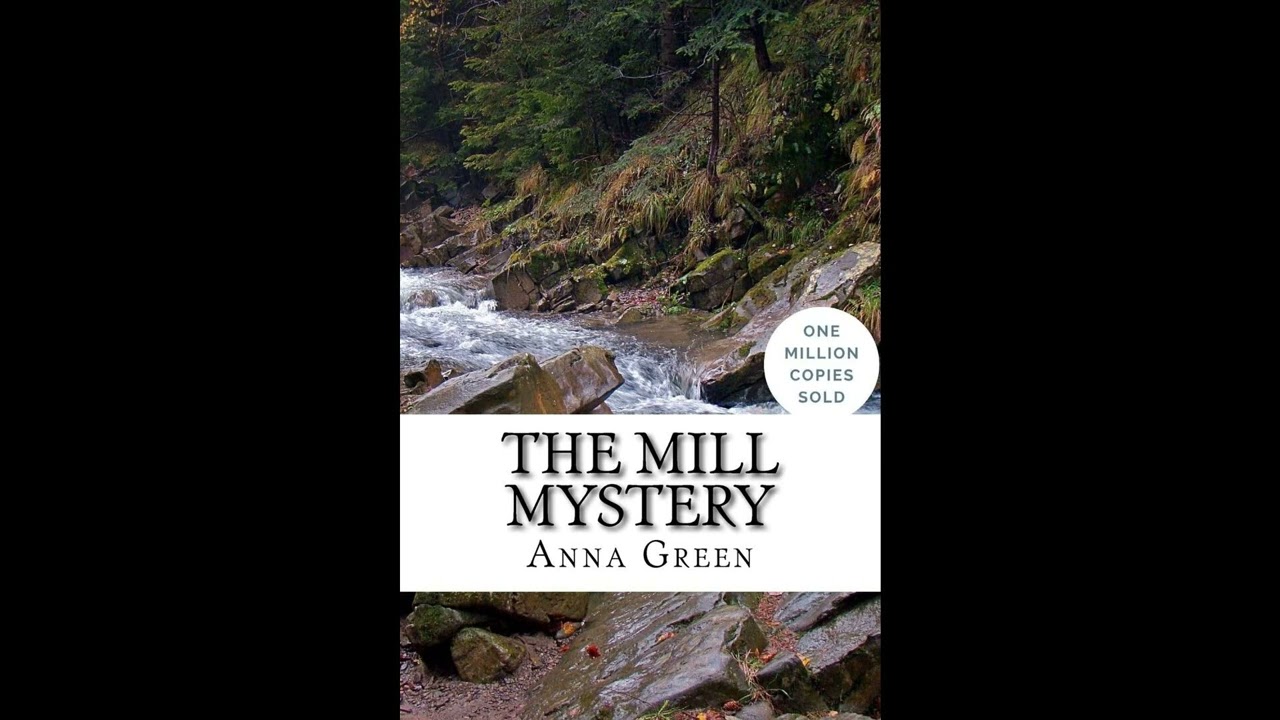
The Mill Mystery
Step into the world of The Mill Mystery, a foundational work of American detective fiction by the remarkably prescient Anna Katharine Green. This gripping novel, first published in 1886, offers far more than a simple whodunit; it presents an early blueprint for the modern crime novel, inviting listeners to unravel a complex web of suspicion and deceit alongside its characters. For enthusiasts of mystery, literature, or those curious about the origins of popular storytelling, Green’s meticulous plotting and keen psychological insights remain as compelling today as they were over a century ago, demonstrating why she is rightly regarded as a pioneering voice in the genre. It's a testament to the enduring human fascination with truth, deception, and the hidden lives within seemingly quiet communities. The narrative unfolds in the seemingly peaceful, isolated setting of a rural mill town, where the daily rhythms of life are suddenly shattered by an act of brutal violence. The prominent and well-regarded Mr. Dexter is found dead, a victim of murder, under circumstances that defy easy explanation. His demise casts a pall over the close-knit community, transforming neighbors into suspects and turning every whispered secret into a potential clue. The focus quickly falls upon a young woman, Margaret Thorne, whose connection to the deceased and her own mysterious demeanor make her the primary, though perhaps unfairly targeted, person of interest. As the formal investigation falters, hampered by local biases and a lack of conclusive evidence, the story introduces an unnamed but astute observer who becomes increasingly determined to uncover the real killer. This unofficial sleuth must navigate a labyrinth of conflicting testimonies, veiled motives, and the pervasive gossip of a small town where everyone seems to know a little too much, yet no one knows the whole truth. The arc of the story follows this determined individual’s patient efforts to piece together fragments of evidence, challenging preconceptions and peeling back layers of deception to reveal the true events of that fateful night, all while the specter of an innocent woman’s conviction looms large. The genius behind this meticulously constructed puzzle belongs to Anna Katharine Green, born in Brooklyn, New York, in 1846. The daughter of a prominent criminal lawyer, Green grew up immersed in the intricacies of legal procedure and logical argumentation, influences that would profoundly shape her literary output. Though she initially harbored ambitions to be a poet, it was her groundbreaking detective novel, The Leavenworth Case, published in 1878, that brought her instant fame and established her as a formidable force in American letters. This work introduced detective Ebenezer Gryce, a precursor to many iconic literary detectives. Green's subsequent novels, including The Mill Mystery in 1886, solidified her reputation. She is often credited as "America's first detective novelist," laying much of the groundwork for the genre years before Arthur Conan Doyle introduced Sherlock Holmes to the world and decades before Agatha Christie's golden age. She was known for her innovative use of forensics, her psychologically astute characterizations, and her ability to craft incredibly complex, yet ultimately solvable, plots. She even featured one of the earliest female detectives, Amelia Butterworth, in later novels, further cementing her place as a literary trailblazer who helped define the rules and conventions of the detective story. Beyond its clever plotting, Green’s novel also engages deeply with several resonant themes. One central concern is the tension between justice and the letter of the law. While the legal system strives for truth, it can often be swayed by circumstantial evidence and public opinion, as seen in the initial rush to judgment against Margaret Thorne. The narrative poignantly illustrates the struggle to distinguish true guilt from the appearance of culpability, urging a deeper examination of facts rather than relying on surface impressions. Another prominent theme is the stark contrast between appearance and reality. The serene, bucolic façade of the mill town belies a hidden world of secrets, illicit affairs, and long-simmering resentments, demonstrating how easily a community's perceived innocence can mask its darker undercurrents. The narrative also highlights the profound power of observation and logical deduction. The amateur investigator doesn't rely on brute force or dramatic chases, but on patient, methodical examination of minute details—a misplaced object, a seemingly insignificant gesture, a subtle inconsistency in a witness's account. These small pieces of information, when connected through rational thought, eventually form a coherent picture of the crime. Finally, the story touches upon social class and reputation, showing how an individual's standing within the community can influence both the direction of the investigation and the willingness of others to believe or disbelieve their testimony. Such concerns were not isolated to fiction; they mirrored the broader currents of late nineteenth-century America, often referred to as the Gilded Age. This was a period of rapid industrialization and significant social upheaval, even in seemingly quiet rural towns like the one depicted. While cities grew, the traditional values and close-knit nature of small communities were also undergoing strain. In the literary world, the popularity of sensational fiction was giving way to an increasing demand for more structured, intellectually stimulating narratives. Green's work emerged during this time of transition, tapping into a public hunger for order and logic in a rapidly changing world, offering the comforting puzzle of a solved crime amidst societal uncertainties. Her intricate plots and the meticulous unveiling of truth offered a sense of intellectual satisfaction that resonated deeply with readers then, and continues to do so today. To truly appreciate the artistry and historical weight of The Mill Mystery, there is no better medium than the audiobook. The several hours of narration allow the story to unfold at precisely the pace Green intended, drawing the listener incrementally deeper into the mystery. A skilled narrator can imbue each character's dialogue with distinct life, from the nervous whispers of suspects to the reasoned pronouncements of the investigator, enhancing the novel’s period charm without sounding anachronistic. The spoken word brings the atmospheric descriptions of the mill, the surrounding countryside, and the tense courtroom scenes vividly to life, creating an immersive experience ideal for focused listening, whether on a quiet evening or during a leisurely drive.
Enjoyed The Mill Mystery? A few ways to support us
Audible & Amazon links are affiliate; we may earn a small commission at no extra cost.
About this production
Human narration by a volunteer reader from LibriVox.org, the public-domain audiobook project. LibriVox volunteers record literary works whose copyright has expired in the United States, releasing the resulting recordings into the public domain.
The Mill Mystery by Anna Katharine Green. The underlying text is in the U.S. public domain. We do not republish any modern copyrighted edition, translation, or commentary.
The 4K cinematic visuals accompanying this audiobook are generated by an AI image model from prompts derived from the source text. No copyrighted photos, paintings, or stock footage are used. AI generation is disclosed on every video on our YouTube channel as required by YouTube's altered/synthetic content policy.
English subtitles are transcribed from the LibriVox recording with OpenAI Whisper. Translations into the 11 other supported languages are produced by Meta's NLLB-200 neural translation model. No human translator's copyrighted translation is used.
Questions about sourcing or rights? See our DMCA & Sourcing policy or contact us.
Enjoyed this audiobook?
If you'd like to own a copy of The Mill Mystery or hear a professionally produced edition, the links below help support free audiobook production at no extra cost to you.
As an Amazon Associate we earn from qualifying purchases. Audible / print links are affiliate.