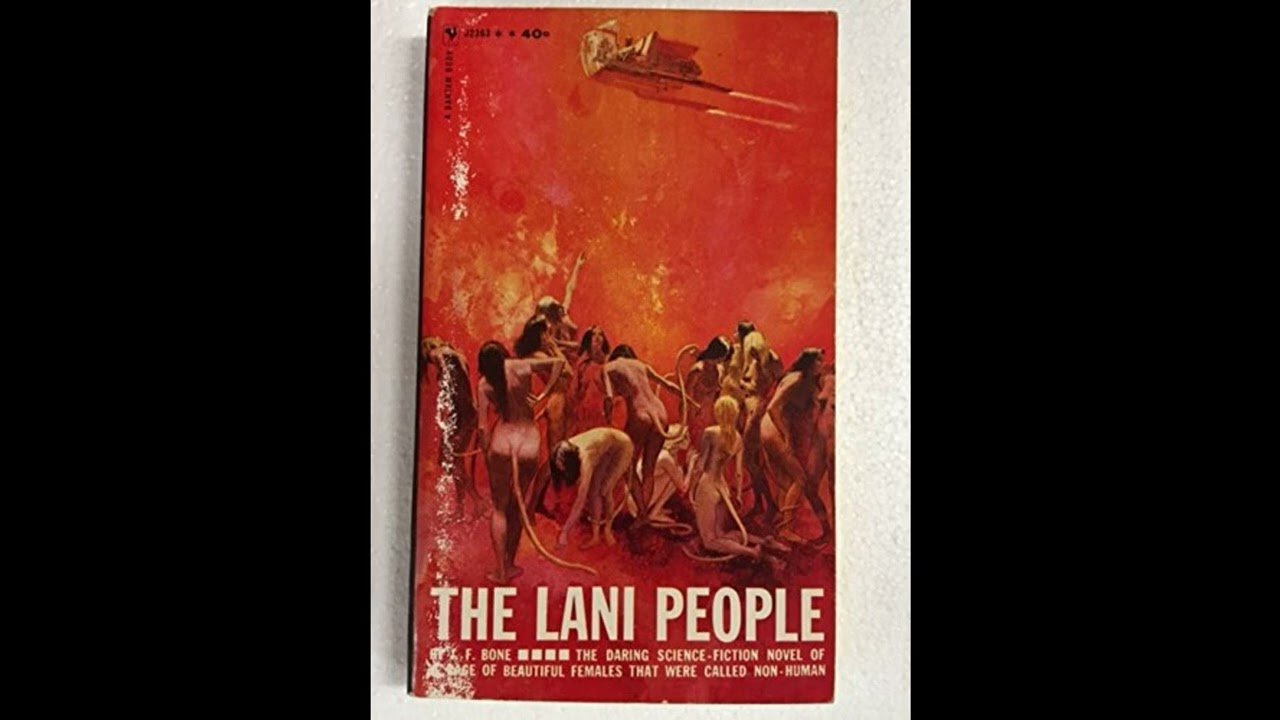
The Lani People
"The Lani People" by Jesse Franklin Bone arrives on SupremeAudiobooks.com as a remarkable piece of speculative fiction that questions the very foundations of human identity. Far more than a simple alien encounter story, this novel plunges its listeners into a universe where the familiar definitions of life, consciousness, and individuality are dramatically upended. It stands as a prescient examination of what happens when humanity, with all its inherent assumptions and biases, confronts a form of existence so utterly foreign that it threatens to shatter our understanding of ourselves. This is a story that resonates profoundly today, urging us to consider the limits of our empathy and the potential for both wonder and terror in the vast cosmos. The story unfolds in a distant future where humanity has ventured beyond Earth, spreading its presence across the stars. Dr. Edward Armitage, a medical officer, finds himself part of a deep-space survey mission. Their vessel, the Surveyor, makes contact with an uncharted planet, a verdant world inhabited by the Lani. The Lani appear to be a gentle, vaguely humanoid species, seemingly primitive but possessing an unnerving telepathic ability and a profoundly communal way of life. Initial scientific curiosity quickly gives way to a creeping unease as Armitage and his colleagues attempt to decipher the Lani's biology and social structure. They are an enigma: they show no signs of individual thought or ambition, existing instead as components of a larger, collective consciousness. Their methods of reproduction and societal interaction defy all known biological paradigms, raising more questions than answers. As the human team conducts their research, a darker truth begins to emerge. The Lani's peaceful exterior conceals a chilling reality about their origins and their ultimate purpose. What initially seemed like a harmonious, if alien, society is slowly revealed to be something far more existential and potentially threatening. The team grapples with the implications of this discovery, struggling to reconcile their ingrained human concepts of individuality and free will with a species that seems to operate without them. The narrative builds a palpable sense of intellectual dread, leading the crew to question not only the Lani's nature but also the very essence of what it means to be a sentient being in a universe full of bewildering possibilities. The arc of the story involves this dawning awareness, the scientific investigation, and the moral quandaries that arise when humanity faces a species that could fundamentally alter its perception of life itself, leading to a desperate struggle for comprehension and survival without revealing the true, unsettling conclusion. Jesse Franklin Bone, the author of this compelling narrative, was an American veterinarian by profession before he became a notable voice in science fiction. Born in 1916, his long and productive life, which concluded in 2006, saw him practice veterinary medicine for over thirty years. This scientific grounding deeply informed his literary output, providing a foundation of biological realism and medical insight that gave his speculative tales a distinct authority. His scientific rigor set him apart, allowing him to craft stories that felt plausible even when dealing with the most fantastical concepts. Bone began publishing his science fiction in the late 1950s and continued through the 1960s, contributing to many of the era’s prominent magazines like If, Galaxy, and Analog. While "The Lani People" is widely considered his most significant and enduring work, he also penned other memorable novels such as "The Planetary Agent," "Legacy," and "Gift of the Gods." Bone found his place within a generation of science fiction writers who were expanding the genre's horizons, moving beyond simplistic adventure stories to tackle more complex scientific, ethical, and sociological questions, often with a unique biological perspective derived from his professional life. His contributions firmly establish him as a respected, if sometimes overlooked, figure in the annals of mid-20th century speculative fiction. At its core, "The Lani People" probes profound themes. One central concern is the definition of humanity and the crucial distinction between individuality and collectivism. The Lani, existing as a singular, unified entity, present a stark contrast to the human crew's individual consciousness, forcing Dr. Armitage and his team to confront how deeply their sense of self is tied to their personal autonomy. For instance, the unsettling lack of individual Lani expression or resistance, even in the face of invasive study, challenges the humans' most basic assumptions about sentient life. Another significant theme is the inherent fear of the utterly alien "other." What begins as scientific fascination gradually curdles into existential dread as the Lani's true nature is pieced together, showing how the unknown, once understood in its unsettling reality, can become a source of profound terror. The crew's increasing sense of alienation and horror upon realizing the implications of the Lani's communal existence illustrates this perfectly. The narrative also addresses the ethics of scientific discovery and intervention. The human mission is to observe and understand, but the knowledge they gain places them in a moral bind, raising questions about responsibility when encountering a form of life so fundamentally different it defies easy categorization. Should they interfere with a species that functions entirely outside human morality? The dilemma faced by the Surveyor's crew as they ponder their next move, weighing scientific curiosity against potential danger and moral obligation, highlights this complex issue. Lastly, the novel touches upon biological determinism and evolution, demonstrating how a species' unique biology can dictate its entire social structure and behavior. The specific details of the Lani's physiology, their reproduction, and their very means of communication are key to understanding their actions and the threat they represent, showcasing Bone's ability to ground grand speculative ideas in biological principles. When "The Lani People" first appeared in the early 1960s, it resonated with a world grappling with significant scientific and cultural shifts. This was the era of the space race, a time when humanity was actively reaching for the stars, inspiring both awe and apprehension about what might lie beyond Earth. Simultaneously, the Cold War fostered anxieties about "the other" and the potential for hidden, insidious threats. Science fiction during this period frequently mirrored these concerns, moving beyond pulpy adventures to tackle more sophisticated explorations of alien psychology, social structures, and the potential impact of advanced technology. Jesse Franklin Bone's work, with its focus on biological uniqueness and the philosophical dilemmas of first contact, fit squarely within this maturing landscape of science fiction, offering a nuanced perspective on alien life that distinguished it from many of its contemporaries. It emerged from a time when the genre was truly coming into its own as a vehicle for serious thought experiments. Listening to "The Lani People" as an audiobook offers a singular opportunity to immerse oneself in its slowly unfolding tension. The several hours of narration allow the listener to fully absorb the scientific deductions, the philosophical debates among the crew, and the accumulating sense of dread that permeates the story. A skilled narrator can perfectly capture Dr. Armitage's thoughtful, often bewildered, internal monologue, conveying the intellectual struggle to comprehend the Lani. Pay close attention to the pacing; the narrative builds its suspense not through action, but through the gradual accumulation of unsettling details. The careful articulation of scientific concepts and the nuanced dialogue between the human crew members are vital to the story's impact, bringing to life the atmosphere of scientific inquiry gradually giving way to profound disquiet. The unique vocalizations or descriptions of the Lani's telepathic communication, filtered through human perception, become particularly potent in an auditory format, deepening the sense of wonder and the eventual, chilling realization.
Enjoyed The Lani People? A few ways to support us
Audible & Amazon links are affiliate; we may earn a small commission at no extra cost.
About this production
Human narration by a volunteer reader from LibriVox.org, the public-domain audiobook project. LibriVox volunteers record literary works whose copyright has expired in the United States, releasing the resulting recordings into the public domain.
The Lani People by Jesse Franklin Bone. The underlying text is in the U.S. public domain. We do not republish any modern copyrighted edition, translation, or commentary.
The 4K cinematic visuals accompanying this audiobook are generated by an AI image model from prompts derived from the source text. No copyrighted photos, paintings, or stock footage are used. AI generation is disclosed on every video on our YouTube channel as required by YouTube's altered/synthetic content policy.
English subtitles are transcribed from the LibriVox recording with OpenAI Whisper. Translations into the 11 other supported languages are produced by Meta's NLLB-200 neural translation model. No human translator's copyrighted translation is used.
Questions about sourcing or rights? See our DMCA & Sourcing policy or contact us.
Enjoyed this audiobook?
If you'd like to own a copy of The Lani People or hear a professionally produced edition, the links below help support free audiobook production at no extra cost to you.
As an Amazon Associate we earn from qualifying purchases. Audible / print links are affiliate.