Sonnets
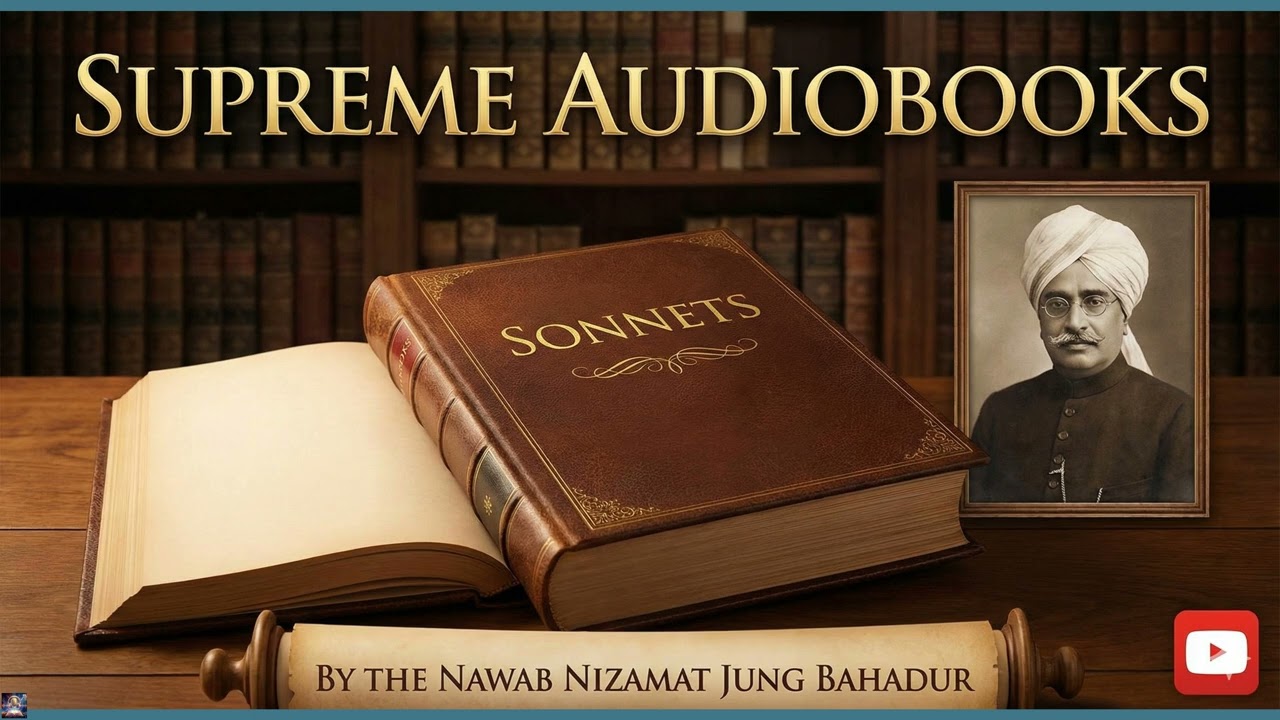
Enter a world where profound thought meets elegant expression, where the traditional English sonnet form becomes a vessel for a truly unique voice. Sonnets by Nawab Nizamat Jung Bahadu offers listeners a rare opportunity to connect with a poet whose work bridged cultures and eras, bringing a distinct sensibility to one of literature's most beloved structures. This collection is more than just poetry; it is an invitation to pause, reflect, and find resonance in verses that speak to universal human experiences, crafted with a precision and beauty that remain strikingly relevant today. It's a chance to witness how artistry can transcend geography and time, delivering insights that feel both deeply personal and universally true. The sonnets themselves present an inner panorama, a landscape of the human heart and mind. The listener is drawn into a series of introspections, observations, and declarations, each poem a carefully wrought jewel reflecting a specific mood or idea. The speaker, often contemplative, moves through reflections on the natural world, admiring the quiet majesty of dawn, the fleeting beauty of a blossoming flower, or the serene expanse of a starlit night. These moments of natural observation frequently serve as a springboard for deeper philosophical musings, linking the external world to internal states of being. As the collection progresses, the focus often shifts towards human relationships and the complexities of emotion. Verses speak of tender affection, the ache of longing, and the steadfastness of friendship. There are sonnets that grapple with the passage of time, the bittersweet nature of memory, and the search for meaning in a world of constant change. While no overarching narrative unfolds, each poem contributes to a cumulative emotional arc, guiding the listener through moments of quiet joy, gentle melancholy, and profound spiritual seeking, all articulated with a disciplined grace inherent to the sonnet form. The central "conflict," if one could call it that for poetry, is often the speaker's wrestle with impermanence, seeking enduring truths amidst life's inevitable currents. The author of this remarkable collection was Nawab Sir Nizamat Jung Bahadur (1871-1955), a distinguished figure whose life was as rich and accomplished as his poetry. Born in Hyderabad, India, Nizamat Jung received a traditional education combined with a strong grounding in English literature and law. He went on to serve with great distinction in the civil service of the Hyderabad State, eventually rising to become its Prime Minister, a testament to his intellect, integrity, and diplomatic skills. His career spanned significant political and social changes in India, and he played a crucial role in the administration of one of the largest princely states during the twilight of the British Raj. Despite his demanding public life, Sir Nizamat Jung maintained a deep passion for literature, particularly poetry. He was knighted by the British Crown for his services, a mark of his stature and influence. His literary output, though perhaps not voluminous, is significant for its quality and the unique cultural perspective it offers. While he may not be associated with a specific "literary movement" in the Western sense, his work stands as a testament to the flowering of English poetry by Indian authors during a period when English education was widely embraced by the subcontinent's intellectual elite. He holds a unique place in the canon as an administrator of state and a poet of the soul, embodying a fusion of Eastern refinement and Western literary tradition. The sonnets consistently return to themes that resonate across cultures and centuries. One prominent theme is the transience of life and beauty contrasted with the aspiration for permanence. Many poems present delicate imagery of flowers or fleeting moments in nature, then pivot to reflect on human mortality or the brevity of love. For instance, a sonnet might describe the delicate blush of a rose at dawn, only to contemplate how its petals will scatter by evening, prompting a meditation on the human lifespan or the impermanence of earthly joys, always with a view towards something more enduring. Another key theme is devotion, both personal and spiritual. Some verses express deep affection for loved ones, celebrating their virtues or lamenting their absence. Others pivot towards a more abstract, spiritual devotion, where the contemplation of a divine presence brings solace and meaning. This is often enacted by moving from an observation of the grandeur of the natural world to an acknowledgment of the greater power behind its creation. Furthermore, the search for truth and wisdom provides a strong undercurrent. The speaker often uses the sonnet as a tool for intellectual and emotional inquiry, sifting through experiences to distill universal lessons. This is sometimes intertwined with a theme of duty and service, reflecting Nizamat Jung’s own life as a statesman. A sonnet might, for example, quietly examine the burdens and rewards of responsibility, or the inner strength required to serve one's community, drawing parallels between personal commitment and broader ethical considerations, all contained within the sonnet's precise fourteen lines. Sir Nizamat Jung's Sonnets emerged during a fascinating period in the late nineteenth and early twentieth centuries. This was an era of significant cultural exchange and political transformation across the globe, particularly in British India. The British colonial presence had fostered widespread English education among the Indian elite, leading to a generation of writers who mastered the English language and its literary forms, often while retaining a distinct Indian sensibility. Poets like Nizamat Jung were part of a nascent movement of English-language literature from India, which sought to express local experiences and philosophical outlooks through Western literary structures. This period saw a blending of traditions, where poets steeped in both Eastern thought and Western Romantic and Victorian poetry found new ways to articulate their visions. His work stands as a beautiful example of this cultural synthesis, offering a window into the intellectual and emotional life of an educated Indian noble writing in English during the waning days of empire. Listening to Sonnets as an audiobook offers a truly distinctive appreciation of this poetry. The sonnet form, with its strict meter and rhyme scheme, is designed to be heard, allowing the listener to fully absorb the rhythm and music of the language. A skilled narrator brings out the subtle cadences and emotional weight of each line, ensuring that the carefully constructed architecture of the poems comes alive. With a runtime of several hours, this collection allows for both focused, immersive listening sessions and shorter, contemplative breaks in one’s day. Pay attention to how the narrator’s voice guides you through the turn of thought in each sonnet—the 'volta'—which often occurs in the ninth line, shifting perspective or introducing a new idea. The pacing of the narration will allow each profound statement to linger, giving the listener ample opportunity to savor the beauty of Nizamat Jung's words and the depths of his reflective spirit.
Enjoyed Sonnets? A few ways to support us
Audible & Amazon links are affiliate; we may earn a small commission at no extra cost.
About this production
Human narration by a volunteer reader from LibriVox.org, the public-domain audiobook project. LibriVox volunteers record literary works whose copyright has expired in the United States, releasing the resulting recordings into the public domain.
Sonnets by the Nawab Nizamat Jung Bahadu by Sir Jung. The underlying text is in the U.S. public domain. We do not republish any modern copyrighted edition, translation, or commentary.
The 4K cinematic visuals accompanying this audiobook are generated by an AI image model from prompts derived from the source text. No copyrighted photos, paintings, or stock footage are used. AI generation is disclosed on every video on our YouTube channel as required by YouTube's altered/synthetic content policy.
English subtitles are transcribed from the LibriVox recording with OpenAI Whisper. Translations into the 11 other supported languages are produced by Meta's NLLB-200 neural translation model. No human translator's copyrighted translation is used.
Questions about sourcing or rights? See our DMCA & Sourcing policy or contact us.
Enjoyed this audiobook?
If you'd like to own a copy of Sonnets or hear a professionally produced edition, the links below help support free audiobook production at no extra cost to you.
As an Amazon Associate we earn from qualifying purchases. Audible / print links are affiliate.