Songs of the Ridings
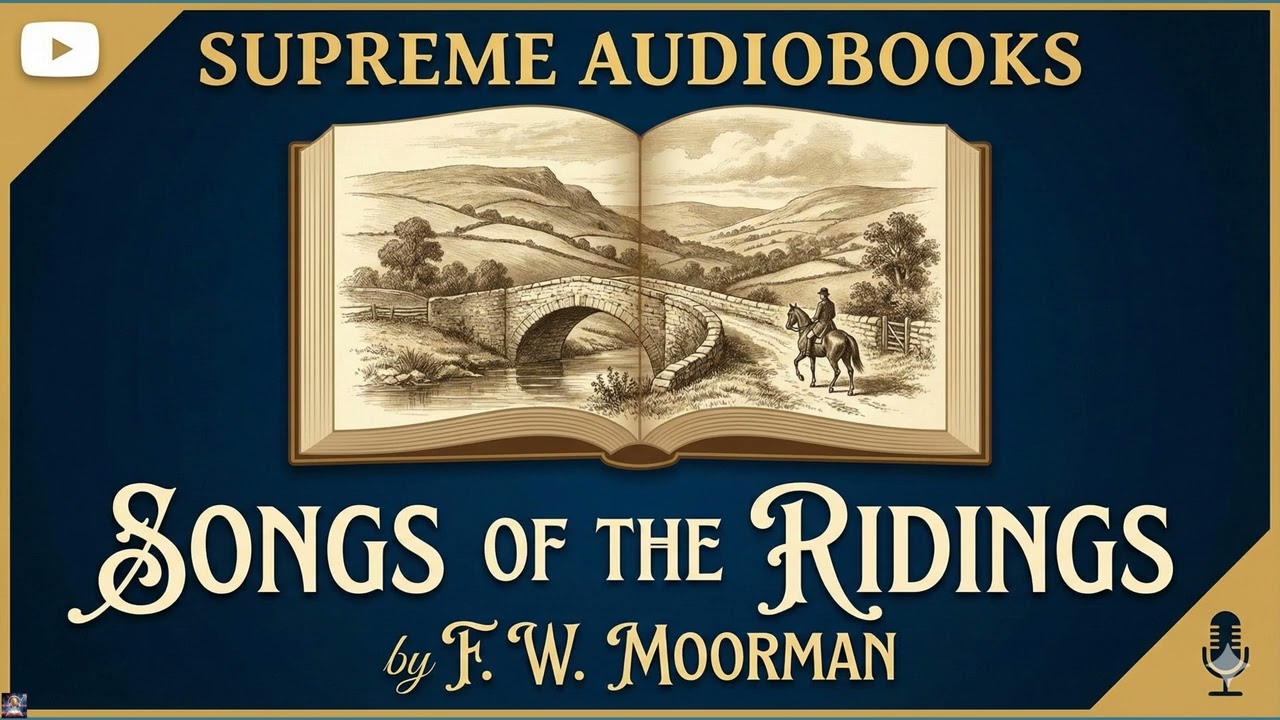
Step into a world where the very soil sings, where the rhythm of the seasons dictates the pulse of life, and where the language of the land finds its eloquent voice. F. W. Moorman's "Songs of the Ridings" is not merely a collection of verses; it is a meticulously crafted soundscape, a vivid portal to a specific time and place—the rugged, beautiful landscape of Yorkshire's three Ridings. For anyone seeking to connect with the authentic heart of regional identity, the enduring spirit of rural communities, and the poetic power of dialect, this remarkable work offers a listening experience unlike any other. It preserves a way of speaking, a way of seeing, and a way of feeling that resonates with universal truths about home, heritage, and humanity's relationship with the natural world. Through a series of evocative poems, Moorman transports listeners to the windswept moors, the bustling market towns, and the quiet farmsteads of early 20th-century Yorkshire. The "main characters" here are less individuals and more the collective spirit of a people. We encounter the stoic dales farmer, his hands gnarled by work and weather, tending his sheep or tilling his fields; the resilient women, whose daily routines are intertwined with the cycles of baking, cleaning, and caring; the children, whose laughter echoes across the fells and whose eyes reflect the boundless wonder of their surroundings. Each poem acts as a vignette, building a larger picture of a community shaped by its environment and traditions. The central conflict, if one can call it that, is the timeless struggle of humanity against the elements—the harsh winters, the brief, glorious summers—and the subtle, yet powerful, pressure of modernity beginning to nudge at the edges of an ancient way of life. The arc of the story within these songs follows the turning of the year, from the hopeful promise of spring to the somber introspection of winter. We experience the thrill of the lambing season, the toil of the harvest, the camaraderie of the village fair, and the quiet comfort of a fireside evening. Moorman captures moments of joy, sorrow, love, and loss, all filtered through the unique linguistic lens of the Yorkshire dialect. His verses paint scenes of stark beauty and simple dignity, where the everyday rituals of life gain an almost sacred quality. While there is no single narrative climax, the cumulative effect of these poems is a profound understanding of a landscape and its people, leaving the listener with a deep appreciation for their enduring spirit and the rich cultural heritage they represent. Frederic William Moorman (1872-1919) was a scholar whose profound love for his native Yorkshire permeated his academic and creative work. Born in Haxey, Nottinghamshire, his family later moved to Goole, Yorkshire, instilling in him a deep connection to the county's language and lore. Moorman pursued his education at St John's College, Cambridge, where he excelled, later becoming a lecturer in English literature at the University of Leeds in 1903. His academic career was marked by a passionate dedication to understanding and preserving regional culture. He became the first Professor of English Language and Literature at Leeds in 1912, a position he held with great distinction. Beyond his role as a professor, Moorman was a meticulous researcher, best known for his scholarly work on medieval English drama and the study of local dialects. He penned "The Place-Names of the West Riding of Yorkshire" and his influential "Yorkshire Dialect Plays," demonstrating his commitment to the linguistic heritage of the region. "Songs of the Ridings," first published in 1915, stands as his most celebrated collection of poetry, a testament to his belief in the inherent beauty and expressive power of the Yorkshire speech he so cherished. His untimely death by drowning in 1919 cut short a brilliant career, but his legacy as a pioneering scholar and poet of regional identity continues to influence literary and linguistic studies. One of the most prominent themes running through "Songs of the Ridings" is the profound sense of regional identity and localism. Moorman’s poems are steeped in the specifics of the Yorkshire landscape—the "breet sun," the "watter-wagtail," the "moorland wind." He doesn’t merely describe these elements; he imbues them with the spirit of the people who inhabit them, showing how the land shapes character and worldview. A poem might depict a farmer's fierce pride in his land, connecting his identity inextricably to the soil he works, or it might celebrate the unique camaraderie found in a Yorkshire village, where shared dialect creates an immediate bond of kinship. This celebration of local distinctiveness acts as a bulwark against the homogenizing forces of the broader world. Another significant theme is the celebration of nature and rural life, often viewed through the lens of memory and nostalgia. Moorman's verses frequently recall simpler times, the rhythms of agricultural cycles, and the enduring beauty of the natural world. He captures the quiet dignity of a shepherd watching his flock or the simple joy of a child playing in a sun-drenched field. The poems often carry a gentle undertone of longing for a past that, even as they were written, was already beginning to fade. They serve as a loving documentation of traditions and landscapes that Moorman understood were increasingly under threat from industrialization and social change, making the collection both an ode and a poignant act of preservation. When "Songs of the Ridings" first appeared in 1915, Britain was a nation gripped by the immense upheaval of the First World War. While the horrors of the Western Front dominated headlines and the public consciousness, Moorman's work offered a different kind of reflection. It emerged during a period where interest in folk culture, dialect, and regional distinctiveness was experiencing a resurgence, partly as a way to affirm national character and local pride in turbulent times. Scholars and poets alike were increasingly looking beyond the metropolitan centers of London to find authentic voices and traditions in the diverse regions of the British Isles. Culturally, the early 20th century was a time of tension between accelerating modernization and a nostalgic yearning for an agrarian past. Moorman’s decision to write in and celebrate the Yorkshire dialect stood in deliberate contrast to the push towards a standardized English, often associated with education and social mobility. His work can be seen as part of a broader movement to document and valorize those elements of British heritage that were perceived to be under threat, ensuring that the unique linguistic and cultural heritage of places like Yorkshire would not be lost to future generations. The book arrived as both a celebration of enduring tradition and a quiet resistance to the relentless march of change. Listening to "Songs of the Ridings" as an audiobook is perhaps the most authentic way to experience Moorman's vision, for these are indeed "songs" intended to be heard. The very essence of dialect poetry lies in its sound, its unique pronunciations, its musicality, and its particular cadences. A skilled narrator brings the rich tones of the Yorkshire speech to life, allowing the listener to truly grasp the humor, the pathos, and the earthy wisdom embedded in the lines. The run length provides ample time to settle into the linguistic world, letting the rhythms of the countryside and the voices of its people wash over you. Pay attention to the subtle shifts in pacing, the gentle rise and fall of the narrator's voice, and how each carefully chosen word, though perhaps unfamiliar in its spelling, sings with clarity and emotion when spoken aloud. This auditory presentation transforms what might initially appear as a linguistic challenge into an immersive and deeply moving connection to a treasured heritage.
Enjoyed Songs of the Ridings? A few ways to support us
Audible & Amazon links are affiliate; we may earn a small commission at no extra cost.
About this production
Human narration by a volunteer reader from LibriVox.org, the public-domain audiobook project. LibriVox volunteers record literary works whose copyright has expired in the United States, releasing the resulting recordings into the public domain.
Songs of the Ridings by F. W. Moorman. The underlying text is in the U.S. public domain. We do not republish any modern copyrighted edition, translation, or commentary.
The 4K cinematic visuals accompanying this audiobook are generated by an AI image model from prompts derived from the source text. No copyrighted photos, paintings, or stock footage are used. AI generation is disclosed on every video on our YouTube channel as required by YouTube's altered/synthetic content policy.
English subtitles are transcribed from the LibriVox recording with OpenAI Whisper. Translations into the 11 other supported languages are produced by Meta's NLLB-200 neural translation model. No human translator's copyrighted translation is used.
Questions about sourcing or rights? See our DMCA & Sourcing policy or contact us.
Enjoyed this audiobook?
If you'd like to own a copy of Songs of the Ridings or hear a professionally produced edition, the links below help support free audiobook production at no extra cost to you.
As an Amazon Associate we earn from qualifying purchases. Audible / print links are affiliate.