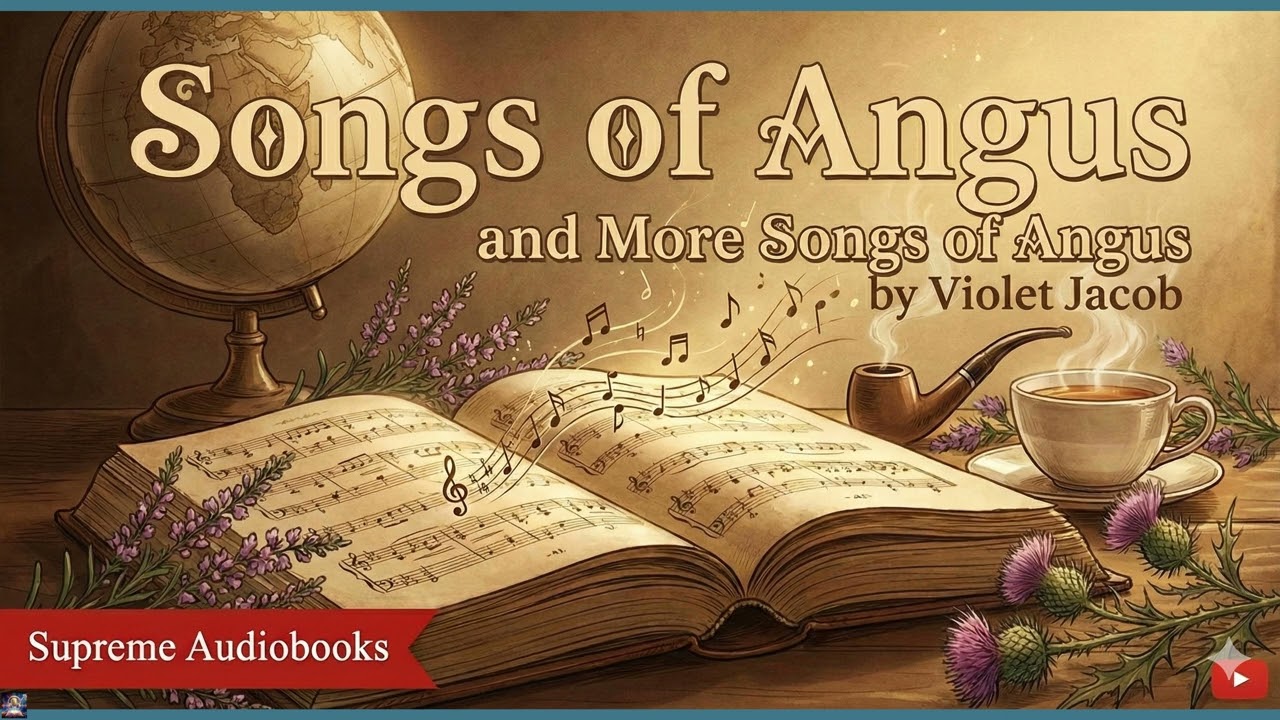
Songs of Angus and More Songs of Angus
Step into a world both intimately familiar and wonderfully distinct, a world where the lilt of the Scottish tongue weaves tales of the land and its people. Violet Jacob's "Songs of Angus and More Songs of Angus" offers more than just a collection of verses; it presents an immersive experience into the heart of rural Scotland at the turn of the 20th century. Through her evocative poetry, Jacob not only preserves the Doric dialect of the Angus region but also captures the enduring spirit, humor, and pathos of a community deeply connected to its heritage. For those seeking an authentic voice from a specific place and time, a voice that speaks to universal themes of home, identity, and the relentless passage of seasons, this collection offers profound resonance even today. It stands as a vital record of a disappearing way of life, articulated with lyrical power and heartfelt observation. These collected poems transport the listener directly to the windswept fields, bustling farmyards, and cozy cottages of Angus, a county on Scotland's east coast. Jacob introduces us to a diverse cast of local characters, not as named individuals in a traditional novel, but as archetypes brought vividly to life through their speech, customs, and daily routines. We meet the hardworking ploughmen, the resilient fisherfolk, the wise old women with their ancient lore, and the children playing amidst the changing seasons. The poems follow the rhythms of agricultural life, from the sowing of seeds in spring to the harvest's bounty and the stark beauty of winter snows, depicting the cyclical nature of existence in a pre-industrial rural setting. The central focus of these songs is the profound bond between the Angus people and their land, a relationship shaped by both its generosity and its harsh demands. The challenges of farm life, the camaraderie of neighbors, the small joys and sorrows that mark a life lived close to nature are all depicted with an unvarnished honesty. Jacob's keen eye for detail brings forth the scent of peat smoke, the sound of the kirk bell, and the feel of the strong Angus wind, creating a sensory landscape that pulls the listener into its embrace. The underlying thread running through the collections is a poignant awareness of change—the slow erosion of old ways, the departure of the young, and the quiet dignity of those who remain. Violet Jacob, born Violet Augusta Mary Frederica Kennedy-Erskine in 1863, belonged to an aristocratic Scottish family, growing up at the magnificent House of Dun, Montrose, within the very Angus landscape she would later immortalize. Her lineage, as the daughter of the 18th Earl of Rothes, granted her a unique vantage point, allowing her to observe the lives of the working folk with both a deep understanding and a degree of distance. She married Arthur Otway Jacob, an army officer, and spent many years living abroad, particularly in India, a period that informed some of her early prose works. However, it was upon her return to Scotland, later in life, that her poetic voice truly found its home, rooted firmly in the soil and language of her birth county. Her literary output included several novels, such as The Sheep-Stealers and The Interloper, and collections of short stories, often depicting rural life and folklore. Yet, it is her dialect poetry that secured her place in Scottish letters. She was not merely recording a dialect; she was breathing life into it, demonstrating its capacity for humor, tenderness, and profound emotion. Jacob's work stands as a significant contribution to the burgeoning Scottish literary revival of the early 20th century, paving the way for later poets who would also reclaim and celebrate the distinctive voices of Scotland, proving that regional expression could speak to universal human experience. She passed away in 1946, leaving behind a body of work that continues to celebrate the enduring spirit of Angus. One prominent theme animating these poems is the profound sense of place and regional identity. Jacob’s verses are steeped in the specifics of the Angus landscape—its fields, its moors, the coastline where the North Sea meets the land. She shows how this environment shapes the character of its inhabitants, instilling in them a resilience, a wry humor, and an unwavering connection to their heritage. For instance, poems describing the planting or harvesting seasons are not merely agricultural reports; they are celebrations of human effort in harmony with the natural world, revealing the deep-seated pride the folk of Angus take in their ability to work the soil. Another powerful theme is the vital importance of language, specifically the Doric dialect, as a vessel for cultural memory and identity. Jacob understood that the unique cadences and vocabulary of Doric were inseparable from the soul of Angus. Through her authentic rendition of the dialect, she conveys shades of meaning, particular humor, and emotional nuances that would be lost in standard English. A poem might depict two old neighbors exchanging gossip, their words rich with local idiom, not only for comic effect but to underline the strength of their community bonds and the shared history embedded within their speech. The poems also frequently touch upon memory and nostalgia, often looking back at a past that is slowly fading. There are verses that recall childhood scenes, the faces of loved ones now gone, or the changing landscape, imbued with a bittersweet longing for what once was. These collections, first published in 1915 and 1918 respectively, emerged during a tumultuous period in global history. The shadow of the First World War looms large over "More Songs of Angus," lending a profound poignancy to many of the poems. Jacob wrote of sons leaving for the front, the anxious wait of families at home, and the immense grief of loss, connecting the personal tragedies of Angus families to the broader catastrophe engulfing Europe. This historical context provides an added layer of meaning, showcasing how even in a seemingly remote corner of the world, global events profoundly impacted individual lives. Culturally, the early 20th century was a time of significant change for rural communities across Britain, with industrialization and urbanization drawing people away from traditional agricultural lifestyles. Jacob's poetry, therefore, serves as a lyrical counterpoint, affirming the value and beauty of a way of life that was, in some respects, already in decline, thus preserving its essence for future generations. Listening to "Songs of Angus and More Songs of Angus" as an audiobook offers an unparalleled opportunity to truly appreciate Jacob's work. The Doric dialect, so central to the poems' power and authenticity, can be challenging on the printed page for those unfamiliar with it. A skilled narrator, however, brings the language to life, allowing the listener to absorb the musicality and emotional depth of the words without effort. The careful pacing of the narration ensures that the listener can savor the rhythm of the verses and the distinct atmosphere of each piece. The subtle intonations of a voice attuned to the Scottish vernacular transform the words from mere text into a living, breathing soundscape, making the humor land more effectively, the sorrow feel more acute, and the sheer beauty of the language resonate more deeply. It is an invitation to inhabit Angus not just with the mind's eye, but with the ear, allowing the stories, the people, and the very spirit of the land to wash over you.
Enjoyed Songs of Angus and More Songs of Angus? A few ways to support us
Audible & Amazon links are affiliate; we may earn a small commission at no extra cost.
About this production
Human narration by a volunteer reader from LibriVox.org, the public-domain audiobook project. LibriVox volunteers record literary works whose copyright has expired in the United States, releasing the resulting recordings into the public domain.
Songs of Angus and More Songs of Angus by Violet Jacob. The underlying text is in the U.S. public domain. We do not republish any modern copyrighted edition, translation, or commentary.
The 4K cinematic visuals accompanying this audiobook are generated by an AI image model from prompts derived from the source text. No copyrighted photos, paintings, or stock footage are used. AI generation is disclosed on every video on our YouTube channel as required by YouTube's altered/synthetic content policy.
English subtitles are transcribed from the LibriVox recording with OpenAI Whisper. Translations into the 11 other supported languages are produced by Meta's NLLB-200 neural translation model. No human translator's copyrighted translation is used.
Questions about sourcing or rights? See our DMCA & Sourcing policy or contact us.
Enjoyed this audiobook?
If you'd like to own a copy of Songs of Angus and More Songs of Angus or hear a professionally produced edition, the links below help support free audiobook production at no extra cost to you.
As an Amazon Associate we earn from qualifying purchases. Audible / print links are affiliate.