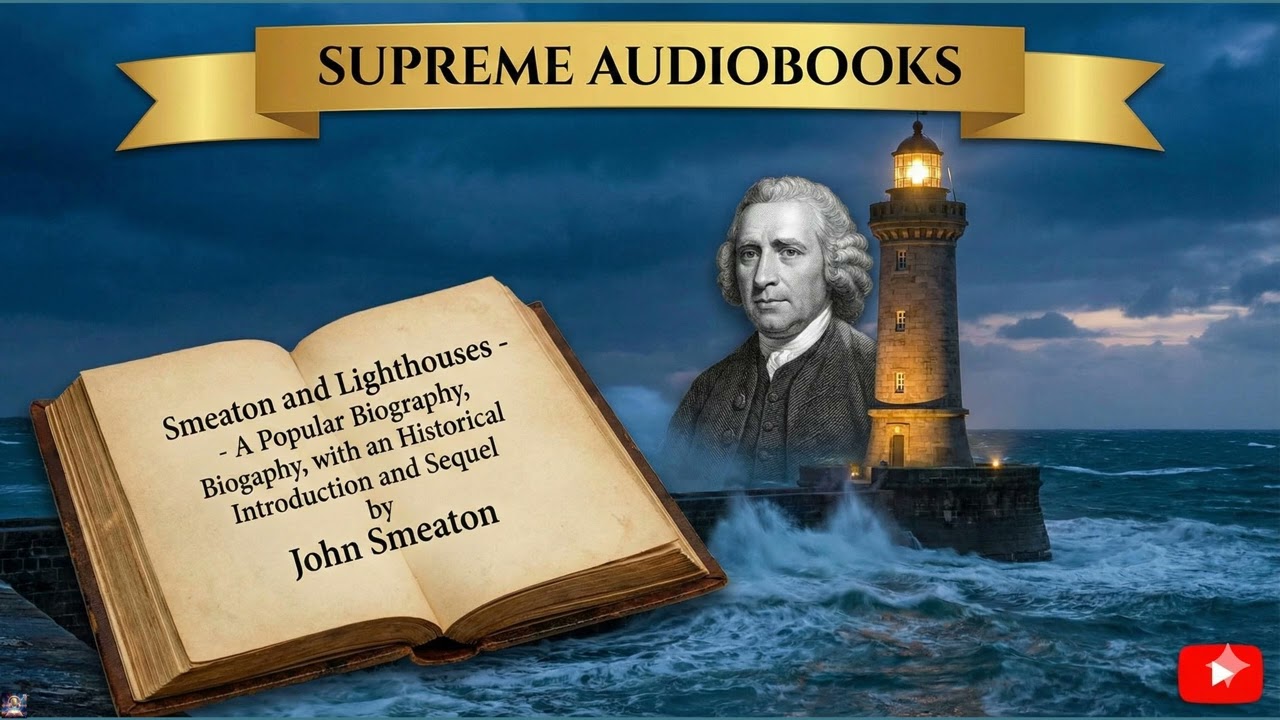
Smeaton and Lighthouses - A Popular Biography, with an Historical Introduction and
Imagine a world where the vast, unpredictable ocean was an even greater force of untamed nature than it is today, a place where shipping routes were graveyards for countless vessels and the dreams of their crews. It was into this perilous reality that the titans of early engineering stepped, armed with ingenuity, daring, and a profound understanding of natural forces. Smeaton and Lighthouses - A Popular Biography, with an Historical Introduction and invites you to witness the birth of modern civil engineering through the life and monumental achievements of John Smeaton, a man whose vision literally illuminated the darkest corners of Britain's treacherous coastlines. This compelling narrative is more than just a historical account; it is a testament to human perseverance, the relentless pursuit of knowledge, and the foundational struggles that forged the very landscape of our modern industrial world. It resonates deeply with anyone who has ever stared at a vast structure and wondered about the minds and hands that brought it into being, reminding us that every great leap forward begins with a single, courageous step into the unknown. The story opens in an era of burgeoning scientific inquiry and mercantile expansion, specifically 18th-century Britain, where the ever-present dangers of coastal navigation were a constant check on progress and prosperity. Shipwrecks were commonplace, the jagged rocks and furious storms claiming lives and cargo with alarming regularity. Against this backdrop emerges John Smeaton, a figure whose intellectual curiosity and mechanical aptitude were evident from a young age. The narrative charts his early life, highlighting the formative influences that shaped his unique approach to engineering. He was not merely a theorist but a practical genius, driven by a desire to apply scientific principles to solve real-world problems. The book establishes his persona as an individual of immense talent and an unwavering commitment to empirical observation and meticulous planning. The central conflict of Smeaton’s story, and indeed the overarching drama of this biography, pits human ambition and intellect against the raw, unyielding power of the natural world. The most dramatic illustration of this struggle comes with the detailed account of the construction of the third Eddystone Lighthouse, a project that had already defeated previous builders and claimed lives. Here, the story brings to life the immense technical and logistical challenges Smeaton faced: working in a remote, wave-battered location, innovating with new materials like hydraulic lime—a concrete that could set underwater—and devising revolutionary construction methods. The biography meticulously describes the setbacks, the storms that threatened to undo weeks of work, and the sheer physical and mental endurance required to erect such a structure against the relentless battering of the sea. The narrative follows Smeaton’s process of iterative design, his careful experiments, and his leadership in orchestrating a monumental undertaking, painting a vivid picture of engineering in its nascent stages. The authorship of this particular biography remains unknown, a common occurrence for works published in earlier centuries, especially those intended for a broad, popular audience. Rather than focusing on a singular authorial voice, then, it’s more fruitful to view this book as a product of a specific literary and cultural tradition. It belongs to a genre of popular science and engineering biographies that flourished from the late 19th through the early 20th centuries. These works aimed to make complex technical subjects accessible and inspiring to the general public, often serving an educational purpose by showcasing the lives of "great men" who contributed to national progress and industrial might. Such texts were frequently commissioned, perhaps by publishing houses or educational societies, and might have been compiled from various sources, sometimes resulting in an anonymous attribution, or the original author's name might have simply faded from collective memory over time. What matters is the enduring quality of the content and its ability to convey the spirit and achievements of its subject. This specific biography stands as a valuable artifact in itself, offering a lens through which we can understand how the figures of engineering and invention were celebrated and presented to the public in a bygone era, reflecting the prevailing attitudes towards science, industry, and heroism during that period. At its core, Smeaton and Lighthouses enacts several profound themes that resonate far beyond the specific details of lighthouse construction. One prominent theme is the triumph of human ingenuity and innovation. The text details Smeaton's inventive use of hydraulic lime, a material he developed and refined through rigorous experimentation, directly addressing the problem of creating durable underwater structures. This specific example demonstrates how scientific inquiry, combined with practical application, can overcome seemingly insurmountable obstacles. Another vital theme is the persistent, often heroic, struggle to conquer nature. The descriptions of the powerful Atlantic storms battering the Eddystone rocks, and Smeaton’s methodical approach to designing a structure that could withstand such forces, clearly illustrate humanity’s enduring desire to master its environment and bend it to its will, often at great personal risk. Furthermore, the biography underscores the idea of legacy and progress. Smeaton's lighthouses were not merely engineering feats for their own sake; they directly led to safer shipping, fewer maritime disasters, and thus significantly boosted trade and prosperity. This shows how individual genius can have a lasting, transformative impact on society, laying groundwork for future generations of engineers and navigators. Finally, the book highlights the crucial role of the scientific method and empiricism. Smeaton's reliance on observation, meticulous data collection, and practical testing—from studying windmills to understanding the properties of different mortars—serves as a compelling demonstration of the scientific process in action, emphasizing that knowledge is built incrementally through careful investigation and hands-on experience, rather than pure theoretical speculation. This particular biography likely emerged during a period of immense public fascination with engineering, invention, and the "self-made man"—a trend particularly strong in the late 19th and early 20th centuries. This was an era when the fruits of the Industrial Revolution were profoundly shaping daily life, from railways to steamships, and there was a widespread appetite to understand the pioneers behind these transformative changes. Culturally, there was a great emphasis on progress, industriousness, and the idea that human ingenuity could solve almost any problem. Politically and economically, maritime trade remained crucial for empires, making advancements in navigation, such as reliable lighthouses, not just a matter of safety but of national economic interest. The literary landscape of the time also favored popular non-fiction, scientific biographies, and works that combined historical detail with an uplifting narrative. These books often served to inspire readers, particularly the young, towards careers in science and engineering, presenting figures like Smeaton as exemplars of dedication and brilliance. The work fits perfectly into this tradition, offering an accessible yet detailed account that would appeal to a broad readership interested in the historical figures who shaped the modern world, as well as those seeking educational and morally edifying tales of perseverance. Listening to Smeaton and Lighthouses as an audiobook offers a singular opportunity to immerse oneself fully in the narrative without the distraction of detailed historical maps or complex diagrams. A skilled narrator, with a clear, steady voice, can bring the challenges of 18th-century engineering to life, guiding the listener through the descriptions of Smeaton’s experiments, the arduous construction phases, and the fierce opposition of the elements. The length of "several hours" makes it an ideal companion for extended commutes, an afternoon of focused listening, or as an engaging backdrop to domestic tasks. Pay attention to the narrator’s pacing, especially when technical details are explained; a well-chosen voice will allow ample time for comprehension while maintaining the momentum of Smeaton's dramatic struggle. The spoken word can lend a particular gravitas to the descriptions of storms and the monumental effort required to anchor structures in the deep, creating an atmosphere that highlights the sheer audacity of Smeaton's vision. It allows the listener to connect directly with the spirit of a bygone era and the enduring human spirit of invention.
Enjoyed Smeaton and Lighthouses - A Popular Biography, with an Historical Introduction and? A few ways to support us
Audible & Amazon links are affiliate; we may earn a small commission at no extra cost.
About this production
Human narration by a volunteer reader from LibriVox.org, the public-domain audiobook project. LibriVox volunteers record literary works whose copyright has expired in the United States, releasing the resulting recordings into the public domain.
Smeaton and Lighthouses - A Popular Biography, with an Historical Introduction and by A Popular Biography, with an Historical Introduction and. The underlying text is in the U.S. public domain. We do not republish any modern copyrighted edition, translation, or commentary.
The 4K cinematic visuals accompanying this audiobook are generated by an AI image model from prompts derived from the source text. No copyrighted photos, paintings, or stock footage are used. AI generation is disclosed on every video on our YouTube channel as required by YouTube's altered/synthetic content policy.
English subtitles are transcribed from the LibriVox recording with OpenAI Whisper. Translations into the 11 other supported languages are produced by Meta's NLLB-200 neural translation model. No human translator's copyrighted translation is used.
Questions about sourcing or rights? See our DMCA & Sourcing policy or contact us.
Enjoyed this audiobook?
If you'd like to own a copy of Smeaton and Lighthouses - A Popular Biography, with an Historical Introduction and or hear a professionally produced edition, the links below help support free audiobook production at no extra cost to you.
As an Amazon Associate we earn from qualifying purchases. Audible / print links are affiliate.