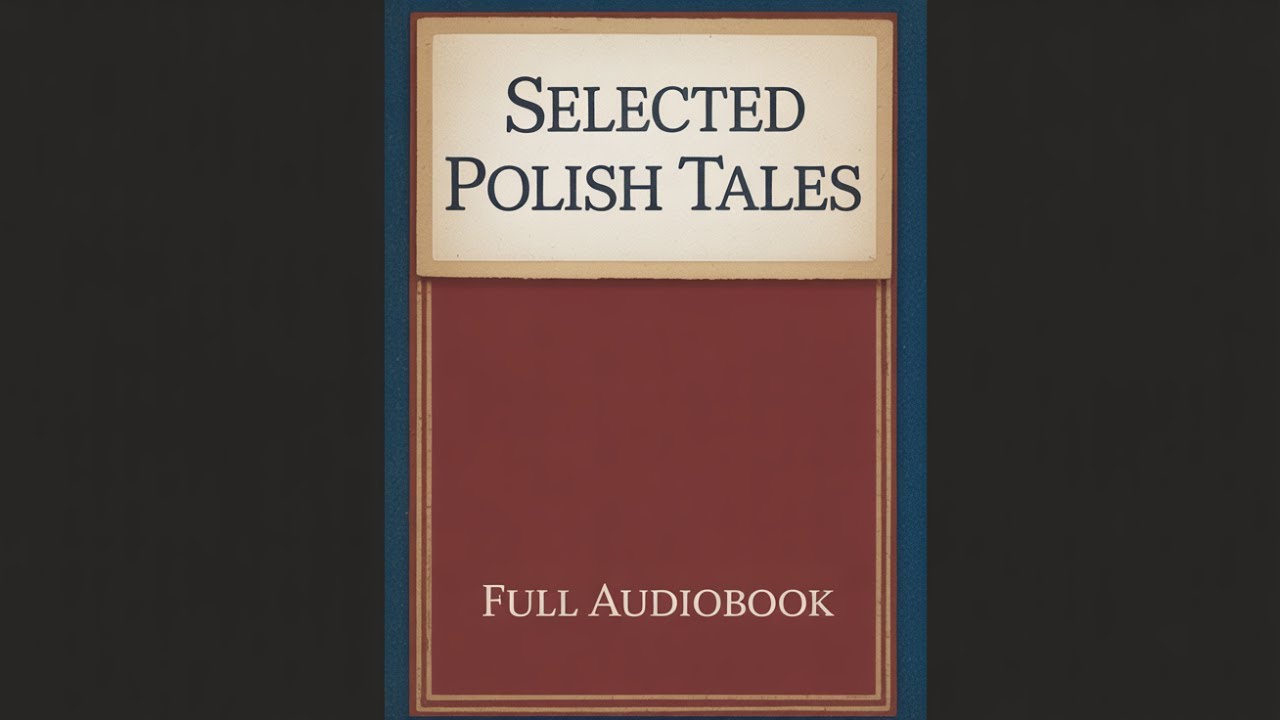
Selected Polish Tales
Enter a world shaped by ancient forests, whispered legends, and an unyielding spirit. "Selected Polish Tales" offers listeners a unique passage into the heart of a nation whose story is as dramatic and compelling as the narratives it has produced. This collection of diverse voices and visions invites you to encounter the profound depths of the human experience through the lens of Polish imagination. It is an invitation to witness resilience, ponder fate, and appreciate the enduring power of storytelling itself – tales that, despite their origins in a specific time and place, speak directly to the universal concerns of courage, sacrifice, and the search for meaning that resonate with us today. Within these selected tales, you will encounter a spectrum of experiences, from the everyday struggles of a peasant family against the harshness of nature to the moral dilemmas faced by a nobleman in a time of political unrest. Settings shift from rustic homesteads clinging to tradition, where old wives' tales still hold sway, to the grand, yet sometimes treacherous, salons of the gentry, where wit can be as sharp as any sword. Characters often find themselves at crossroads: a young woman torn between duty and personal desire, a cunning merchant trying to outsmart his rivals, or a solitary scholar seeking ancient wisdom in forbidden texts. Each story, while distinct, often presents a central conflict—a test of loyalty, a battle against injustice, or a confrontation with the supernatural—that pulls the reader into its carefully constructed world. The overarching dramatic arcs typically follow individuals or small communities as they navigate profound challenges. You might find a protagonist seeking redemption after a past misdeed, or a village uniting to overcome an external threat. The tension often arises from the clash between individual will and the forces of destiny, tradition, or societal expectation. These narratives frequently build to moments of intense revelation or a pivotal decision that alters the course of lives, leaving the full resolution of events to unfold organically without revealing all final outcomes prematurely. Instead, the focus remains on the journey of discovery, the choices made, and the profound impact of those choices on the human spirit. The literary tradition of Poland, forged in the crucible of centuries of foreign occupation and valiant struggles for independence, offers a distinct window into the human condition. It is a tradition that elevates the spoken word, seeing in stories not just entertainment but a means of preserving national identity, transmitting moral lessons, and articulating the soul of a people. "Selected Polish Tales" draws from this deep well, presenting the work of various authors whose contributions collectively form a panorama of national letters. These writers, whether their names are widely celebrated or known only to specialists, each contribute a unique voice to a chorus of Polish voices, creating a literary heritage that spans from the age of Romanticism through the Positivist era and beyond, each period bringing new perspectives and stylistic innovations to the fore. These authors, emerging from different social strata and historical moments, were often acutely aware of their role as chroniclers and shapers of national consciousness. Their lives, frequently touched by political upheaval and personal sacrifice, informed their writing with a particular urgency and depth. Many lived through periods when the Polish language itself was suppressed, making the act of writing in Polish a profound statement of cultural defiance. The collection represents the collective genius of those who, through fiction, sought to capture the essence of Polish life, the beauty of its landscapes, the complexities of its people, and the historical forces that shaped their destiny, often blending elements of folklore, historical realism, and philosophical inquiry. The tales often examine the tenacious spirit of the Polish people, showcasing how individuals and communities persist through adversity. For instance, a narrative might present a village enduring a harsh winter, demonstrating collective fortitude and ingenuity, or an individual finding inner strength in the face of personal loss. Another recurring idea is the interplay between the earthly and the otherworldly. Folkloric elements frequently intertwine with daily life—a mischievous spirit might influence a farmer's harvest, or an ancient legend might suddenly manifest in a modern setting, illustrating the deep roots of superstition and myth in the national psyche. Furthermore, the theme of justice and morality frequently appears, as characters grapple with ethical dilemmas, striving to uphold honor or correct wrongs in a world that is often imperfect and unfair. The narratives frequently suggest that true justice extends beyond legal frameworks, residing instead in the moral compass of individuals and communities. A profound sense of national identity and the weight of history also permeate many of these stories. Characters often confront the legacy of past generations, whether through patriotic duty or the burdens of historical memory. This can be seen in scenes where characters debate the meaning of freedom, recall ancestral heroes, or make personal sacrifices for the greater good of their community or nation. These themes are not merely abstract concepts; they are embodied in the actions and internal struggles of the characters, giving concrete form to complex ideas about what it means to be Polish and human within a specific historical and cultural framework. The historical backdrop against which many of these narratives first took shape is one of profound national challenge. For over a century, Poland as a sovereign state ceased to exist, carved up by neighboring empires. During this period, literature became a vital sanctuary for national identity. Writers became the conscience of the nation, preserving the language, chronicling the past, and articulating hopes for the future. The Romantic period, for example, saw poets and novelists use historical settings and mythological elements to inspire nationalistic fervor and mourn lost independence. Later, the Positivist movement shifted focus to social problems, advocating for education and economic development as means of strengthening the nation from within. The stories in this collection thus emerged from a context where literature was not just entertainment but a crucial act of cultural and political survival, serving as a repository for collective memory and a platform for national self-expression. Listening to these selected Polish tales as an audiobook offers an immersive experience that complements the written word. A skilled narrator's voice lends distinct textures to the various characters, making the wit sharper and the pathos more immediate. The measured pace of a well-told story, unhurried yet always advancing, allows you to absorb the intricacies of Polish customs and the nuances of human emotion. The atmospheric details of the narration—the creak of a wooden door, the distant sound of a village carol, the quiet tension in a dialogue—draw you deep into the world each author created. The total run length, several hours in duration, makes this collection ideal for extended listening sessions, whether during a quiet evening at home or on a lengthy journey. It allows the stories to unfold naturally, giving each narrative its due space to resonate and leave a lasting impression.
Enjoyed Selected Polish Tales? A few ways to support us
Audible & Amazon links are affiliate; we may earn a small commission at no extra cost.
About this production
Human narration by a volunteer reader from LibriVox.org, the public-domain audiobook project. LibriVox volunteers record literary works whose copyright has expired in the United States, releasing the resulting recordings into the public domain.
Selected Polish Tales by Various Authors. The underlying text is in the U.S. public domain. We do not republish any modern copyrighted edition, translation, or commentary.
The 4K cinematic visuals accompanying this audiobook are generated by an AI image model from prompts derived from the source text. No copyrighted photos, paintings, or stock footage are used. AI generation is disclosed on every video on our YouTube channel as required by YouTube's altered/synthetic content policy.
English subtitles are transcribed from the LibriVox recording with OpenAI Whisper. Translations into the 11 other supported languages are produced by Meta's NLLB-200 neural translation model. No human translator's copyrighted translation is used.
Questions about sourcing or rights? See our DMCA & Sourcing policy or contact us.
Enjoyed this audiobook?
If you'd like to own a copy of Selected Polish Tales or hear a professionally produced edition, the links below help support free audiobook production at no extra cost to you.
As an Amazon Associate we earn from qualifying purchases. Audible / print links are affiliate.