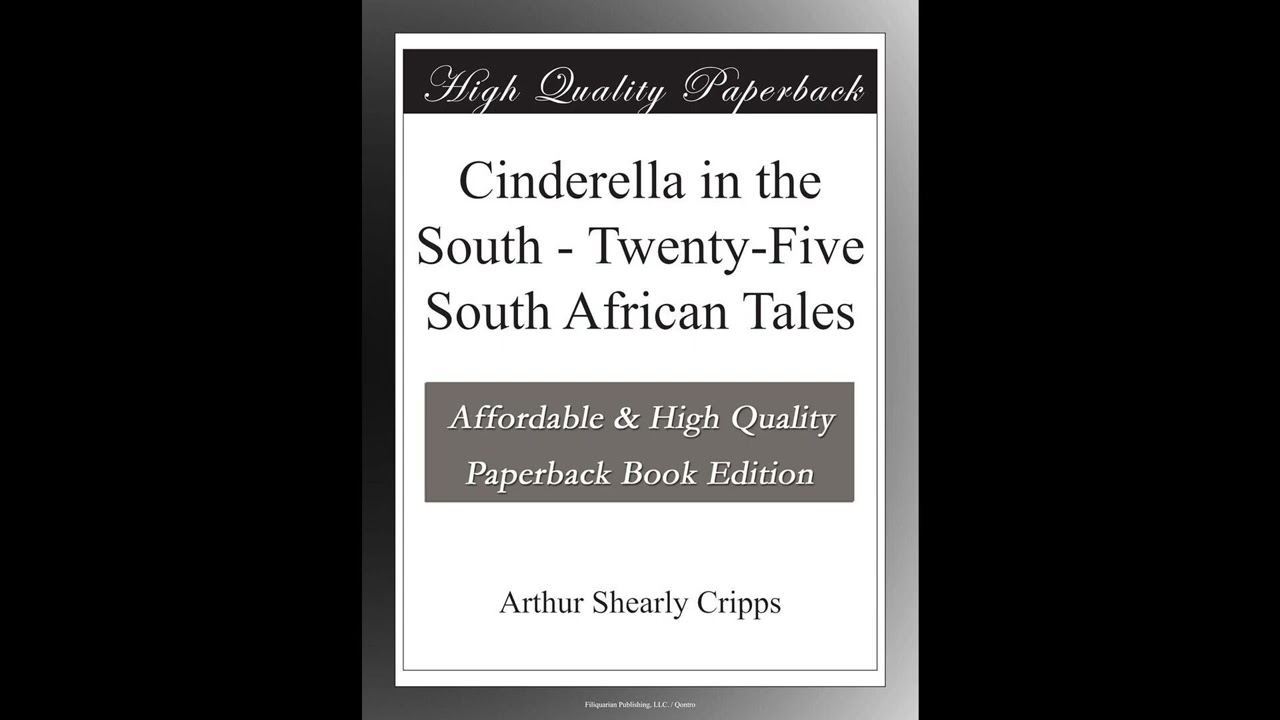
Cinderella in the South - Twenty-Five South African Tales
Step into a world where ancient wisdom meets the sun-drenched landscapes of Southern Africa, a realm shaped by storytellers for generations. Arthur Shearly Cripps’s "Cinderella in the South - Twenty-Five South African Tales" offers a rare and compelling window into the narrative heart of a continent. This collection is more than just a book; it is an echo of voices from a bygone era, a gathering of fables, myths, and cautionary tales that speak to universal human experiences even as they are deeply rooted in their specific place. For anyone seeking to understand the power of traditional narratives, the nuances of cultural exchange, or simply to lose themselves in tales both familiar and wonderfully strange, this volume stands as a testament to the enduring magic of spoken word and its translation to the page. It’s a chance to listen to stories that resonate with archetypal power, re-imagined through a distinctive and significant lens. Within these twenty-five narratives, listeners will discover a panorama of South African folklore, interpreted and presented by Cripps. The tales are set against the vast and varied backdrops of the region—from the arid plains to the verdant riverbanks, the rocky outcrops to the humble villages where life unfolds in rhythm with nature. The characters that populate these stories are a fascinating array of archetypes: there are cunning tricksters, often personified by animals suchike the jackal or the hare, whose cleverness challenges authority and tradition; noble heroes who face impossible odds; and ordinary men and women whose daily struggles and triumphs reflect the deeper currents of community and belief. Alongside them are wise elders, powerful chiefs, benevolent spirits, and even monstrous figures that embody the fears and uncertainties of existence. The overarching arc of the collection isn't a single narrative, but rather the cumulative effect of diverse narratives that together paint a comprehensive picture of Southern African traditional thought. Listeners will encounter stories that explain the origins of natural phenomena, fables that teach moral lessons about honesty, diligence, and respect for the natural world, and heroic legends that celebrate bravery and the spirit of community. Some tales might echo familiar European motifs, like the very "Cinderella" theme in the title, showing how universal story structures find unique expression in different cultures. Others will be entirely distinct, offering fresh perspectives on human nature, the balance between good and evil, and the ever-present connection between people and their environment. The plots often involve quests, trials, magical transformations, and encounters with both benevolent and malevolent forces, all serving to illuminate cultural values and the consequences of human actions. Arthur Shearly Cripps, born in Tunbridge Wells, Kent, England, in 1869, was a figure of remarkable commitment and conviction. Educated at Trinity College, Oxford, he was ordained as an Anglican priest in 1892. His life took a decisive turn when he went to Southern Rhodesia (now Zimbabwe) as a missionary in 1901. He served the Anglican Church there for nearly fifty years, making a profound impact not only as a cleric but also as a passionate advocate for the rights of the indigenous African population. Cripps became renowned for his outspoken criticism of colonial land policies and racial discrimination, often clashing with both the colonial administration and even parts of his own church hierarchy. His dedication to justice for the Shona people among whom he lived earned him the affectionate title "the Lone Buffalo." Beyond his ecclesiastical and humanitarian work, Cripps was a prolific and respected writer. He produced several volumes of poetry, including "Titania and Other Poems" (1900) and "Lyra Evangelistica" (1909), which often drew inspiration from the Southern African landscape and his experiences there. His prose works, such as "Bay-Tree Country" (1913) and "The Black Madonna and Other Poems" (1926), further cemented his reputation as a significant voice in early 20th-century colonial literature, albeit one with a uniquely critical and sympathetic perspective towards the colonized. "Cinderella in the South," published in 1918, stands as a testament to his deep immersion in and respect for the local culture, offering a bridge between indigenous oral traditions and a wider reading public. He continued to live in Rhodesia until his death in 1952, leaving behind a legacy of both spiritual and literary dedication. The stories in this collection are steeped in themes that resonate deeply with both their origins and the broader human condition. One prominent theme is the interconnectedness of humanity and the natural world. Many tales feature animals as central characters, often speaking, reasoning, and acting with human-like motivations, illustrating the belief that wisdom and folly are not exclusive to one species. For instance, fables about a cunning jackal outsmarting a larger predator don't just entertain; they convey lessons about survival, wit, and the often-unpredictable order of the ecosystem. Another significant theme is moral rectitude and justice. Numerous narratives present clear ethical dilemmas, where characters face consequences for their greed, pride, or dishonesty, while virtue, humility, and generosity are ultimately rewarded. A story might depict a person who shares their last morsel of food with a stranger only to find their kindness repaid manifold, serving as a powerful reinforcement of community values. Furthermore, the collection often grapples with the theme of cultural identity and transformation. By presenting tales that sometimes parallel European folklore—the "Cinderella" motif itself being a prime example—Cripps highlights both the universal patterns of human storytelling and the distinctive ways in which these patterns are adapted and infused with local flavor, customs, and beliefs. The specific challenges and triumphs depicted often reflect the societal structures and spiritual understandings prevalent in Southern African communities, offering a glimpse into a worldview where ancestors, spirits, and the living are in constant communication. These tales are not just entertainment; they are vehicles for preserving history, transmitting knowledge, and reinforcing social cohesion across generations. "Cinderella in the South" emerged during a period of intense colonial expansion and cultural interaction in Southern Africa. The early 20th century saw the entrenchment of British rule across vast territories, leading to significant shifts in indigenous societies and a growing interest—both academic and popular—in documenting "native" cultures before they were irrevocably altered. Anthropologists and folklorists were actively collecting oral traditions, driven by a mixture of scholarly curiosity, a sense of preserving what was perceived as disappearing heritage, and sometimes, a colonial desire to understand and thus control. Cripps, however, approached this endeavor from a different perspective. As a missionary deeply embedded within the community, his collection sprang from genuine respect and a desire to bridge cultural divides, not just to document. His work stands out because it wasn't merely an anthropological record but a literary re-telling, infused with his own sensitivity and understanding. The publication in 1918 also places it firmly in a time when European literature was beginning to grapple more directly with the realities of empire and the diverse peoples it encompassed. Cripps’s tales offered readers in the West a glimpse into the richness of African narrative traditions, challenging simplistic views and fostering a more nuanced appreciation for the depth of indigenous thought. This collection contributed to a growing body of literature that sought to represent non-Western voices and traditions, even if filtered through a European author's pen. Listening to "Cinderella in the South" as an audiobook offers a particularly rewarding experience, especially given the origins of these stories in oral tradition. The narrator's voice becomes the conduit, breathing life into characters and scenes that were originally meant to be heard. The pacing of the narration can evoke the measured rhythm of a campfire storyteller, drawing listeners in with a sense of intimacy and immediacy. Listen for the subtle shifts in tone that differentiate a wise elder from a mischievous animal, or the suspenseful pauses that heighten the drama of a conflict. The spoken word allows the atmosphere to build organically, letting the rich imagery of the South African landscape and the distinctive personalities of its creatures and people truly settle. Over several hours of listening, these tales unfold not just as narratives, but as an experience—a direct connection to the enduring power of stories told and retold across time.
Enjoyed Cinderella in the South - Twenty-Five South African Tales? A few ways to support us
Audible & Amazon links are affiliate; we may earn a small commission at no extra cost.
About this production
Human narration by a volunteer reader from LibriVox.org, the public-domain audiobook project. LibriVox volunteers record literary works whose copyright has expired in the United States, releasing the resulting recordings into the public domain.
Cinderella in the South - Twenty-Five South African Tales by Arthur Shearly Cripps. The underlying text is in the U.S. public domain. We do not republish any modern copyrighted edition, translation, or commentary.
The 4K cinematic visuals accompanying this audiobook are generated by an AI image model from prompts derived from the source text. No copyrighted photos, paintings, or stock footage are used. AI generation is disclosed on every video on our YouTube channel as required by YouTube's altered/synthetic content policy.
English subtitles are transcribed from the LibriVox recording with OpenAI Whisper. Translations into the 11 other supported languages are produced by Meta's NLLB-200 neural translation model. No human translator's copyrighted translation is used.
Questions about sourcing or rights? See our DMCA & Sourcing policy or contact us.
Enjoyed this audiobook?
If you'd like to own a copy of Cinderella in the South - Twenty-Five South African Tales or hear a professionally produced edition, the links below help support free audiobook production at no extra cost to you.
As an Amazon Associate we earn from qualifying purchases. Audible / print links are affiliate.