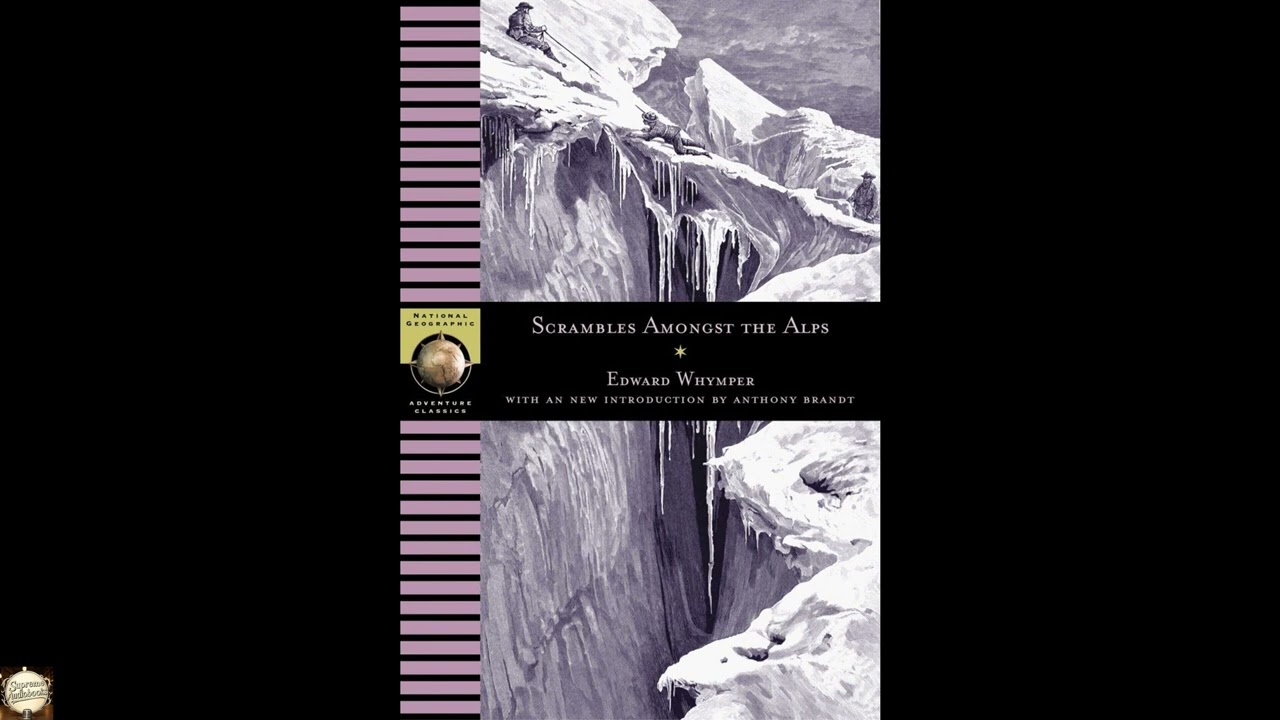
Scrambles Amongst the Alps (National Geographic Adventure Classics)
Imagine a world where the highest, most imposing peaks of a continent remained unconquered, their summits shrouded not just in cloud, but in legend and fear. Scrambles Amongst the Alps transports you directly into this world, offering Edward Whymper's electrifying, first-person account of his relentless pursuit of these defiant mountains, most notably the Matterhorn. Far more than a mere record of ascents, this classic stands as a testament to human ambition, the unforgiving beauty of nature, and the psychological grip of an impossible challenge. It’s a foundational text for anyone who has ever looked at a distant horizon and felt the magnetic pull of the unknown, a story that resonates profoundly with our contemporary fascination for extreme sports, survival stories, and the enduring quest to push beyond perceived limits. The narrative unfolds in the rugged heart of the European Alps during the 1860s, a period when many of its colossal peaks were still virgin territory. Whymper, an English artist and engraver by trade, initially visited the region on a commission to sketch mountain scenery. What began as professional work quickly transformed into a consuming passion, as he became drawn into the nascent sport of alpinism. His story chronicles a series of audacious attempts, not just on the Matterhorn, but on numerous other formidable summits across the Pennine Alps, including the Dent Blanche and the Grand Cornier. We meet a cast of vivid characters: the stoic, supremely skilled local guides like Michel Croz and the Taugwalders, upon whom Whymper’s life often depended; rival climbing parties whose shared ambition created both camaraderie and intense competition; and the mountains themselves, described with a geologist’s precision and an artist’s eye for their awe-inspiring, often menacing grandeur. At the core of Scrambles Amongst the Alps lies Whymper’s escalating obsession with the Matterhorn, a peak widely considered unclimbable due to its sheer faces and formidable rock architecture. Over several seasons, Whymper dedicates himself to finding a route to its summit, facing numerous setbacks, perilous falls, and the constant threat of avalanches, rockfalls, and sudden storms. Each failed attempt, meticulously documented, only fuels his resolve. He experiments with different approaches, devises new techniques, and grapples with the logistical nightmares of equipping and organizing expeditions in an era before modern gear. The tension builds with each chapter, as Whymper and his various companions inch closer, sometimes miraculously, sometimes tragically, to their ultimate objective, illustrating the immense physical and mental toll exacted by such audacious endeavors. The story becomes a gripping tale of endurance, calculated risk, and the sheer audacity of individuals who dared to challenge nature's most imposing fortresses. Edward Whymper, born in London in 1840, was a figure whose diverse talents coalesced to shape his extraordinary life. Initially trained in the family business of wood engraving, his artistic skills were instrumental in his early travels to Switzerland, where he was tasked with illustrating a book about the Alps. This initial foray into the mountains proved to be a turning point, awakening a deep-seated passion for climbing that would define his legacy. From 1861 to 1865, Whymper focused his formidable energies on the Matterhorn, undertaking no fewer than seven unsuccessful attempts before his fateful and ultimately tragic first ascent in July of 1865. His account of this period became Scrambles Amongst the Alps, published in 1871. Beyond his mountaineering triumphs and the controversies that shadowed them, Whymper was also a respected explorer and scientist. He led expeditions to Greenland in 1867 and 1872, conducting pioneering research on glaciology and making significant geological observations. Later, between 1879 and 1880, he undertook extensive scientific and mountaineering expeditions in Ecuador, achieving the first ascents of several Andean peaks, including Chimborazo. His work during this period contributed substantially to the understanding of altitude sickness and the effects of low atmospheric pressure. Whymper’s writing, including his subsequent Travels Amongst the Great Andes of the Equator, is characterized by its precise observation, dramatic narrative style, and unflinching honesty, cementing his place not just as a pioneer of alpinism but as a pivotal figure in the development of adventure literature before his death in 1911. One of the central themes that runs through Scrambles Amongst the Alps is the potent force of human aspiration and obsession. Whymper’s relentless drive to conquer the Matterhorn, despite repeated failures and near-fatal accidents, illustrates a profound psychological need to achieve what is deemed impossible. He describes moments of intense frustration, like being turned back within tantalizing reach of a summit due to treacherous weather, yet he always returns, his will strengthened. This mirrors the universal human desire to test limits and define oneself against the backdrop of immense challenge. Another powerful theme is the raw, indifferent power of nature versus the tenacity of humankind. Whymper’s vivid descriptions of the Alpine landscape—the biting winds, the shifting glaciers, the terrifying precipices—serve as constant reminders of the inherent dangers. He recounts a terrifying incident where he slipped and plunged hundreds of feet down a snow slope, only to be miraculously arrested, a scene that vividly conveys the fine line between triumph and disaster. Furthermore, the book beautifully captures the complex dynamics of camaraderie and rivalry within the climbing parties. Whymper’s interactions with his guides, particularly Michel Croz, reveal bonds forged under extreme duress, where trust and mutual dependence are paramount. Yet, he also portrays the intense competition between different national and individual climbing parties, all vying for the glory of a first ascent. This blend of cooperation and competition highlights the social dimension of extreme endeavors. Finally, the text implicitly grapples with the inherent cost of ambition, hinting at the sacrifices and potential losses that attend such high-stakes pursuits. Whymper’s reflections, particularly in the later sections, often carry a somber undertone, reflecting on the profound consequences that can arise from pushing the boundaries of human endurance. Scrambles Amongst the Alps emerged during the mid-Victorian era, a period marked by rapid scientific advancement, industrialization, and a growing romantic fascination with the natural world. The accessibility of the Alps had increased with the expansion of railway networks, drawing a new wave of British tourists and, crucially, mountaineers. This was the "golden age of alpinism," where the pursuit of first ascents became a nationalistic endeavor as well as a personal one. Whymper’s meticulous approach to mountaineering, combining detailed logistical planning with scientific observation, reflects the era’s emphasis on systematic inquiry and the cataloging of the natural world. His book contributed significantly to shaping the public perception of mountaineering, moving it from a curiosity for eccentric adventurers to a respected, albeit dangerous, sport that blended physical prowess with intellectual rigor. Culturally, Victorian Britain valued courage, self-reliance, and the conquest of challenges, ideals perfectly embodied by Whymper’s narrative. The publication of Scrambles tapped into this ethos, offering readers not just an exciting adventure story but also a glimpse into the extremes of human endeavor. It stood out in the burgeoning genre of travel and adventure literature for its authenticity, its blend of personal drama with detailed geographical and scientific observation, and its often stark, unvarnished portrayal of the dangers involved. Whymper’s direct, compelling voice made the high-altitude world accessible to a wider audience, inspiring future generations of climbers and solidifying the genre of mountaineering literature as a distinct and powerful form of storytelling. Listening to Scrambles Amongst the Alps as an audiobook brings Whymper's dramatic narrative to life with an immediacy that print alone cannot fully convey. A skilled narrator can imbue the descriptions of the vast mountainscapes with appropriate awe, conveying both their sublime beauty and their terrifying indifference. The pacing of the narration can perfectly mirror the text’s rhythm, from the measured, detailed accounts of planning and reconnaissance to the breathless urgency of an actual climb or a narrow escape. Listen for the subtle inflections that distinguish Whymper’s voice from that of his guides or his rivals, bringing their personalities into sharper focus. The approximately several hours of listening provide ample opportunity to become fully immersed in the grandeur of the Alps and the gripping human drama unfolding within them, allowing the powerful imagery of crevasse and peak, storm and sun, to truly unfold in the theater of your mind.
Enjoyed Scrambles Amongst the Alps (National Geographic Adventure Classics)? A few ways to support us
Audible & Amazon links are affiliate; we may earn a small commission at no extra cost.
About this production
Human narration by a volunteer reader from LibriVox.org, the public-domain audiobook project. LibriVox volunteers record literary works whose copyright has expired in the United States, releasing the resulting recordings into the public domain.
Scrambles Amongst the Alps (National Geographic Adventure Classics) by Edward Whymp. The underlying text is in the U.S. public domain. We do not republish any modern copyrighted edition, translation, or commentary.
The 4K cinematic visuals accompanying this audiobook are generated by an AI image model from prompts derived from the source text. No copyrighted photos, paintings, or stock footage are used. AI generation is disclosed on every video on our YouTube channel as required by YouTube's altered/synthetic content policy.
English subtitles are transcribed from the LibriVox recording with OpenAI Whisper. Translations into the 11 other supported languages are produced by Meta's NLLB-200 neural translation model. No human translator's copyrighted translation is used.
Questions about sourcing or rights? See our DMCA & Sourcing policy or contact us.
View 10 famous quotes from this book →
Enjoyed this audiobook?
If you'd like to own a copy of Scrambles Amongst the Alps (National Geographic Adventure Classics) or hear a professionally produced edition, the links below help support free audiobook production at no extra cost to you.
As an Amazon Associate we earn from qualifying purchases. Audible / print links are affiliate.