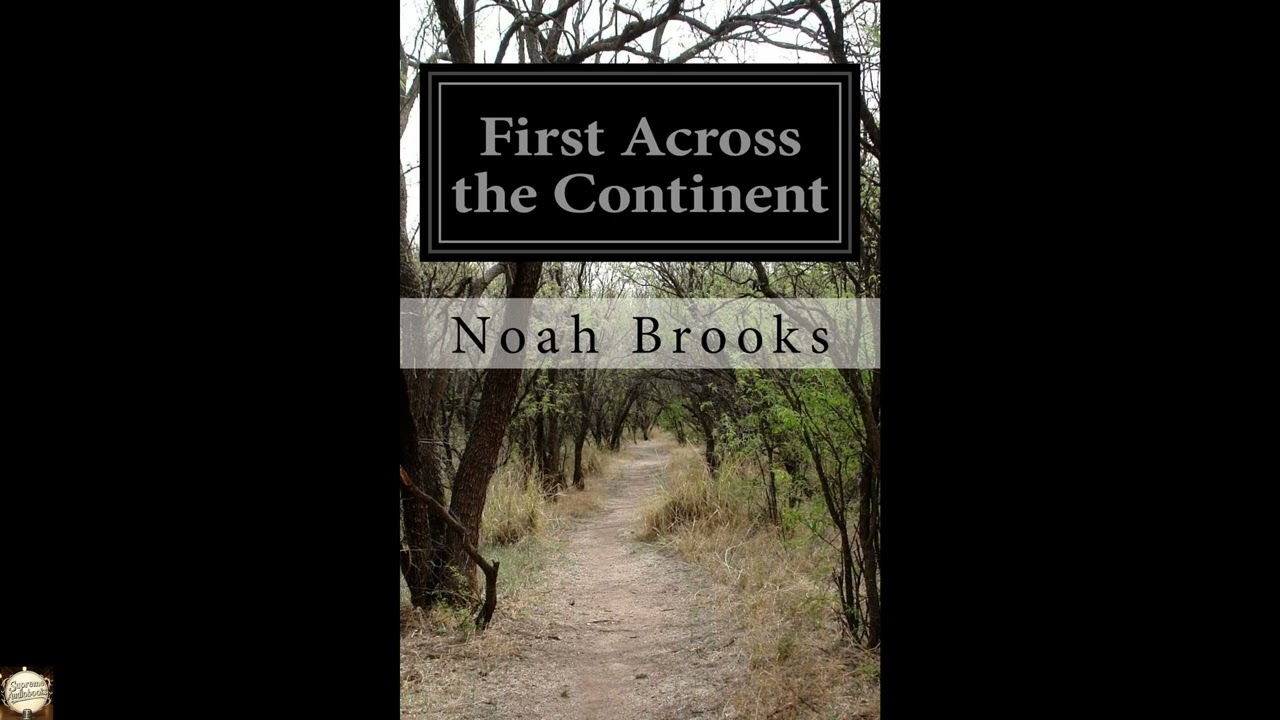
First Across the Continent: The Story of the Exploring Expedition of Lewis and Clar
Imagine a continent, vast and mysterious, stretching westward into an unknown expanse, its horizons guarded by formidable mountain ranges and its plains inhabited by peoples unseen by the young American republic. In the early 19th century, this was the reality, a challenge and an opportunity awaiting the boldest of spirits. "First Across the Continent: The Story of the Exploring Expedition of Lewis and Clar" transports listeners directly into this pivotal moment, recounting one of the most audacious and consequential undertakings in American history. It is a chronicle of courage, scientific inquiry, and human endurance that shaped the very identity of a nation, and its lessons about discovery, adaptation, and cross-cultural encounter resonate profoundly even today. The narrative begins with President Thomas Jefferson's visionary decision in 1803 to send an expedition up the Missouri River. His objective was twofold: to find a practical water route to the Pacific Ocean, thereby facilitating trade and westward expansion, and to gather comprehensive scientific and ethnographic data about the newly acquired Louisiana Purchase. At the heart of this monumental task stood Captain Meriwether Lewis, Jefferson's personal secretary, a man of keen intellect and wilderness experience, who then recruited his former commanding officer, William Clark, an accomplished frontiersman and cartographer. Together, these two men would lead the Corps of Discovery, a diverse group of soldiers, hunters, and interpreters, into the vast, uncharted wilderness. Their ambitious undertaking commenced from St. Louis in May 1804. The story unfolds as the Corps pushes upstream against the powerful currents of the Missouri, encountering immense herds of buffalo, grizzly bears, and a succession of Native American tribes – some friendly, some wary. The central conflict arises from the relentless demands of the land itself: unpredictable weather, treacherous rapids, the constant threat of starvation, and the sheer physical toll of daily travel through an unmapped world. The reader witnesses the Corps' ingenuity in building canoes, hunting for sustenance, and navigating through sheer willpower. A pivotal moment comes with the addition of Sacagawea, a Shoshone woman, as an interpreter and guide, whose knowledge of the terrain and Native languages proved invaluable to their progress toward the daunting Rocky Mountains and the ultimate goal of the Pacific. This particular account, though attributed to an unknown author, draws its power and authenticity directly from the original records of the expedition itself. The primary source material for any retelling of the Lewis and Clark journey remains the meticulous journals kept by Meriwether Lewis, William Clark, and several other members of the Corps of Discovery. These handwritten accounts, filled with detailed observations of flora, fauna, geology, and encounters with Indigenous peoples, form the bedrock of our understanding of this epic trek. Over the decades, these primary documents have been compiled, edited, and interpreted by historians and scholars, giving rise to numerous editions and popular narratives. "First Across the Continent" belongs to this esteemed tradition of historical literature, serving as a distillation or comprehensive retelling that brings the raw facts and daily experiences of the expedition to a broader audience. Such works become "Classic Literature" not because of a single named author, but because they effectively transmit a foundational story, preserving its historical integrity while crafting a compelling narrative that stands the test of time. This version therefore represents a significant contribution to the public’s access to one of America’s most important historical narratives, ensuring the voices and experiences documented by Lewis and Clark continue to resonate through generations. Among the defining themes of the expedition, and this book's retelling, is the profound human encounter with the untamed wilderness. The narrative vividly portrays the Corps of Discovery as they grapple with the overwhelming scale and raw power of nature. When they reach the formidable Bitterroot Mountains, for instance, the text recounts harrowing struggles against snow, hunger, and near-fatal exhaustion, illustrating humanity's vulnerability against a landscape indifferent to their ambitions. This theme underscores not just physical survival, but also the mental fortitude required to persevere in the face of relentless natural obstacles, making a powerful statement about human resilience. Another crucial theme is the complex dynamic of cultural encounter and diplomacy. The expedition's success hinged on their ability to forge relationships with the numerous Native American tribes whose territories they traversed. The book illustrates the delicate balance of offering gifts, seeking passage, and attempting to communicate across vast linguistic and cultural divides. For example, the detailed descriptions of councils held with the Mandan, Shoshone, and Nez Perce tribes demonstrate the art of negotiation and the often-fragile nature of trust between disparate peoples, highlighting how these interactions were central to the expedition's progress and the peaceful (or sometimes tense) exchange of knowledge and resources. Furthermore, the systematic scientific observation of new species, geography, and meteorology, painstakingly recorded by Lewis, exemplifies the Enlightenment spirit of cataloging and understanding the natural world that drove the expedition. The expedition itself, and the subsequent publication of its findings and stories, emerged at a critical juncture in American history, following the Louisiana Purchase of 1803. Politically, the young United States was grappling with its identity as a continental power, and the expedition was a bold assertion of its territorial claims and expansionist vision. Culturally, there was an intense curiosity about the West, fueled by tales of vast resources and exotic landscapes. The period was characterized by a spirit of scientific inquiry inherited from the Enlightenment, where detailed observation and mapping were seen as essential tools for national development and intellectual progress. The emergence of narratives like "First Across the Continent" satisfied a public hunger for firsthand accounts of discovery and contributed significantly to the evolving American mythos of self-reliance, pioneering spirit, and manifest destiny. Listening to "First Across the Continent" as an audiobook offers a singular opportunity to immerse oneself in this grand historical saga. The "several hours" run time allows for a comprehensive and unhurried experience, perfect for long drives, quiet evenings, or whenever one wishes to step away from the immediate world. A skilled narrator can bring the diverse voices and challenges to life, from President Jefferson's sweeping vision to the quiet determination of Lewis and Clark, and the wonder of encountering uncharted territory. Listen for the subtle shifts in pacing, reflecting moments of urgent danger versus periods of patient observation, and the atmospheric descriptions that paint vivid mental pictures of rolling prairies, towering mountains, and the restless flow of mighty rivers. The spoken word adds a layer of immediacy and human connection to a story that, at its heart, is about human endeavor against overwhelming odds.
Enjoyed First Across the Continent: The Story of the Exploring Expedition of Lewis and Clar? A few ways to support us
Audible & Amazon links are affiliate; we may earn a small commission at no extra cost.
About this production
Human narration by a volunteer reader from LibriVox.org, the public-domain audiobook project. LibriVox volunteers record literary works whose copyright has expired in the United States, releasing the resulting recordings into the public domain.
First Across the Continent: The Story of the Exploring Expedition of Lewis and Clar by Noah Brooks. The underlying text is in the U.S. public domain. We do not republish any modern copyrighted edition, translation, or commentary.
The 4K cinematic visuals accompanying this audiobook are generated by an AI image model from prompts derived from the source text. No copyrighted photos, paintings, or stock footage are used. AI generation is disclosed on every video on our YouTube channel as required by YouTube's altered/synthetic content policy.
English subtitles are transcribed from the LibriVox recording with OpenAI Whisper. Translations into the 11 other supported languages are produced by Meta's NLLB-200 neural translation model. No human translator's copyrighted translation is used.
Questions about sourcing or rights? See our DMCA & Sourcing policy or contact us.
Enjoyed this audiobook?
If you'd like to own a copy of First Across the Continent: The Story of the Exploring Expedition of Lewis and Clar or hear a professionally produced edition, the links below help support free audiobook production at no extra cost to you.
As an Amazon Associate we earn from qualifying purchases. Audible / print links are affiliate.