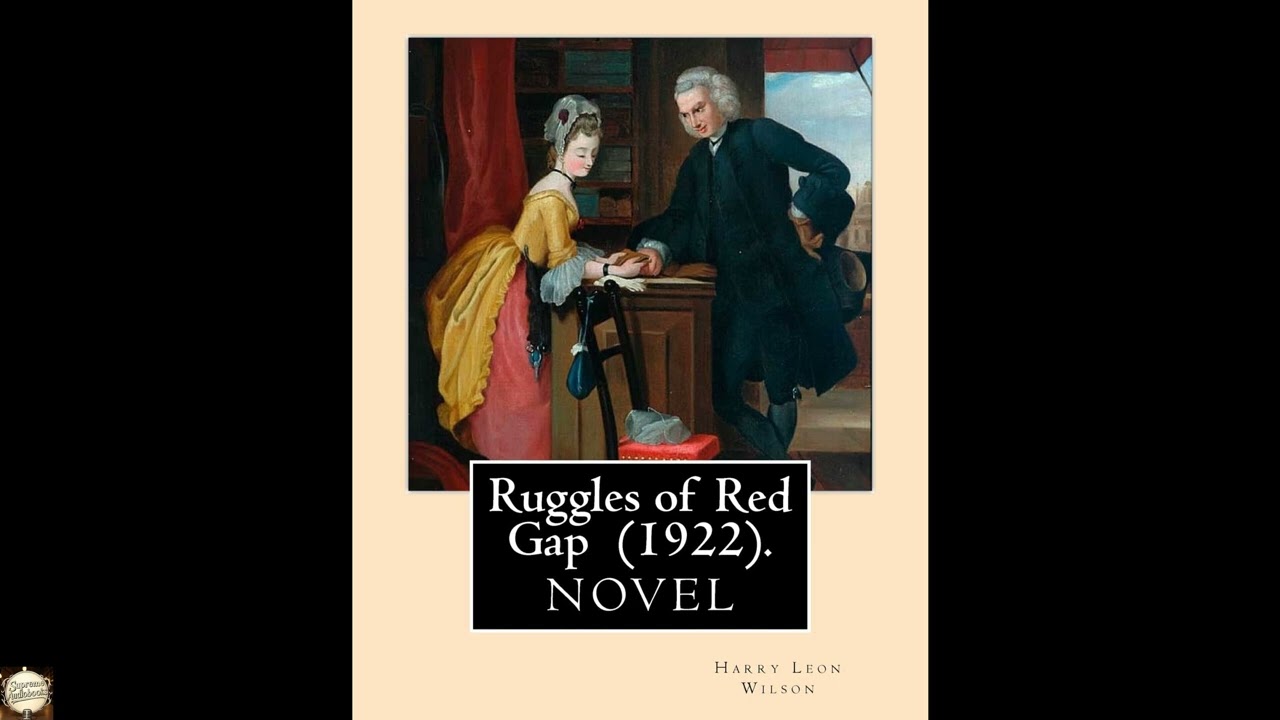
Ruggles of Red Gap (1922). By: Harry Leon Wilson: Harry Leon Wilson
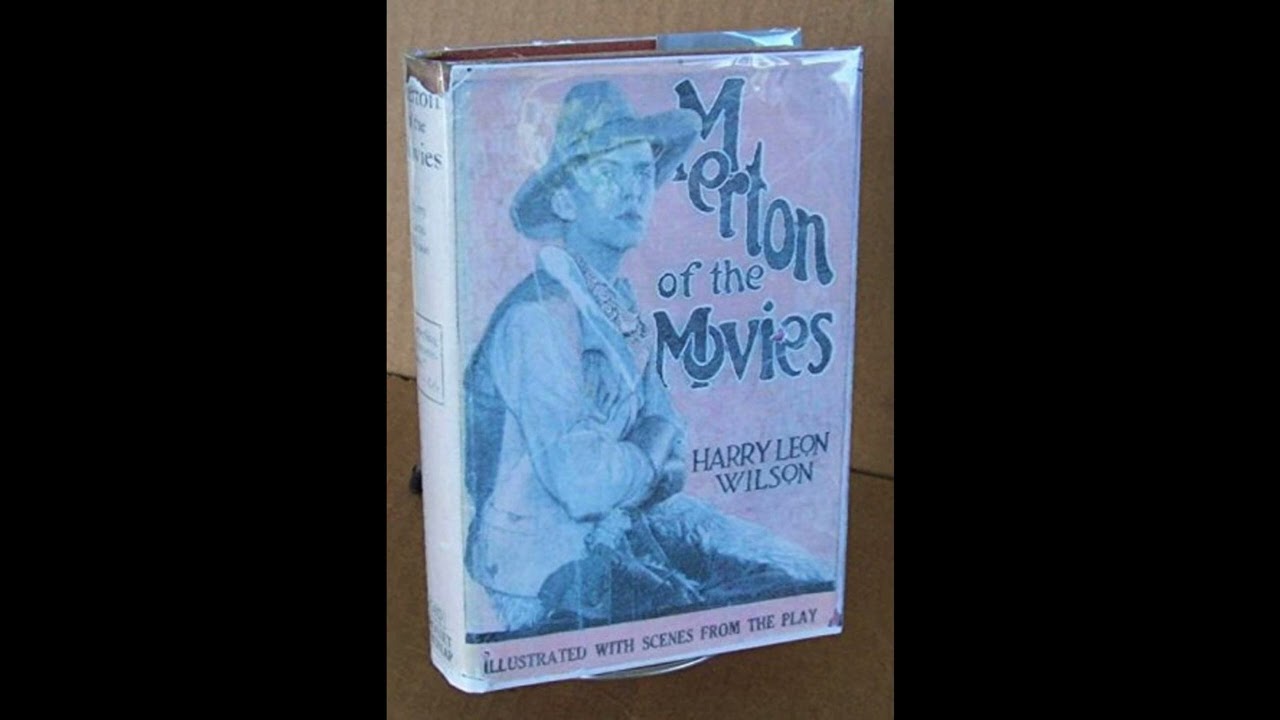
What happens when the rigid dictates of European class structure collide head-on with the boisterous, freewheeling spirit of the American West? Harry Leon Wilson's "Ruggles of Red Gap," a comedic gem from 1922, offers a hilarious and surprisingly insightful answer. This delightful novel introduces us to Marmaduke Ruggles, a perfectly prim and proper English valet, whose carefully ordered world is upended when he finds himself transplanted across the Atlantic. Far more than a simple farce, Wilson's story uses Ruggles's bewildered perspective to gently poke fun at American pretensions and British snobbery alike, revealing the universal human desire for acceptance and a place to call one's own. It's a testament to the power of reinvention, rendered with a wit and warmth that remains just as fresh and relevant today. Our story begins in the cultured salons of Paris, where the impecunious but aristocratic Earl of Brinstead loses his impeccable "gentleman's gentleman," Ruggles, in a high-stakes poker game. The unlikely winner is Colonel Floud, a nouveau riche American seeking a dose of European polish for his eager, socially ambitious wife, Effie. Before Ruggles can quite comprehend the affront to his dignified existence, he is whisked away from the comfortable familiarity of his English life, first class on an ocean liner, then on a transcontinental train, all the way to Red Gap, Washington. This remote, unassuming town is a world away from Mayfair, a place where titles mean little and social hierarchies are fluid, if they exist at all. In Red Gap, Ruggles is expected to be more than just a valet; he is meant to be a symbol of European sophistication, a living curio to elevate the Flouds' standing. Mrs. Floud, particularly, envisions Ruggles as a sort of personal cultural ambassador, mistaking his quiet deference for profound wisdom and his impeccable manners for aristocratic breeding. The humor springs from Ruggles's horrified attempts to maintain his professional distance and dignity in a place where everyone is his equal, and where "sir" is rarely heard. He grapples with the concept of a "front porch" versus a "verandah," with being addressed by his first name, and with the bewildering expectation that he should sometimes join in the family meal. As Ruggles navigates this bewildering new world of saloons, cowboys, and relentless democratic informality, he slowly, almost imperceptibly, begins to change, finding himself drawn into the very community he initially sought to observe with detached British disdain. Harry Leon Wilson, born in Oregon, Illinois, in 1867, became one of America's most celebrated humorists of the early 20th century. After an early career that saw him working as a journalist and even a railroad clerk, Wilson gravitated towards writing, finding his niche in satirical novels and short stories. His talent for sharp observation and comedic timing was honed during his tenure as editor of Puck magazine from 1896 to 1902, a highly influential satirical publication known for its political cartoons and humorous prose. This experience undoubtedly deepened his understanding of social commentary and the nuances of American character, which he would skillfully weave into his fiction. Wilson's literary output was prodigious, often characterized by its lighthearted wit and a keen eye for human foibles. Among his other notable works are "Bunker Bean" (1912), a story about a timid clerk who finds confidence through a belief in reincarnation, and "Merton of the Movies" (1922), a comedic yet poignant look at Hollywood's early days through the eyes of an earnest aspiring actor. He was a master at crafting relatable characters who, despite their eccentricities, often embodied universal aspirations and anxieties. Wilson's works are often associated with the tradition of American humorists who bridged the gap between the Gilded Age and the Jazz Age, providing a gentle critique of burgeoning American identity and the evolving social landscape. He passed away in Carmel, California, in 1939, leaving behind a legacy of laughter and a shrewd depiction of American life. "Ruggles of Red Gap" deftly enacts several enduring themes, foremost among them the collision of class and identity. Ruggles's entire sense of self is initially tied to his station as a valet, a precise role within a rigid social hierarchy. In Red Gap, this carefully constructed identity crumbles as the locals treat him as an ordinary man, even an intriguing novelty, rather than a servant. Consider his initial distress when Colonel Floud, in a moment of genial American informality, claps him on the back and calls him "old boy," a gesture utterly foreign and unsettling to Ruggles's understanding of proper decorum between master and servant. This highlights the inherent friction between European fixed class systems and the American ideal of egalitarianism, where self-definition is often achieved through individual action rather than inherited status. The novel also brilliantly satirizes the absurdity of social pretension, particularly through the character of Mrs. Effie Floud. Her desperate attempts to import European culture and elevate her social standing in Red Gap, often misguided and clumsy, are a constant source of humor. For instance, her insistence on parading Ruggles around as if he were a visiting dignitary, or her misinterpretations of his polite, evasive answers as profound declarations, underscore the comical lengths people go to impress others. Yet, beneath the humor, Wilson also touches upon the theme of self-discovery and the transformative power of a new environment. Ruggles, forced to shed his old identity, gradually begins to forge a new one, learning to think for himself and even to appreciate the genuine, if unrefined, warmth of his new home. Published in 1922, "Ruggles of Red Gap" emerged during a fascinating period in American history, often dubbed the Jazz Age or the Roaring Twenties. The nation was still navigating its post-World War I identity, experiencing unprecedented economic growth, rapid urbanization, and significant social changes. Traditional values were giving way to new freedoms, particularly for women, and a distinctive American culture was asserting itself on the global stage. It was a time of both confidence and a degree of self-consciousness, where Americans were eager to define themselves apart from European traditions yet still fascinated by them. Wilson's novel perfectly captures this cultural moment, juxtaposing an Old World symbol (Ruggles) against a rapidly modernizing, distinctly American landscape. The setting of Red Gap, a town still connected to the frontier myth of self-reliance and reinvention, provides the perfect backdrop for this cultural clash, underscoring the idea that in America, one could shed the constraints of the past and build a new future, regardless of one's origins. Listening to "Ruggles of Red Gap" as an audiobook offers a particular pleasure. The subtle nuances of Ruggles's British accent, his careful pronouncements contrasting with the earthy, direct dialogue of the Red Gap residents, truly come alive through skilled narration. The comedic timing, so essential to Wilson's humor, benefits immensely from a narrator who can perfectly calibrate the pauses, the inflections, and the underlying exasperation or bewilderment in the characters' voices. You can almost hear Ruggles's inner monologue of horror as he confronts another American eccentricity, or Mrs. Floud's breathless social aspirations. The pacing of the story, a gradual unfolding of cultural misunderstandings and Ruggles's slow transformation, is perfectly suited for audio, allowing the listener to settle into the narrative and fully appreciate the humorous details and the evolving atmosphere of Red Gap. It's a delightful experience that highlights the brilliant characterizations and witty exchanges that make this novel a enduring favorite.
Enjoyed Ruggles of Red Gap (1922). By: Harry Leon Wilson: Harry Leon Wilson? A few ways to support us
Audible & Amazon links are affiliate; we may earn a small commission at no extra cost.
About this production
Human narration by a volunteer reader from LibriVox.org, the public-domain audiobook project. LibriVox volunteers record literary works whose copyright has expired in the United States, releasing the resulting recordings into the public domain.
Ruggles of Red Gap (1922). By: Harry Leon Wilson: Harry Leon Wilson by Harry Leon Wilson. The underlying text is in the U.S. public domain. We do not republish any modern copyrighted edition, translation, or commentary.
The 4K cinematic visuals accompanying this audiobook are generated by an AI image model from prompts derived from the source text. No copyrighted photos, paintings, or stock footage are used. AI generation is disclosed on every video on our YouTube channel as required by YouTube's altered/synthetic content policy.
English subtitles are transcribed from the LibriVox recording with OpenAI Whisper. Translations into the 11 other supported languages are produced by Meta's NLLB-200 neural translation model. No human translator's copyrighted translation is used.
Questions about sourcing or rights? See our DMCA & Sourcing policy or contact us.
Enjoyed this audiobook?
If you'd like to own a copy of Ruggles of Red Gap (1922). By: Harry Leon Wilson: Harry Leon Wilson or hear a professionally produced edition, the links below help support free audiobook production at no extra cost to you.
As an Amazon Associate we earn from qualifying purchases. Audible / print links are affiliate.