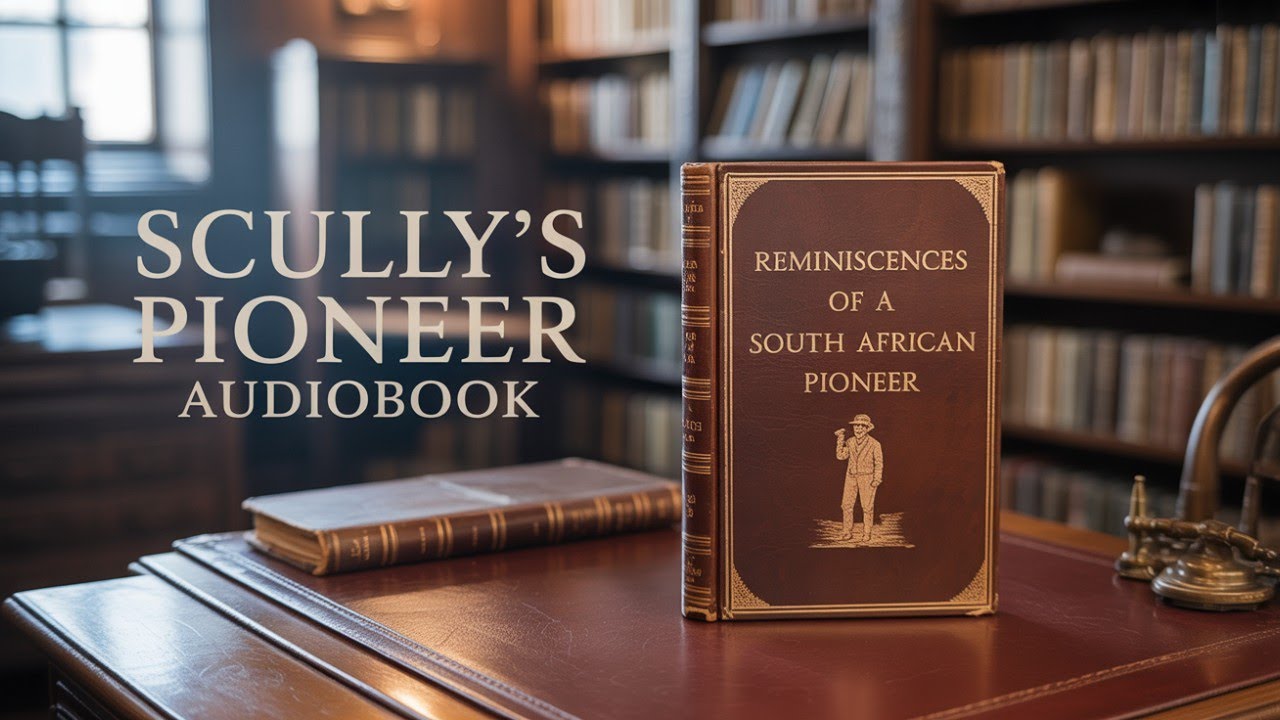
Reminiscences of a South African Pioneer
Step into a world now largely vanished, a landscape of stark beauty and challenging frontiers, through the eyes of a man who witnessed its transformation firsthand. W. C. Scully's Reminiscences of a South African Pioneer offers a remarkable window into late nineteenth and early twentieth-century South Africa, a period of immense change, conflict, and the forging of new identities. This is not merely a collection of personal anecdotes; it is a vital historical document, a keen observation of human nature under pressure, and a testament to the enduring spirit of both settlers and indigenous peoples struggling to find their place in a rapidly evolving land. Listeners today will find themselves drawn into the immediacy of Scully's experiences, gaining an understanding of the complex forces that shaped a nation and the enduring resonance of questions surrounding culture, environment, and justice that remain profoundly relevant. Scully's narrative transports the listener to the wild, untamed expanses of the Cape Colony, where he arrived as a young man in the latter half of the nineteenth century. The story unfolds as a series of encounters and observations from his varied postings as a magistrate and civil servant in some of the most isolated and demanding districts. He takes us from the desolate grandeur of the Karoo, with its parched earth and sudden, violent storms, to the more verdant coastal regions, each presenting its own unique set of challenges and wonders. The central "character" is arguably the land itself—vast, indifferent, yet capable of breathtaking beauty—and the diverse peoples who inhabit it: the resilient San, the pastoral Xhosa, the Dutch-speaking Boers, and the various British settlers, all navigating a landscape where resources were scarce and understanding often scarcer. The arc of Scully's account is less about a single dramatic progression and more about a life lived in observation and quiet administration, slowly witnessing the imposition of colonial structures onto traditional ways of life. He describes the arduous conditions of travel by ox-wagon, the delicate art of mediating disputes between vastly different cultural groups, and the constant struggle against the elements and isolation. His duties often placed him at the heart of daily life, offering unique insights into local customs, superstitions, and the very human drama of survival and adaptation. We encounter figures from all strata of society, from powerful chiefs and stoic herdsmen to desperate criminals and resourceful pioneers, each interaction painting a vivid picture of a society in flux, teetering between ancient traditions and the inexorable march of a new order. William Charles Scully (1855-1943) was a truly pivotal figure in early South African English literature. Born in Dublin, Ireland, he emigrated to the Cape Colony in 1874, at the age of nineteen. This move marked the beginning of a long and distinguished career in the colonial administration, primarily as a magistrate in remote districts such as Namaqualand, Willowmore, and the Transkei. His firsthand experience living and working among various indigenous communities and European settlers profoundly shaped his literary output, giving his writing an authenticity and depth rare among his contemporaries. His postings often lasted for years, immersing him deeply in the local cultures and landscapes he would later chronicle. Beyond his administrative duties, Scully was a prolific writer, recognized both as a poet and a fiction author. His collections of short stories, such as Kafir Stories (1895) and The White Hecatomb (1897), offered readers an unflinching look at the realities of frontier life and the complex relationships between different racial groups, often with a sympathetic eye towards the indigenous perspective, a rarity for his time. He also penned novels like A Vendetta of the Desert (1898) and several volumes of poetry, which showcased his keen descriptive powers and deep connection to the South African environment. His place in the literary canon is that of an important chronicler of a specific historical moment, bridging the gap between adventure narrative and more nuanced social commentary within the broader tradition of colonial literature. One of the prominent themes woven through Reminiscences is the profound impact of colonialism and its attendant societal shifts. Scully details, often with a sense of melancholic observation, how European law and settlement gradually altered traditional indigenous lifeways. For instance, he recounts the changing patterns of land ownership, the slow erosion of tribal authority under new administrative systems, and the friction that arose when deeply ingrained customs clashed with foreign legal frameworks. His accounts of judicial proceedings reveal the often bewildering experience for indigenous peoples confronted with a system entirely alien to their own, illustrating the power dynamics at play. Another significant thread is the concept of adaptation and resilience in the face of daunting challenges, both personal and communal. Scully himself adapted to a solitary life in remote postings, learning local languages and customs to perform his duties effectively. He describes the ingenuity of both settlers and indigenous groups in extracting a living from a harsh environment—how communities managed water scarcity in the Karoo or how they navigated vast distances on foot. These scenes portray a fundamental human drive to survive and innovate, whether constructing rudimentary shelters or employing ancient tracking skills to navigate the wilderness, highlighting the spirit required to thrive in such an unforgiving land. The cultural and political landscape of South Africa was particularly dynamic when Scully’s Reminiscences was published in 1913. This era followed closely on the heels of the devastating Anglo-Boer Wars (1899-1902), a conflict that fundamentally reshaped the region's political structure and led to the formation of the Union of South Africa in 1910. The Union represented a consolidation of British colonial power and the reconciliation of the two dominant white groups, but it also ushered in a period where racial segregation laws began to be more formally codified, laying groundwork for future discriminatory policies. Scully’s writing emerged from a time when the "frontier" was rapidly closing, transforming from wild, open country to a more structured, administered territory. His book thus captures the twilight of an older way of life, a look back at the characters and events that shaped the emerging modern nation, colored by a deep awareness of what was being lost even as new forms of progress were being touted. Listening to Reminiscences of a South African Pioneer as an audiobook offers a unique connection to Scully's observations. The narrator's voice can lend gravitas to the historical accounts and bring out the subtle nuances of Scully's prose. Imagine hearing the descriptions of endless plains, the tension of a mediated dispute, or the quiet contemplation of a man observing the vastness around him, all brought to life through skilled vocal performance. The several hours of listening time provide ample opportunity to truly settle into the rhythm of Scully's reflective narrative, allowing the listener to absorb the detailed descriptions of landscape, the intricacies of social interactions, and the profound sense of place that permeates every chapter. Listen for the measured pacing, which mirrors the slow, deliberate unfolding of events in a pre-modern world, and the way the voice conveys both the author’s authority as a civil servant and his underlying compassion for the people and land he served.
Enjoyed Reminiscences of a South African Pioneer? A few ways to support us
Audible & Amazon links are affiliate; we may earn a small commission at no extra cost.
About this production
Human narration by a volunteer reader from LibriVox.org, the public-domain audiobook project. LibriVox volunteers record literary works whose copyright has expired in the United States, releasing the resulting recordings into the public domain.
Reminiscences of a South African Pioneer by W. C. (William Charles) Scully. The underlying text is in the U.S. public domain. We do not republish any modern copyrighted edition, translation, or commentary.
The 4K cinematic visuals accompanying this audiobook are generated by an AI image model from prompts derived from the source text. No copyrighted photos, paintings, or stock footage are used. AI generation is disclosed on every video on our YouTube channel as required by YouTube's altered/synthetic content policy.
English subtitles are transcribed from the LibriVox recording with OpenAI Whisper. Translations into the 11 other supported languages are produced by Meta's NLLB-200 neural translation model. No human translator's copyrighted translation is used.
Questions about sourcing or rights? See our DMCA & Sourcing policy or contact us.
Enjoyed this audiobook?
If you'd like to own a copy of Reminiscences of a South African Pioneer or hear a professionally produced edition, the links below help support free audiobook production at no extra cost to you.
As an Amazon Associate we earn from qualifying purchases. Audible / print links are affiliate.