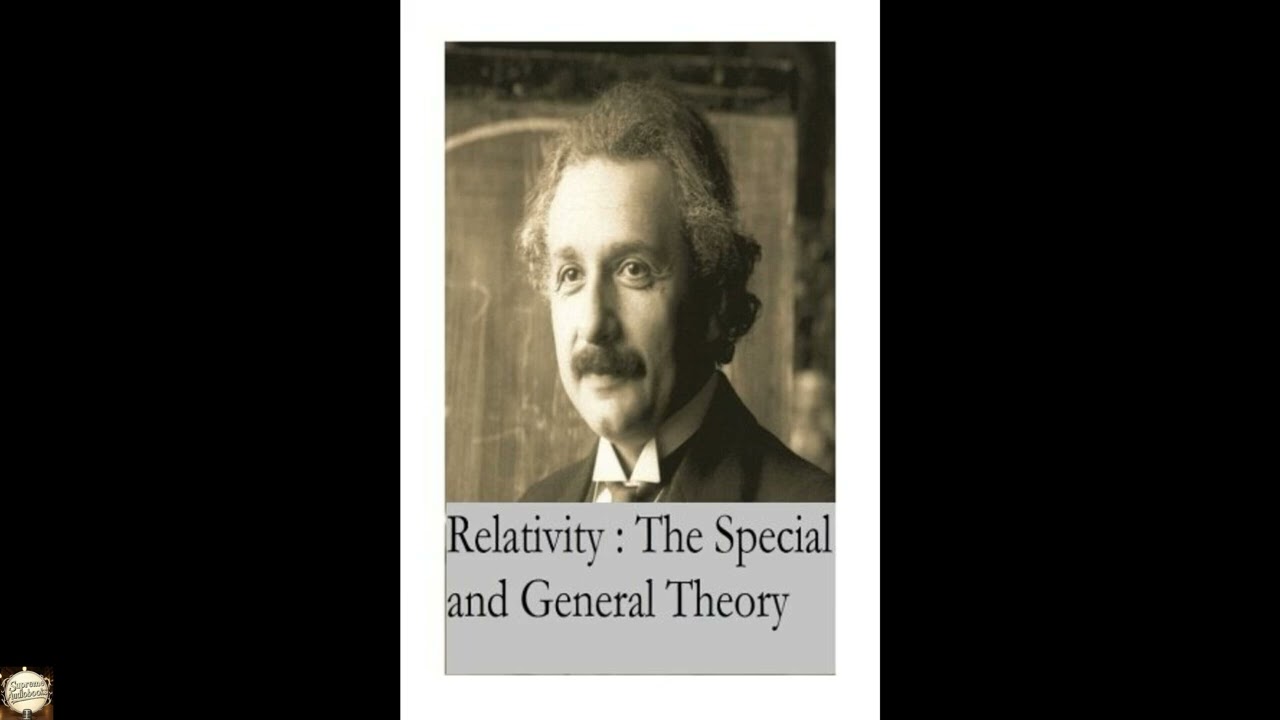
Relativity : the Special and General Theory
Imagine a world where the fabric of reality itself shifts beneath your feet, where time can stretch and shrink, and space itself curves and warps. This is not the stuff of science fiction, but the profound, mind-bending reality laid bare by Albert Einstein in his foundational text, "Relativity: The Special and General Theory." This isn't merely a book of scientific principles; it's a meticulously crafted argument, a guided expedition into the very heart of the cosmos, presented by one of history's greatest minds. For anyone who has ever gazed at the stars and wondered about their place in the universe, or for those who simply seek a clearer understanding of the invisible forces that govern everything from the smallest atom to the grandest galaxy, this book offers an unparalleled opportunity to grasp the ideas that fundamentally reshaped human thought, and which continue to underpin our technological world today. The story Einstein tells within these pages begins by inviting us to consider the seemingly simple act of observation. He sets the stage in the early years of the twentieth century, an era when the classical mechanics of Isaac Newton had long reigned supreme, yet new experiments—particularly concerning the behavior of light—were casting long shadows of doubt. Our main 'character,' if you will, is the curious observer, positioned in various thought experiments: a person on a moving train, another standing still on the platform, each witnessing the same events. The central conflict arises from the surprising discovery that the speed of light remains constant for all observers, regardless of their motion. This unwavering constant clashes head-on with classical notions of relative velocity, presenting a profound dilemma that Einstein brilliantly resolves. Through a series of clear, accessible examples, Einstein then develops the Special Theory of Relativity. He introduces the reader to the two fundamental postulates: the principle of relativity (the laws of physics are the same for all non-accelerating observers) and the constancy of the speed of light. From these deceptively simple starting points, he meticulously builds a framework that demonstrates startling consequences. We witness how time can dilate, slowing down for objects in motion relative to a stationary observer, and how lengths can contract. He shows us how mass and energy are not separate entities but interconvertible forms of the same fundamental stuff, culminating in the world's most famous equation, E=mc^2. The narrative then expands its scope, acknowledging the limitations of Special Relativity, which only applies to uniform motion, and prepares the reader for an even grander vision. The story's arc takes a monumental turn with the introduction of the General Theory of Relativity. Here, the challenge shifts from understanding uniform motion to grappling with acceleration and, most profoundly, with gravity. Einstein brilliantly posits that gravity is not a force pulling objects together, as Newton had described, but rather a manifestation of the curvature of space and time itself, caused by the presence of mass and energy. He introduces the principle of equivalence, illustrating how the effects of gravity are indistinguishable from the effects of acceleration. Imagine an observer in a windowless elevator: are they feeling the pull of gravity, or are they accelerating upwards in space? The answer, according to Einstein, is fundamentally the same. This insight paves the way for a revolutionary understanding of the universe, where planets orbit the sun not because of a mysterious pull, but because the sun's immense mass warps the spacetime around it, creating a "valley" in which the planets follow the shortest possible path. Albert Einstein, born in Ulm, Germany, in 1879, was a figure whose life was as remarkable as his scientific output. His early education was marked by a rebellious spirit and a deep independent streak, culminating in his famous period as a patent clerk in Bern, Switzerland. It was during this seemingly mundane period, in his "annus mirabilis" of 1905, that he published four groundbreaking papers that fundamentally altered physics: on the photoelectric effect (which earned him the Nobel Prize in Physics in 1921), Brownian motion, and the Special Theory of Relativity, along with the mass-energy equivalence formula. His intellectual fire continued to burn brightly, leading to the full formulation of the General Theory of Relativity in 1915, which extended his revolutionary ideas to gravity. Einstein's brilliance soon took him from the patent office to prestigious academic positions in Zurich, Prague, and Berlin, where he became a prominent public figure. With the rise of Nazism in Germany, being of Jewish heritage, he made the momentous decision to emigrate to the United States in 1933, taking up a position at the Institute for Advanced Study in Princeton, New Jersey, where he remained until his passing in 1955. Beyond his scientific achievements, Einstein was a vocal proponent of pacifism, civil rights, and nuclear disarmament, using his immense influence to advocate for a more just and peaceful world. He stands as a towering figure, not only in the annals of science but in the broader human story, symbolizing ingenuity, intellectual courage, and a profound commitment to humanity. The book profoundly enacts several intellectual themes. One central idea is the relativity of perception, demonstrating that what one observer measures as time or distance depends fundamentally on their state of motion relative to another. For example, Einstein illustrates with a thought experiment involving a light clock on a train: an observer on the train sees the light beam traveling straight up and down, but an observer on the platform sees the light traveling a diagonal path, covering a greater distance in the same perceived time. To reconcile the constant speed of light for both, the platform observer must conclude that the train's clock is running slower – a concrete demonstration of time dilation. This highlights how our intuitive, everyday understanding of a universal, absolute time and space must yield to a more nuanced, observer-dependent reality. Another powerful theme is the pursuit of elegant simplicity in the laws of nature. Einstein was driven by a belief that the universe's deepest truths would be expressed in the most beautiful and parsimonious forms. His development of the General Theory, where gravity is reframed not as a mysterious force but as the geometry of spacetime itself, perfectly illustrates this. The complex phenomena of planetary orbits, the bending of light around massive objects, and even the expansion of the universe are all elegantly explained by the single, coherent idea of mass and energy curving the spacetime in their vicinity. This move from disparate forces to a unified geometric description is a testament to the power of seeking underlying simplicity amidst apparent complexity. This work emerged during a period of immense intellectual ferment and upheaval in the early twentieth century. Newtonian mechanics, though immensely successful, faced mounting challenges from new experimental findings that it could not adequately explain, particularly the behavior of electromagnetic waves and the puzzling Michelson-Morley experiment. Scientists were grasping for a new paradigm to unify these observations. Culturally, the era was defined by rapid industrialization, burgeoning global communication, and a growing sense of the world shrinking, even as political tensions simmered and would soon erupt into World War I. This intellectual quest for new understanding mirrored a broader modernist movement in art and literature, which also sought to break from established conventions and redefine reality, moving beyond linear narratives and fixed perspectives. Einstein's work, published in 1916 amidst this global chaos, offered a new bedrock of understanding for a world questioning its foundations. Listening to "Relativity: The Special and General Theory" as an audiobook offers a singular opportunity to engage with these profound ideas. The spoken word allows for a natural pacing, giving the listener time to absorb complex concepts without the visual distraction of a page. A clear, measured narration can guide the listener through Einstein's logical progression, allowing the thought experiments to unfold vividly in the mind's eye. The length, several hours, is ideal for breaking down into digestible segments, perfect for commuters, walkers, or those who prefer to learn at their own pace. This format encourages repeated listening to reinforce understanding, transforming a challenging text into an accessible and enlightening experience that truly changes how one thinks about time, space, and the fundamental nature of existence itself.
Enjoyed Relativity : the Special and General Theory? A few ways to support us
Audible & Amazon links are affiliate; we may earn a small commission at no extra cost.
About this production
Human narration by a volunteer reader from LibriVox.org, the public-domain audiobook project. LibriVox volunteers record literary works whose copyright has expired in the United States, releasing the resulting recordings into the public domain.
Relativity : the Special and General Theory by Albert Einstein. The underlying text is in the U.S. public domain. We do not republish any modern copyrighted edition, translation, or commentary.
The 4K cinematic visuals accompanying this audiobook are generated by an AI image model from prompts derived from the source text. No copyrighted photos, paintings, or stock footage are used. AI generation is disclosed on every video on our YouTube channel as required by YouTube's altered/synthetic content policy.
English subtitles are transcribed from the LibriVox recording with OpenAI Whisper. Translations into the 11 other supported languages are produced by Meta's NLLB-200 neural translation model. No human translator's copyrighted translation is used.
Questions about sourcing or rights? See our DMCA & Sourcing policy or contact us.
Enjoyed this audiobook?
If you'd like to own a copy of Relativity : the Special and General Theory or hear a professionally produced edition, the links below help support free audiobook production at no extra cost to you.
As an Amazon Associate we earn from qualifying purchases. Audible / print links are affiliate.