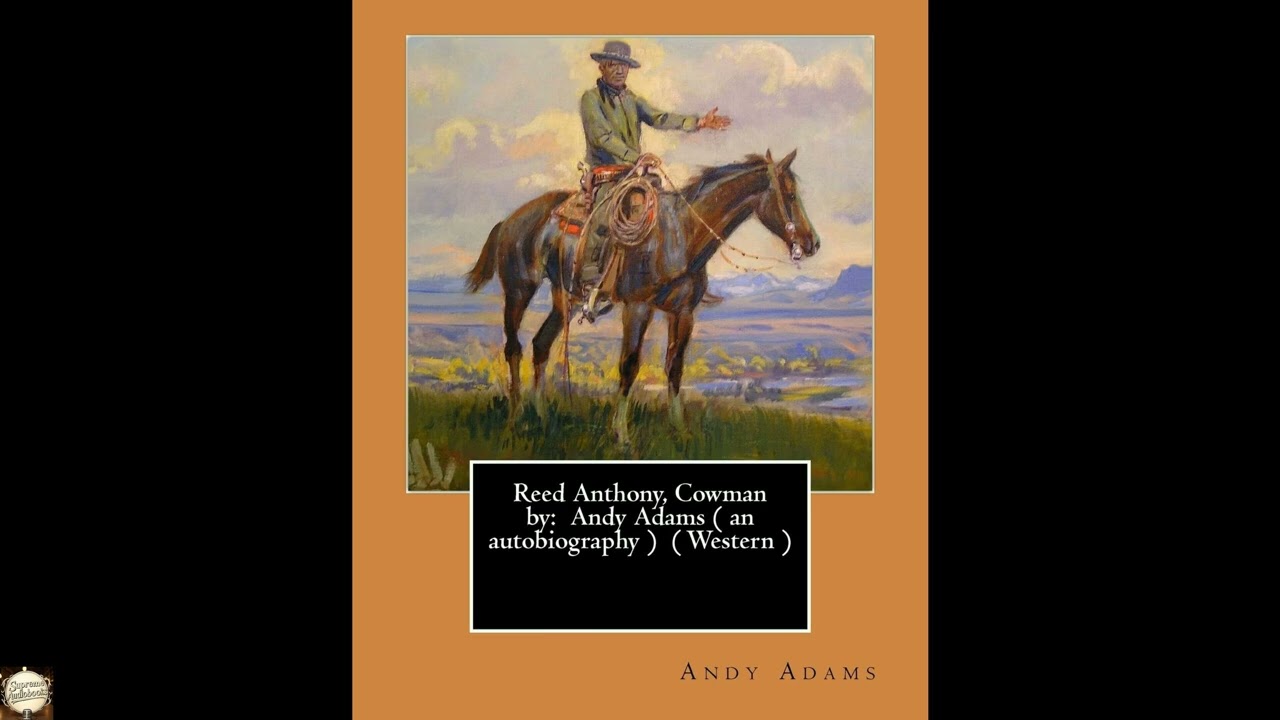
Reed Anthony, Cowman by: Andy Adams
Andy Adams's Reed Anthony, Cowman stands as a pillar of authentic Western literature, a compelling saga that pulls back the curtain on the true, arduous life of the American cowboy and the vast, untamed landscape he inhabited. Far from the romanticized gunfights and dashing heroes often depicted in popular fiction, this novel offers a meticulously observed account of one man's rise from a humble cowhand to a powerful cattle baron, grounded in the sweat, dust, and raw economic realities of the post-Civil War frontier. It is a story not just of adventure, but of perseverance, shrewd business acumen, and an enduring connection to the land—lessons that continue to resonate in discussions of American industry, personal drive, and the very shaping of a national identity. For anyone seeking to understand the real forces and characters that forged the legendary West, Reed Anthony, Cowman remains an essential and remarkably relevant narrative. The story opens in the wide-open spaces of Texas in the years following the Civil War, a time when the cattle industry was booming and the iconic long drives to railheads in Kansas were at their peak. We meet Reed Anthony as a young man, fresh to the cattle business, possessing little more than ambition, a strong back, and an eagerness to learn. Adams skillfully immerses the listener in the daily rhythms and challenges of a cowboy's existence: the arduous work of branding, the dangers of stampedes, the vigilance required against rustlers, and the sheer physical and mental endurance demanded by weeks on the trail. Reed's early experiences are a vivid lesson in the practicalities of a harsh profession, painting a picture of camaraderie and hardship under an endless sky. As the narrative progresses, Reed Anthony steadily grows in skill and reputation, moving from a mere employee to a man of increasing responsibility. His keen observations of the cattle market, his sound judgment in dealing with both animals and men, and his willingness to take calculated risks set him apart. He accumulates modest capital, makes strategic investments in land and herds, and begins to navigate the complex economic landscape of an expanding nation. The book follows Reed through various ventures and challenges, from the sprawling open range to the burgeoning towns that served as hubs for the cattle trade, all while the West itself is rapidly changing around him. His journey is a testament to the power of self-reliance and the relentless pursuit of opportunity in an era defined by grand, sweeping transformations. The author, Andy Adams, was born in Indiana in 1859, but his true education began when he moved west as a young man. He spent over a decade working as a cowhand on numerous cattle drives, traversing the legendary Chisholm Trail, the Western Trail, and the Goodnight-Loving Trail, among others. This direct, first-hand experience provided him with an unparalleled understanding of the cattle industry, the vast landscapes of the plains, and the unique culture of the cowboys who worked them. Unlike many writers of his era who romanticized the West from a distance, Adams wrote from the inside out, detailing the mundane realities and the specific techniques of ranching and trail driving with an accuracy that was, and remains, remarkable. Adams did not turn to writing until he was in his forties, driven by a desire to counter the often-sensationalized and historically inaccurate depictions of cowboy life prevalent in the popular dime novels of the late nineteenth century. His most celebrated work, The Log of a Cowboy, published in 1903, is widely considered a classic for its unflinching realism and is often used as a historical reference for the era. Reed Anthony, Cowman, published in 1907, builds upon this foundation, offering a more extensive and character-driven narrative within the same authentic framework. Adams's contribution to American literature lies in his unwavering commitment to portraying the cowboy not as a mythical figure, but as a skilled laborer, an entrepreneur, and a participant in a crucial, if often brutal, economic enterprise, securing his place as a foundational figure in realistic Western literature. One of the central themes that runs through Reed Anthony, Cowman is the profound importance of authenticity and realism. Adams meticulously details the minutiae of trail life—the specific vocabulary, the methods of handling a herd, the arduousness of a river crossing, the precise economics of buying and selling cattle. For instance, the descriptions of Reed's early days, learning to mend fences, to identify different brands, or to manage the horses in a remuda, serve to underscore the practical, unglamorous skills required to survive and prosper. Another significant theme is the American entrepreneurial spirit, as exemplified by Reed Anthony's steady ascent. His growth from a hired hand to a landowning, independent cattleman illustrates the potential for upward mobility through hard work, smart decision-making, and an astute understanding of market forces, transforming risk into reward on the expanding frontier. Furthermore, the book powerfully enacts the theme of man versus nature, presenting the stark realities of surviving in a challenging, often unforgiving environment. The narrative frequently pits Reed and his cohorts against severe weather—blizzards that threaten to scatter herds, droughts that dry up watering holes, or sudden storms that can turn a docile herd into a stampede. These episodes are not merely plot devices; they are central to understanding the constant struggle against the elements that defined life on the open range. We also witness the closing of an era, as the open range slowly gives way to fences, railroads, and settlements, marking the end of the traditional long cattle drives. Reed Anthony's adaptation to these changes, investing in land and shifting his business model, reflects the larger transformation of the American West from a wild frontier to a more settled and organized agricultural landscape. When Reed Anthony, Cowman was published in 1907, America was experiencing a profound nostalgia for its recently vanished frontier. The actual cattle drives had largely concluded, replaced by railroads and fenced ranches, yet the myth of the cowboy was flourishing in popular culture. This was an era when Owen Wister's The Virginian (1902) had already cemented the romanticized cowboy in the public imagination. Against this backdrop, Adams's work offered a stark counterpoint, providing a much-needed dose of historical accuracy and gritty realism. Politically and culturally, the United States was industrializing rapidly, moving from an agrarian society to an urban one, and many Americans looked back to the West as a symbol of individualism and a simpler, more "authentic" past. Adams's books catered to this interest by offering a truly authentic glimpse, contrasting sharply with the often-exaggerated narratives of dime novels and Buffalo Bill's Wild West shows. His writing emerged from a desire to correct the record and preserve the memory of a unique way of life for future generations. Listening to Reed Anthony, Cowman as an audiobook transforms the experience of this foundational text. A skilled narrator can imbue Reed's laconic observations and the direct dialogue of the cowboys with an authentic regional inflection, making the characters feel incredibly present. The run length of several hours makes it an ideal companion for long road trips, commutes, or extended periods of focused listening, allowing the listener to truly settle into the deliberate pacing that mirrors the slow, steady progress of a cattle drive. One can almost hear the creak of leather, the lowing of cattle, and the vast silence of the prairie through the performance. The atmosphere created by voice and sound can amplify Adams's vivid descriptions, bringing the dust, the campfires, the relentless sun, and the challenging river crossings to life in a way that truly honors the realism and deep historical detail of Adams's vision.
Enjoyed Reed Anthony, Cowman by: Andy Adams? A few ways to support us
Audible & Amazon links are affiliate; we may earn a small commission at no extra cost.
About this production
Human narration by a volunteer reader from LibriVox.org, the public-domain audiobook project. LibriVox volunteers record literary works whose copyright has expired in the United States, releasing the resulting recordings into the public domain.
Reed Anthony, Cowman by: Andy Adams by Andy Adams. The underlying text is in the U.S. public domain. We do not republish any modern copyrighted edition, translation, or commentary.
The 4K cinematic visuals accompanying this audiobook are generated by an AI image model from prompts derived from the source text. No copyrighted photos, paintings, or stock footage are used. AI generation is disclosed on every video on our YouTube channel as required by YouTube's altered/synthetic content policy.
English subtitles are transcribed from the LibriVox recording with OpenAI Whisper. Translations into the 11 other supported languages are produced by Meta's NLLB-200 neural translation model. No human translator's copyrighted translation is used.
Questions about sourcing or rights? See our DMCA & Sourcing policy or contact us.
Enjoyed this audiobook?
If you'd like to own a copy of Reed Anthony, Cowman by: Andy Adams or hear a professionally produced edition, the links below help support free audiobook production at no extra cost to you.
As an Amazon Associate we earn from qualifying purchases. Audible / print links are affiliate.