Cowper
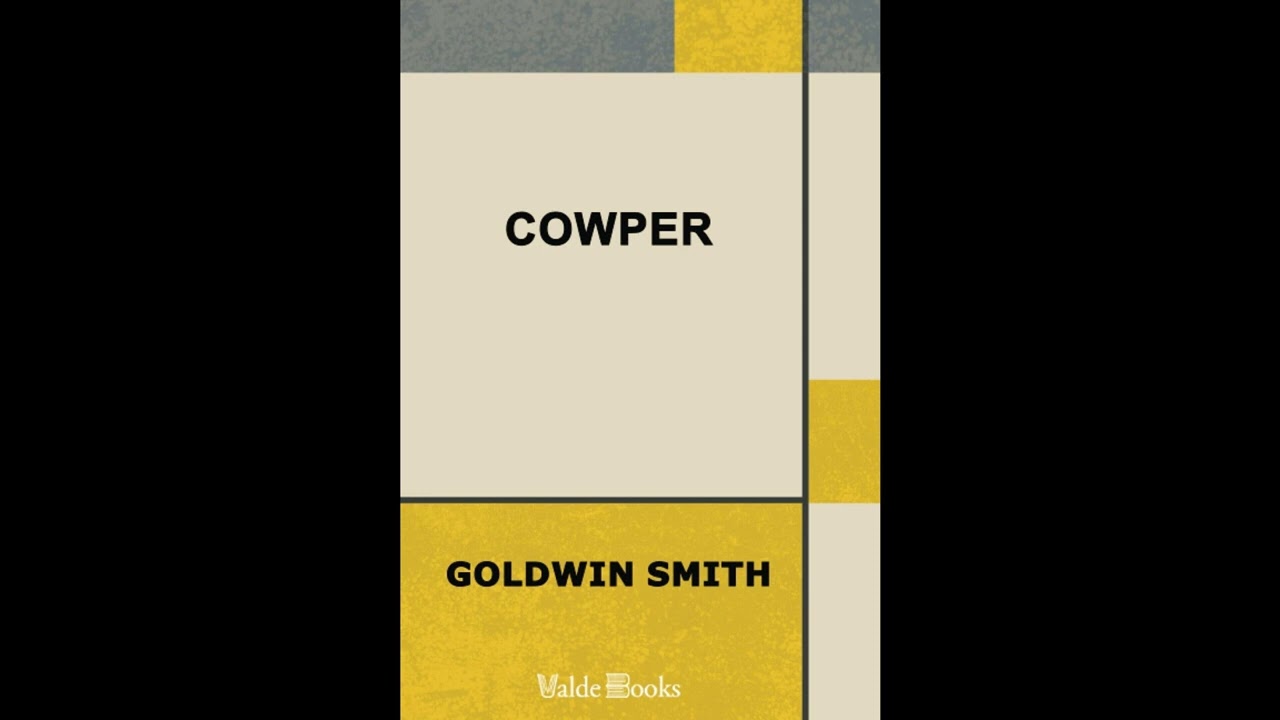
Within the pages of Goldwin Smith's "Cowper," listeners encounter a discerning portrait of William Cowper, a figure whose verses captured the delicate balance between domestic tranquility and profound inner turmoil in eighteenth-century England. This is not merely a chronicle of events, but an insightful analysis, a sympathetic yet clear-eyed examination of a poet whose lyrical talent blossomed despite—and perhaps because of—his lifelong struggle with melancholia and spiritual despair. Smith invites us to understand Cowper not just as a literary antecedent to Romanticism, but as a deeply human soul whose sensitivity and suffering resonate with universal truths about the artistic temperament and the fragility of the human spirit. For anyone seeking to understand the wellsprings of creativity amidst personal adversity, or those who appreciate meticulous literary biography, Smith's study offers both illumination and profound empathy, making Cowper's quiet genius and tumultuous inner world feel remarkably close to us today. The story Goldwin Smith unspools is the life of William Cowper, a gentle soul born into privilege who nevertheless faced a childhood marked by loss and a sensitive disposition ill-suited to the demands of public life. From his early days at Westminster School, where he suffered from bullying, to his later attempts at a legal career, Cowper exhibited a debilitating shyness and an increasing propensity for fits of despondency. The narrative traces his eventual mental breakdown, leading to confinement in a private asylum, a harrowing period from which he emerged with a newfound evangelical piety. This conversion, however, did not banish his shadows, but rather reshaped them, introducing a profound spiritual anxiety that often plunged him into conviction of his own damnation. Smith carefully details Cowper's retreat from London society to the quiet village of Olney in Buckinghamshire, a move that proved pivotal for his personal stability and poetic output. Here, under the devoted care of Mary Unwin and in the companionship of the evangelical curate John Newton—co-author of the famous "Olney Hymns"—Cowper found a semblance of peace and the encouragement to write. His days were filled with gardening, writing letters, and observing the simple beauties of rural life, which would become the material for some of his most cherished works. Smith’s account follows Cowper through periods of intense creativity, producing poems like "The Task" and translating Homer, interspersed with devastating relapses into mental illness, each one a stark reminder of the ever-present internal battle that defined his existence. Goldwin Smith, the author of this thoughtful examination, was himself a figure of considerable intellectual stature in the late nineteenth and early twentieth centuries. Born in Reading, England, in 1823, he received his education at Eton and Magdalen College, Oxford, where he distinguished himself as a classical scholar. He became Regius Professor of Modern History at Oxford, a position he held with great distinction, influencing a generation of students with his incisive intellect and liberal political views. A staunch advocate for social reform and a critic of imperialism, Smith moved to the United States in 1868 to join the faculty of Cornell University as its first Professor of English and Constitutional History, helping to shape the nascent institution. Later, in 1871, he settled permanently in Toronto, Canada, becoming a prominent public intellectual and a prolific writer on history, politics, and literature. His published works were extensive, including "Lectures on the Study of History," "The Political History of the United States," and numerous essays and commentaries that reflected his deep commitment to rational inquiry and ethical governance. Smith’s writing on literary figures, like this study of Cowper, often combined rigorous historical research with a keen psychological understanding, offering a perspective rooted in both Victorian moral earnestness and burgeoning intellectual curiosity about the human condition. His place in the intellectual canon is that of a significant bridge-figure, an Oxbridge scholar who brought his formidable learning to the New World and continued to influence public discourse through his clear prose and unyielding principles until his death in 1910. Smith’s "Cowper" enacts several important themes through its biographical lens, most notably the complex interplay between mental affliction and artistic genius. He meticulously illustrates how Cowper’s deep melancholy, far from stifling his creative impulse, instead imbued his poetry with a unique poignancy and a profound understanding of solitude and sorrow. For instance, Smith points to the way Cowper’s isolated life in Olney, often dictated by his fragile mental state, led him to observe nature and domestic life with an extraordinary intensity, resulting in the detailed and emotionally resonant descriptions found in "The Task"—poems that elevate the commonplace to the profound, precisely because of the poet’s internal landscape. Another compelling theme is the sustaining power of friendship and domesticity in the face of psychological vulnerability. Smith emphasizes the crucial role played by figures like Mary Unwin, whose steadfast companionship and practical care provided the stability Cowper desperately needed to function and to write. The biography shows how these deep, platonic relationships were not merely comforting, but absolutely essential for Cowper’s survival and artistic output, serving as anchors against the terrifying currents of his internal world. Smith uses Cowper's extensive letter writing to friends as a key to understanding both his mind and the way these bonds provided solace and intellectual stimulation, acting as a crucial lifeline. This critical biography emerged from a fascinating confluence of historical currents. William Cowper’s life (1731-1800) unfolded during an era of significant transition in England—the tail end of the Enlightenment, the rise of the Evangelical Revival, and the dawn of Romanticism. His poetry, with its focus on nature, domestic life, and individual emotion, marked a clear departure from the neoclassical formalism that preceded him. Goldwin Smith, writing in the late nineteenth century, revisited Cowper’s story at a time when Victorian society was grappling with new understandings of psychology and mental health, alongside a reassessment of earlier literary periods. Smith’s work, therefore, serves as both an illuminating window into Cowper’s eighteenth-century world and a reflection of the intellectual concerns of the late Victorian era, highlighting the enduring relevance of Cowper’s struggles and his lyrical legacy. Listening to Goldwin Smith’s "Cowper" as an audiobook offers a singular opportunity to absorb this nuanced literary biography at a pace that encourages reflection. The sustained run length allows for a gradual immersion into Cowper’s life and Smith’s scholarly interpretations. A skilled narrator brings Smith’s articulate prose to life, carefully modulating voice and pacing to convey both the academic rigor of the historian and the quiet pathos of the poet’s story. Listeners can attend to Smith's carefully constructed arguments, appreciating the subtle shifts in tone as he moves between biographical detail and critical analysis. The spoken word allows the atmosphere of both Cowper’s secluded eighteenth-century existence and Smith’s contemplative Victorian scholarship to settle, creating a rich, contemplative experience perfectly suited for those who appreciate thoughtful literary and historical inquiry.
Enjoyed Cowper? A few ways to support us
Audible & Amazon links are affiliate; we may earn a small commission at no extra cost.
About this production
Human narration by a volunteer reader from LibriVox.org, the public-domain audiobook project. LibriVox volunteers record literary works whose copyright has expired in the United States, releasing the resulting recordings into the public domain.
Cowper by Goldwin Smith. The underlying text is in the U.S. public domain. We do not republish any modern copyrighted edition, translation, or commentary.
The 4K cinematic visuals accompanying this audiobook are generated by an AI image model from prompts derived from the source text. No copyrighted photos, paintings, or stock footage are used. AI generation is disclosed on every video on our YouTube channel as required by YouTube's altered/synthetic content policy.
English subtitles are transcribed from the LibriVox recording with OpenAI Whisper. Translations into the 11 other supported languages are produced by Meta's NLLB-200 neural translation model. No human translator's copyrighted translation is used.
Questions about sourcing or rights? See our DMCA & Sourcing policy or contact us.
Enjoyed this audiobook?
If you'd like to own a copy of Cowper or hear a professionally produced edition, the links below help support free audiobook production at no extra cost to you.
As an Amazon Associate we earn from qualifying purchases. Audible / print links are affiliate.