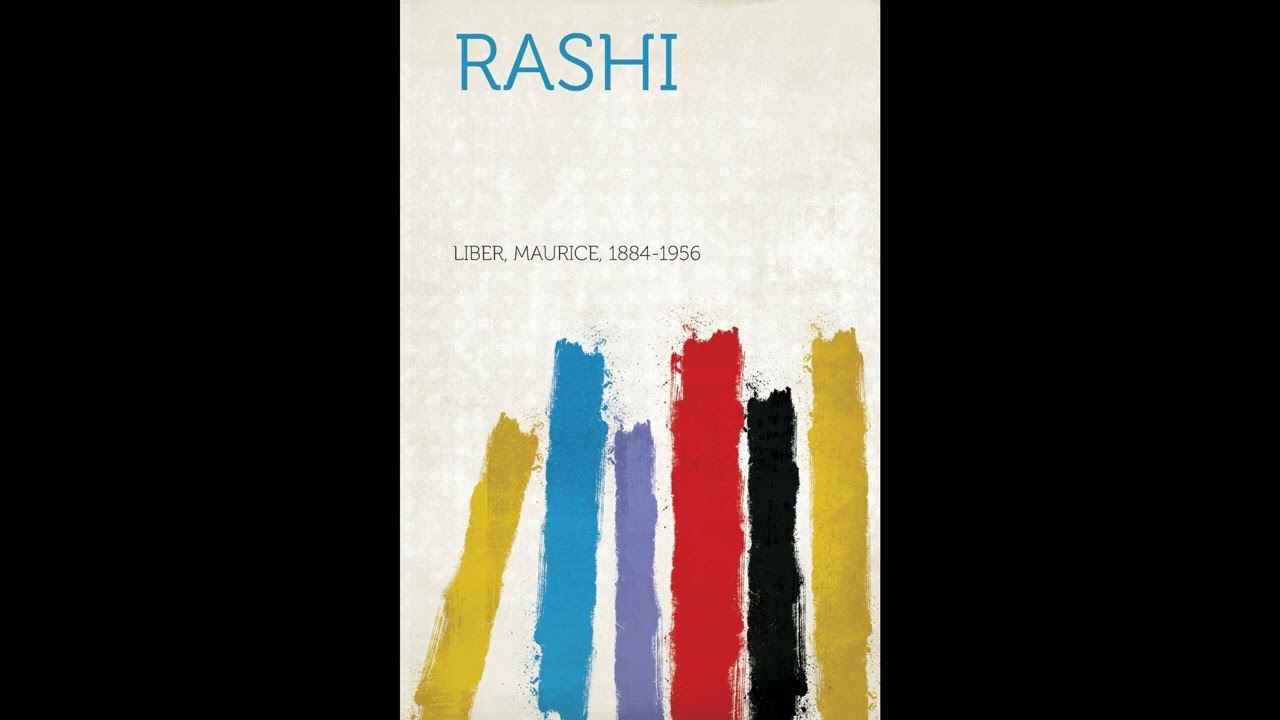
Rashi
Dive into the intellectual currents that shaped centuries of thought with "Rashi" by Maurice Liber, an indispensable biographical account of one of the most profoundly influential figures in Jewish history. This isn't merely a recounting of facts; it is an invitation to understand the enduring power of scholarship, the quest for clarity in sacred texts, and the indelible mark one individual can leave on civilization. For anyone seeking to grasp the foundations of biblical and Talmudic commentary, or to witness the birth of a literary tradition that continues to resonate today, Liber's work offers a meticulously researched and remarkably accessible entry point into the life and world of Rabbi Shlomo Yitzchaki, known universally as Rashi. His insights remain a cornerstone for students and scholars alike, making this book a crucial lens through which to appreciate an unparalleled intellectual legacy. The narrative unfolds in the vibrant intellectual hub of 11th-century Troyes, France, a time and place ripe with both scholarly ferment and considerable challenges for its Jewish community. We are introduced to Rabbi Shlomo Yitzchaki, an individual whose intellectual curiosity and profound dedication would set him apart from his contemporaries. The early chapters establish his formative years, his rigorous education within the great academies of Mayence and Worms in Ashkenaz, and his eventual return to his native Troyes, where he established a renowned Yeshiva that attracted students from across Europe. The central arc of the story follows Rashi's monumental undertaking: the creation of comprehensive commentaries on the entire Hebrew Bible and the Babylonian Talmud. Liber meticulously details Rashi's unique approach, which prioritized the peshat – the simple, contextual meaning of the text – while skillfully integrating earlier rabbinic traditions. His work aimed to demystify complex passages, making them accessible to a wider audience, from seasoned scholars to young students. The narrative illustrates the intellectual struggles and triumphs inherent in such a vast project, set against the backdrop of medieval society where Jewish communities navigated a sometimes-precarious existence. We see Rashi not only as a scholar but as a communal leader, guiding his students and responding to the needs of his people, even as his magnum opus steadily took shape, forever changing the landscape of Jewish learning. Maurice Liber, born in 1884, stands as a distinguished figure in 20th-century French Jewish scholarship. Educated within the esteemed intellectual traditions of his time, Liber dedicated his life to historical research and the presentation of Jewish thought to a broad public. He served as the Director of Studies at the Séminaire Israélite de France, the venerable French Rabbinical Seminary, a position from which he profoundly influenced generations of students and scholars. His work on Rashi, first published in 1905, quickly established itself as a standard reference, celebrated for its blend of academic rigor and engaging prose. Liber was part of a significant movement among Jewish intellectuals in the early 20th century to reclaim and reinterpret their heritage through the lens of modern historical inquiry. This period saw a concerted effort to document and analyze the lives and contributions of pivotal Jewish figures, not only for internal communal edification but also to demonstrate the profound intellectual contributions of Jewish civilization to the wider world. Liber’s biographical studies, including other notable works on figures like Maimonides, firmly placed him within the canon of scholarly biographers who sought to illuminate complex historical personalities with precision and insight, bringing these intellectual giants to life for a new era. Liber's "Rashi" enacts several profound themes, primarily centered on the relentless pursuit of knowledge and the power of intellectual clarity. Rashi’s commitment to distilling the essence of often obscure and voluminous texts into easily understandable language serves as a core example. The book shows how Rashi employed a concise, almost aphoristic style, often using vernacular French terms – known as La'az – to explain difficult Hebrew or Aramaic words, thereby bridging linguistic and conceptual gaps for his readers. This dedication to lucidity is not merely an academic exercise; it embodies a philosophical belief in the accessibility of wisdom. Another potent theme is the concept of enduring legacy and the profound impact of individual genius. Liber illustrates how Rashi's commentaries, once disseminated, became the foundational layer for nearly all subsequent biblical and Talmudic study. His approach effectively standardized the study of these texts, creating a common language and methodology that persisted for centuries. For instance, in nearly every printed edition of the Talmud, Rashi's commentary appears prominently, adjacent to the main text, serving as the first point of reference for anyone attempting to unravel its complexities. This omnipresence underscores his unparalleled influence and the lasting resonance of his intellectual contributions. The work also touches on the theme of mentorship and the transmission of tradition, through Rashi’s role as a teacher and the subsequent contributions of his students and grandsons. When Maurice Liber penned "Rashi" in 1905, Europe was undergoing a period of intense social, political, and intellectual transformation. The turn of the 20th century marked a critical juncture for Jewish communities, balancing the promise of emancipation and integration with the emerging specter of modern antisemitism. Culturally, there was a widespread embrace of modern historical and biographical methods across the continent, an effort to apply scientific rigor to the study of the past, including religious and cultural histories. This intellectual climate fostered a desire to present figures like Rashi not solely as religious authorities, but as historical personalities whose lives and works could be analyzed and appreciated within a broader historical context. The emergence of Liber's book during this time reflects a dual purpose: to reacquaint a modern Jewish readership, many of whom were navigating a secularizing world, with the grandeur of their intellectual heritage, and to introduce the profound contributions of Jewish scholarship to a wider non-Jewish academic audience. It was part of a larger European project to document and valorize cultural heritage, an undertaking where figures like Rashi, often confined to specialized religious study, were given their rightful place as intellectual titans of the medieval world, their impact extending far beyond the confines of religious institutions. Listening to "Rashi" as an audiobook offers a unique opportunity to engage deeply with this scholarly work. The narrator’s voice becomes a crucial guide, leading you through the complexities of medieval intellectual life and Liber’s perceptive analysis. With a run length of several hours, this allows for a substantial, yet digestible, immersion into Rashi’s world, ideal for sustained listening during commutes, walks, or quiet evenings. Expect a measured pace that respects the density of the subject matter, allowing the listener to absorb the nuances of Rashi's methodologies and Liber's historical insights. A skilled narrator will imbue the prose with an authoritative yet inviting tone, bringing to life the historical setting of 11th-century Troyes and the intellectual environment of early 20th-century scholarship, making this biography an illuminating and thought-provoking experience.
Enjoyed Rashi? A few ways to support us
Audible & Amazon links are affiliate; we may earn a small commission at no extra cost.
About this production
Human narration by a volunteer reader from LibriVox.org, the public-domain audiobook project. LibriVox volunteers record literary works whose copyright has expired in the United States, releasing the resulting recordings into the public domain.
Rashi by Liber Maurice. The underlying text is in the U.S. public domain. We do not republish any modern copyrighted edition, translation, or commentary.
The 4K cinematic visuals accompanying this audiobook are generated by an AI image model from prompts derived from the source text. No copyrighted photos, paintings, or stock footage are used. AI generation is disclosed on every video on our YouTube channel as required by YouTube's altered/synthetic content policy.
English subtitles are transcribed from the LibriVox recording with OpenAI Whisper. Translations into the 11 other supported languages are produced by Meta's NLLB-200 neural translation model. No human translator's copyrighted translation is used.
Questions about sourcing or rights? See our DMCA & Sourcing policy or contact us.
Enjoyed this audiobook?
If you'd like to own a copy of Rashi or hear a professionally produced edition, the links below help support free audiobook production at no extra cost to you.
As an Amazon Associate we earn from qualifying purchases. Audible / print links are affiliate.