Paul and Virginie
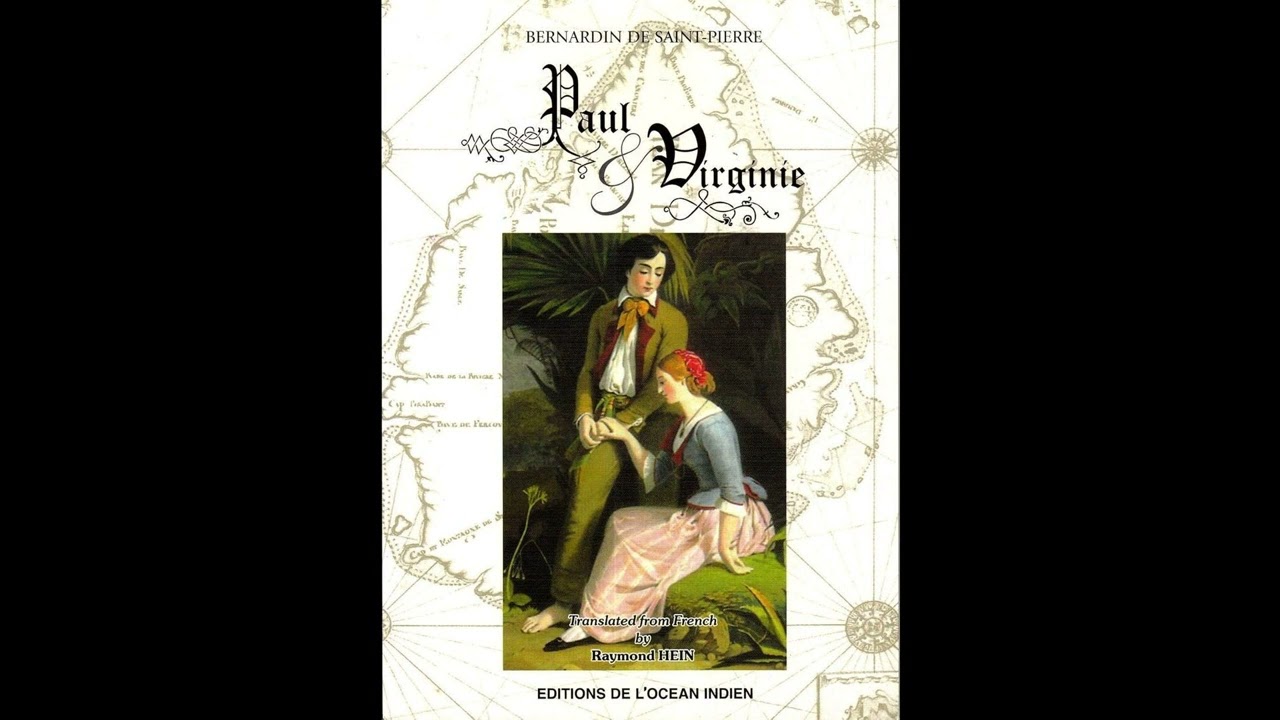
Imagine a secluded, unspoiled paradise, far from the machinations and corruptions of civilization, where two innocent souls grow up in perfect harmony with nature and each other. This is the enduring vision at the heart of Bernardin de Saint-Pierre's Paul and Virginie, a novel that enchanted eighteenth-century Europe and continues to resonate today. More than just a tender love story, it is a profound meditation on the human condition, a sharp critique of societal artifice, and a poignant exploration of the fragility of idyllic existence. This foundational work of French Romanticism offers a window into a bygone era's dreams and anxieties, questioning what constitutes true happiness and the price of progress, making it as relevant for listeners seeking an escape and reflection in our modern world as it was upon its original publication. The story unfolds on the picturesque Isle de France—what we know today as Mauritius—a verdant gem in the Indian Ocean. Here, two young women, Marguerite and Madame de la Tour, have sought refuge from the disappointments and judgments of European society. Marguerite, ostracized for having an illegitimate child, Paul, finds solace in the simple life. Madame de la Tour, a noblewoman abandoned by her family after marrying beneath her station, later gives birth to Virginie. Raised together from infancy, Paul and Virginie share everything: their modest homes, the bounties of the lush landscape, and an unbreakable bond of affection. Their days are spent exploring the island's secret coves, climbing its mountains, and helping their mothers cultivate their gardens. They learn kindness from their mothers, generosity from their circumstances, and an innate morality from the unspoiled world around them. Their innocent, pure love blossoms naturally, untainted by notions of class, wealth, or worldly ambition. However, this idyllic existence is threatened by the arrival of the outside world. An aunt in France, learning of Virginie's existence, decides to offer her an inheritance and a proper European education, promising a return to society's graces. Despite the deep reluctance of Virginie's mother and the profound grief of Paul, Virginie is compelled to accept this offer. This forced separation marks a dramatic turning point, thrusting Virginie into a world of artificiality, rigid social rules, and unfeeling ambition, while leaving Paul to languish in heartbroken longing on their paradise island. The narrative then follows the challenges each faces—Virginie's struggle to adapt to a foreign, unloving environment, and Paul's desperate hope for her return, all while hinting at the ultimate, inescapable forces that conspire against their reunion. The author, Jacques-Henri Bernardin de Saint-Pierre, was a figure steeped in the Enlightenment ideals and a precursor to the Romantic movement. Born in Le Havre, France, in 1737, his early life was marked by a restlessness that led him across Europe and beyond. He served as an engineer in Russia, worked as a cartographer in Germany, and eventually traveled to the French colonies, most notably spending several years on the Isle de France. This experience was transformative, providing the vivid backdrop and deep inspiration for Paul and Virginie. During his time there, he became the intendant of the botanical garden, immersing himself in the natural world and observing the complexities of colonial society. Bernardin de Saint-Pierre returned to France, disillusioned with society yet enriched by his exotic experiences. He became a close acquaintance and disciple of Jean-Jacques Rousseau, whose philosophy on the goodness of natural man and the corrupting influence of civilization profoundly shaped his own worldview. He initially published Paul and Virginie in 1788 as part of a larger philosophical work, Études de la Nature, where it served as an illustrative example of his theories. Other notable works include Harmonies de la nature, continuing his focus on the natural world and human interaction with it. His eloquent prose and deeply felt narratives cemented his place as a significant literary figure, bridging the rationalism of the Enlightenment with the burgeoning emotionalism of Romanticism, becoming a celebrated member of the Institut de France and a professor of morals at the École normale. One of the central themes running through Paul and Virginie is the enduring contrast between nature and civilization. Bernardin de Saint-Pierre champions the simple, unadorned life lived in harmony with the natural world, arguing for its inherent moral superiority over the artificiality and corruption of European society. We see this vividly in the children's upbringing: their clothes are made of rough cloth, their food is gathered from the land, and their games involve exploring the island's wilds. When Virginie arrives in France, she is overwhelmed by the restrictive corsets, the cold formality of social interactions, and the calculating pursuit of wealth—a stark contrast to the freedom and genuine affection she knew on the island. The text suggests that true happiness stems from a connection to the earth and human authenticity, not from material gain or social standing. Another compelling theme is the idealized portrayal of sentimental love. The affection between Paul and Virginie is presented as the purest form of love, growing organically from shared childhood and mutual dependence, unburdened by societal expectations or material considerations. Their devotion to each other is absolute, a spiritual connection that transcends mere physical attraction. For instance, when a slave girl seeks refuge from her cruel master, Paul and Virginie bravely stand up for her, showcasing their innate compassion, which is presented as an extension of their pure hearts. Their love embodies a pre-lapsarian innocence, a bond so profound it seems to defy the very laws of the corrupt world. This innocent, yet powerful, love is what the author suggests humanity loses when it falls prey to the complexities of an advanced society. The book emerged in a period of intense intellectual and social ferment. Published in 1788, on the very eve of the French Revolution, Paul and Virginie reflects the powerful philosophical currents of the Enlightenment. It was a time when Jean-Jacques Rousseau's ideas about the "noble savage" and the innate goodness of humanity—often corrupted by society—were gaining significant traction. Bernardin de Saint-Pierre's work became a prime literary example of these concepts, capitalizing on a growing public fascination with exotic lands fueled by scientific exploration and colonial expansion. Culturally, there was a shift away from the rigid formality and rationalism of Neoclassicism towards a greater emphasis on emotion, individual experience, and the sublime power of nature—elements that would soon define the Romantic movement. The novel's celebration of sensibility, natural virtue, and its implicit critique of class structures resonated deeply with a society on the brink of radical change. To hear Paul and Virginie as an audiobook is to be transported directly to its sun-drenched, palm-fringed setting. A skilled narrator can truly bring to life the lush, tropical atmosphere of the Isle de France, painting vivid pictures with their voice alone. Listeners can savor the unhurried pacing of the early chapters, which mirror the children's innocent, peaceful existence, before feeling the subtle but inexorable build-up of tension as the outside world encroaches. The narrator's ability to differentiate the various characters—from the sweet naivety of Paul and Virginie to the quiet wisdom of their mothers and the imposing voices of societal figures—adds considerable depth to the unfolding drama. This auditory experience allows for a direct connection to the story's emotional core, making the idyllic passages resonate with greater warmth and the impending sorrow of the later sections land with profound impact, creating an immersive and affecting listening experience.
Enjoyed Paul and Virginie? A few ways to support us
Audible & Amazon links are affiliate; we may earn a small commission at no extra cost.
About this production
Human narration by a volunteer reader from LibriVox.org, the public-domain audiobook project. LibriVox volunteers record literary works whose copyright has expired in the United States, releasing the resulting recordings into the public domain.
Paul and Virginie by Bernardin de Saint-Pierre. The underlying text is in the U.S. public domain. We do not republish any modern copyrighted edition, translation, or commentary.
The 4K cinematic visuals accompanying this audiobook are generated by an AI image model from prompts derived from the source text. No copyrighted photos, paintings, or stock footage are used. AI generation is disclosed on every video on our YouTube channel as required by YouTube's altered/synthetic content policy.
English subtitles are transcribed from the LibriVox recording with OpenAI Whisper. Translations into the 11 other supported languages are produced by Meta's NLLB-200 neural translation model. No human translator's copyrighted translation is used.
Questions about sourcing or rights? See our DMCA & Sourcing policy or contact us.
Enjoyed this audiobook?
If you'd like to own a copy of Paul and Virginie or hear a professionally produced edition, the links below help support free audiobook production at no extra cost to you.
As an Amazon Associate we earn from qualifying purchases. Audible / print links are affiliate.