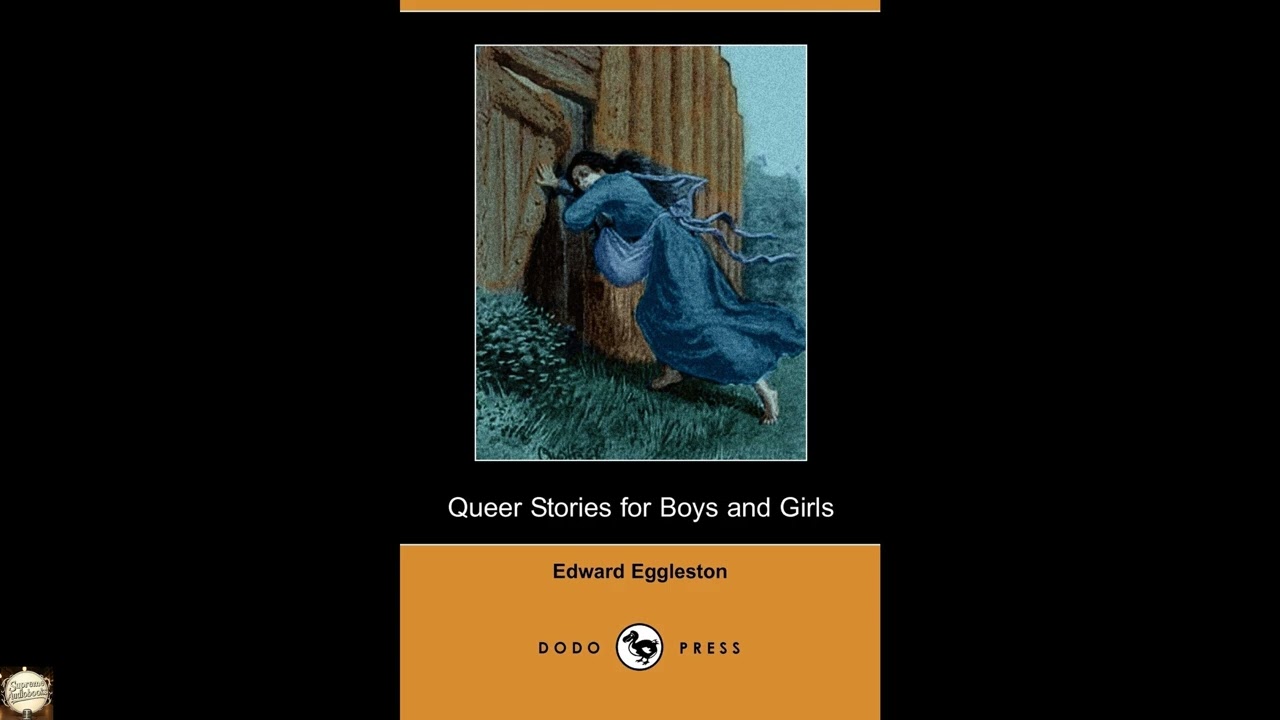
Queer Stories for Boys and Girls: A collection of stories
In a world increasingly seeking to categorize and define, the very title Queer Stories for Boys and Girls by the American author stands as an intriguing invitation, a gentle challenge to convention that resonates as much today as it did when first penned. Far from being a modern creation, this collection hails from an earlier literary tradition, where "queer" meant something wonderfully different—strange, unusual, peculiar, or simply not quite fitting the expected mold. This audiobook offers listeners a unique portal to a time when stories for young people dared to venture beyond the strictly didactic, instead presenting tales that celebrated the oddity of existence, the beauty in divergence, and the quiet wisdom found in things and people that defy easy classification. It is a work that encourages curiosity, broadens horizons, and reminds us that some of the most profound truths are often cloaked in the unexpected. This anthology ushers listeners into a series of narrative worlds, each distinct yet bound by a shared spirit of delightful peculiarity. Across its pages, young protagonists—be they inquisitive boys with a knack for noticing the unseen, or spirited girls whose imaginations color their everyday—find themselves at the crossroads of the ordinary and the truly uncommon. We meet children who befriend talking animals that offer philosophical pronouncements, or who stumble upon forgotten gardens where the flowers whisper ancient secrets. There are accounts of toys that develop surprising sentience when their owners are asleep, and of peculiar neighbors whose outwardly strange habits conceal stories of great tenderness or profound insight. The central conflict in many of these stories isn’t a grand, external struggle but rather an internal one: the protagonists’ grappling with the unexpected, their efforts to understand phenomena that don't conform to conventional logic, or their quiet acceptance of difference in themselves and others. The narratives unfold with a measured pace, often beginning in familiar domestic settings or sleepy village locales before subtly introducing elements of the fantastic. A seemingly mundane afternoon walk might lead to an encounter with an eccentric hermit who shares a startling vision of the future, or a forgotten attic might reveal a diary detailing adventures in an unseen dimension. The arc of these stories typically moves from initial bewilderment or mild apprehension towards a deeper understanding or a quiet, often poignant, epiphany. While each tale stands alone, together they form a mosaic, illustrating how the world is perpetually brimming with wonders just beyond the veil of the mundane, waiting to be noticed by those with open hearts and minds. The collection consistently emphasizes the value of observation, empathy, and the courage to see beyond surface appearances, often concluding not with a dramatic climax, but with a lingering sense of awe or a newly acquired perspective that enriches the protagonist’s, and by extension, the listener’s, understanding of the world. The American author behind this collection, while not widely known by a singular, iconic name today, represents a vital current in the stream of American literature during the late nineteenth and early twentieth centuries. This period saw a flourishing of storytellers dedicated to shaping the moral and imaginative landscape of young readers. Many such writers, often women, published extensively in children’s magazines and serials, contributing a wealth of material that, while sometimes published anonymously or under pseudonyms, became foundational to American juvenile letters. These authors were often educators or concerned citizens deeply invested in nurturing character, fostering wonder, and imparting ethical lessons through the power of narrative. Their works aimed to cultivate a sense of civic duty, individual integrity, and an appreciation for both the natural world and the boundless realm of human creativity. They formed a significant part of a literary movement focused on the development of a distinctly American voice in children’s literature, moving beyond purely European folk tales to craft stories rooted in American settings and values. Their contemporaries might have included figures who wrote tales of frontier life, domestic dramas, or whimsical fables. While specific biographical details for many such prolific authors remain elusive, their collective contribution to the literary canon is undeniable. They left behind a legacy of stories that spoke to the joys and trials of childhood, tales designed to entertain, educate, and subtly guide young minds towards an understanding of themselves and their place in a rapidly evolving nation. This particular author, through Queer Stories for Boys and Girls, stands as an enduring testament to that tradition, prioritizing imagination and gentle moral guidance over overt instruction. At its core, this collection enacts several enduring themes. Firstly, there is the obvious theme of difference and acceptance. The "queerness" of the stories frequently refers to characters or situations that deviate from the social norm, whether it's a child who possesses an unusual gift of prophecy, a talking animal that becomes a confidant, or a village custom that seems utterly bizarre to an outsider. For instance, in one story, a young boy named Timothy might initially be wary of the reclusive old woman who lives at the edge of the woods and only speaks in riddles, but through a series of chance encounters, he comes to discern her profound wisdom and gentle spirit, teaching him that appearances and conventional behavior do not define a person's worth. Another prominent theme is the power of imagination and wonder. The tales frequently blur the lines between reality and fantasy, suggesting that the most meaningful aspects of life might be those perceived not with the eyes alone, but with an open and receptive mind. A common example might be a story where a group of children, playing in an ordinary field, discover that the trees themselves seem to have memories and personalities, communicating with them through the rustling of leaves or the shapes of their branches. This doesn't simply present a fantastical event but underscores the capacity of a child’s mind to infuse the mundane with magic, revealing an underlying philosophy that true wonder resides as much in perception as in objective reality. These stories also subtly address the theme of moral and spiritual growth, guiding young readers toward empathy, kindness, and an appreciation for the mysterious elements of existence. The historical context surrounding the genesis of Queer Stories for Boys and Girls is crucial to understanding its unique voice. These stories likely emerged during a transformative era in America, roughly from the close of the Civil War through the turn of the 20th century, a period marked by rapid industrialization, increasing urbanization, and significant social change. As the nation grappled with its identity, there was a growing recognition of childhood as a distinct phase of life, requiring its own literature. Authors and publishers began to produce books specifically for children, moving away from purely religious tracts towards entertaining narratives that still contained moral underpinnings. This was also a time when folklore, regional tales, and whimsical parables held considerable sway, often serving as a bridge between older oral traditions and the burgeoning print culture. Works like this collection filled a need for stories that could both entertain and gently instruct, appealing to a sense of adventure and curiosity while reinforcing societal values. They offered an escape from the complexities of a changing world, providing narratives that affirmed the power of goodness, the importance of inner character, and the enduring magic that could still be found in everyday life, even as modernity reshaped the landscape. The tales within this volume reflect a desire to capture and preserve a sense of innocent wonder amidst a world that was becoming increasingly rationalized. Listening to Queer Stories for Boys and Girls as an audiobook offers a singular opportunity to fully immerse oneself in its unique charm and thoughtful narratives. The "several hours" run length makes it an ideal companion for family car trips, quiet afternoons, or for winding down before bed. A skilled narrator brings each distinct voice and peculiar situation to life, elevating the prose from mere text to a living, breathing experience. Imagine the subtle shifts in tone that might characterize the wisdom of an ancient talking animal, or the hushed excitement conveyed during a child’s clandestine encounter with a magical artifact. The pacing of the narration will be key, allowing listeners to absorb the often subtle moral lessons and appreciate the gentle humor and unexpected twists within each story. The audio format enhances the atmospheric quality of these tales, allowing the listener to truly step into worlds where the unusual is simply a facet of being, reminding us that there is always more to see, and to hear, than first meets the eye.
Enjoyed Queer Stories for Boys and Girls: A collection of stories? A few ways to support us
Audible & Amazon links are affiliate; we may earn a small commission at no extra cost.
About this production
Human narration by a volunteer reader from LibriVox.org, the public-domain audiobook project. LibriVox volunteers record literary works whose copyright has expired in the United States, releasing the resulting recordings into the public domain.
Queer Stories for Boys and Girls: A collection of stories by the American author. The underlying text is in the U.S. public domain. We do not republish any modern copyrighted edition, translation, or commentary.
The 4K cinematic visuals accompanying this audiobook are generated by an AI image model from prompts derived from the source text. No copyrighted photos, paintings, or stock footage are used. AI generation is disclosed on every video on our YouTube channel as required by YouTube's altered/synthetic content policy.
English subtitles are transcribed from the LibriVox recording with OpenAI Whisper. Translations into the 11 other supported languages are produced by Meta's NLLB-200 neural translation model. No human translator's copyrighted translation is used.
Questions about sourcing or rights? See our DMCA & Sourcing policy or contact us.
Enjoyed this audiobook?
If you'd like to own a copy of Queer Stories for Boys and Girls: A collection of stories or hear a professionally produced edition, the links below help support free audiobook production at no extra cost to you.
As an Amazon Associate we earn from qualifying purchases. Audible / print links are affiliate.