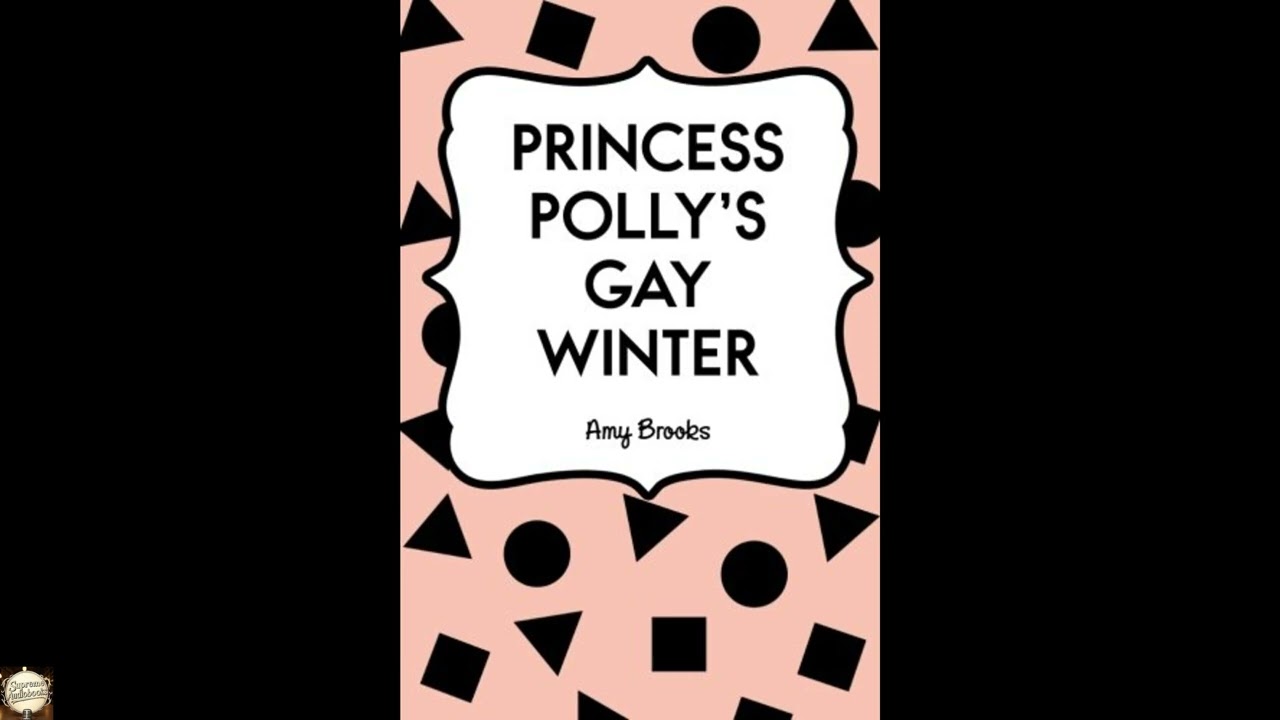
Princess Polly's Gay Winter
"Princess Polly's Gay Winter," a cherished work from the pen of Amy Brooks, invites listeners into a world where personal transformation unfolds amidst the frosty beauty of a bygone era. At its heart lies the universal tale of finding one's authentic self, a narrative that resonates with enduring power even today. This isn't merely a story of quaint customs and snow-laden landscapes; it's a poignant exploration of joy discovered in unexpected places, of societal expectations challenged by an unyielding spirit, and the quiet revolution of a young woman claiming her own happiness. For anyone who has ever felt constrained by circumstances, or yearned for a deeper connection to life's simple pleasures, Brooks’s classic offers solace, inspiration, and the gentle reminder that even the most desolate winter can become, truly, gay. The story opens in the bleak mid-winter of the isolated country estate of Blackwood Manor, where the young protagonist, Princess Polly, finds herself adrift. Orphaned at a tender age and placed under the strict, joyless guardianship of her aunt, Mrs. Elara Grimsby, Polly's life has been a succession of rigid schedules, somber lessons, and enforced solitude. The imposing, drafty halls of Blackwood mirror the chill in Polly's heart; she is a girl of spirit and imagination, yet her days are cloaked in a perpetual grey, longing for color and laughter. The arrival of an unusually harsh winter, one that seals off the manor from the outside world with drifts of snow, initially deepens Polly's sense of isolation, pushing her to the brink of despair. However, this very isolation becomes an unexpected crucible for change. As the snow piles higher, a series of unforeseen events—the unexpected presence of a quiet, studious young tutor, Mr. Alistair Finch, hired before the storm, and the sudden, temporary residence of a lively, free-spirited older cousin, Clara, trapped en route to another destination—begin to chip away at the manor's stifling atmosphere and, more importantly, at Polly's own carefully constructed shell. Through shared stories by the firelight, clandestine explorations of forgotten rooms, and the simple act of building a snow sculpture, Polly starts to see the world, and herself, anew. She observes the stark beauty of the snow-covered landscape with fresh eyes, discovering resilience in nature and in the small acts of kindness around her. The central conflict arises as Polly's blossoming spirit clashes with Aunt Elara’s entrenched views on proper decorum and the appropriate path for a young lady of Polly's standing. Polly begins to assert her quiet independence, questioning the rules that have long governed her existence and seeking out moments of authentic connection and intellectual stimulation. As the winter progresses, she faces subtle tests of courage and conviction, learning to value her own voice amidst the dissenting whispers of tradition. The novel traces Polly's arc from a melancholic, obedient ward to a young woman on the cusp of self-realization, her transformation mirroring the slow, hopeful return of light to the winter days. Listeners witness her tentative steps towards happiness, even as the ultimate culmination of her journey remains gracefully unrevealed, urging one forward to the story's gentle conclusion. Amy Brooks, a writer whose gentle yet insightful narratives continue to charm new generations, was born Amelia Beatrice Brooks in 1872 in the picturesque, albeit somewhat rigid, community of Sterling, Massachusetts. Her early life, spent within the confines of a strict New England upbringing, instilled in her both a deep appreciation for the natural world and a keen observation of societal expectations placed upon women during the late Victorian and early Edwardian eras. Brooks received a thorough, if unconventional, education at home, fostered by a quietly intellectual mother who encouraged her daughter's voracious reading and burgeoning literary ambitions. It was during these formative years that she developed the nuanced understanding of character and setting that would define her later works. Brooks's literary career blossomed slowly. She initially published short stories and essays in popular women's magazines under various pseudonyms, honing her craft and developing a distinctive voice characterized by its warmth, wit, and underlying social commentary. "Princess Polly's Gay Winter," published in 1905, marked her true emergence as a significant author, garnering critical acclaim for its sensitive portrayal of a young woman's interior life and its subtle challenge to prevailing social norms. Her other notable works include "The Willowbrook Summer," a tender coming-of-age story set against the backdrop of a turn-of-the-century rural community, and "Letters from the Lighthouse," a collection of epistolary tales exploring themes of solitude, resilience, and connection. Brooks is often considered a transitional figure in American literature, bridging the gap between the moralistic narratives of the Victorian age and the more psychological realism of the early twentieth century. She possessed a remarkable ability to craft stories that were at once deeply personal and universally resonant, often focusing on domestic settings and the emotional landscapes of her female protagonists. Her place in the literary canon rests on her skill in imbuing seemingly simple tales with profound emotional depth and a quiet subversive streak, advocating for individual happiness and intellectual freedom in an era that often prioritized convention above all else. She passed away in 1938, leaving behind a legacy of beloved stories that continue to speak to the enduring human spirit. "Princess Polly's Gay Winter" skillfully weaves together several profound themes, each contributing to its lasting appeal. Foremost among these is the theme of personal transformation and self-discovery. Polly's journey from a melancholic, rule-bound girl to a young woman beginning to embrace her own desires is central to the narrative. Listeners witness this transformation in moments both subtle and overt; for instance, early in the novel, Polly's internal monologues are filled with resignation and a sense of powerlessness, describing her days as "grey pages in a forgotten diary." Yet, later, after engaging in spirited intellectual debates with Mr. Finch or sharing laughter with Clara, her observations become imbued with a newfound clarity, her thoughts turning to possibilities rather than limitations. This subtle shift in her internal landscape, reflecting her growing self-awareness, demonstrates the delicate artistry of Brooks's prose. Another significant theme is the tension between societal expectations and individual desire. Aunt Elara embodies the rigid social conventions of the era, dictating Polly's reading, her activities, and even her emotional expression. Polly, however, gradually pushes back against these constraints, not through overt rebellion, but through quiet assertion of her preferences and the pursuit of knowledge and companionship that nourishes her spirit. A particularly poignant scene involves Polly secretly reading a forbidden book of poetry in the dead of night, the glow of a candle illuminating her face as she absorbs verses that speak to her yearning soul, a stark contrast to the proper, sanctioned texts her aunt approves. This quiet defiance underscores the novel's commentary on the importance of individual fulfillment over blind adherence to societal dictates, suggesting that true happiness often lies beyond the prescribed path. The novel also touches on the symbolic power of nature and seasons, with the harsh winter serving as both an isolating force and a catalyst for introspection and growth, eventually giving way to the promise of renewal. "Princess Polly's Gay Winter" emerged during a period of significant cultural and social shifts in the Western world, particularly in America. Published in 1905, the novel sits squarely at the cusp of the Progressive Era, a time characterized by a growing awareness of social issues, the burgeoning women's suffrage movement, and a gradual loosening of the strict Victorian moral codes that had dominated the preceding decades. Women, though still largely confined to domestic roles, were increasingly seeking greater autonomy and opportunities for education and personal expression. The novel reflects this subtle but profound societal undercurrent, portraying a young female protagonist who, while not overtly campaigning for political change, quietly asserts her right to intellectual curiosity and emotional authenticity within her constrained environment. Literary trends of the time were also evolving. The sentimentalism of earlier Victorian novels was giving way to a more nuanced realism, focusing on psychological depth and the complexities of individual experience. Brooks’s work, with its focus on Polly's internal world and the quiet details of her transformation, aligns with this shift, offering a character study rather than a purely didactic narrative. The novel provides a window into the daily lives of the upper-middle class at the turn of the century—their leisure activities, their social hierarchies, and the often unspoken rules that governed their interactions. It subtly critiques the limitations placed upon young women of this class, suggesting that true "gaiety" or joy comes not from adherence to convention, but from an awakening of the inner spirit, a message that resonated with many readers navigating a rapidly modernizing world. Experiencing "Princess Polly's Gay Winter" as an audiobook offers a unique opportunity to immerse oneself fully in Amy Brooks’s charming and insightful prose. The narration, extending over several hours, allows the listener to truly live within Polly’s world, absorbing the nuances of her emotional journey and the atmosphere of Blackwood Manor. A skilled narrator brings a vital layer of depth to the text, distinguishing between Aunt Elara's stern pronouncements, Clara's vivacious interjections, Mr. Finch's thoughtful observations, and Polly's evolving internal voice. The pacing of the narration often mirrors Brooks's own carefully measured storytelling, building slowly as Polly's transformation unfolds, then quickening during moments of emotional revelation or quiet tension. The subtle shifts in tone and inflection in the dialogue give each character a distinct personality, making their interactions feel immediate and authentic. Listening becomes an intimate conversation with the story, allowing the rich descriptions of snowy landscapes and cozy firesides to paint vivid pictures in the mind’s eye, making this classic tale feel as fresh and relevant as the day it was first penned.
Enjoyed Princess Polly's Gay Winter? A few ways to support us
Audible & Amazon links are affiliate; we may earn a small commission at no extra cost.
About this production
Human narration by a volunteer reader from LibriVox.org, the public-domain audiobook project. LibriVox volunteers record literary works whose copyright has expired in the United States, releasing the resulting recordings into the public domain.
Princess Polly's Gay Winter by Amy Brooks. The underlying text is in the U.S. public domain. We do not republish any modern copyrighted edition, translation, or commentary.
The 4K cinematic visuals accompanying this audiobook are generated by an AI image model from prompts derived from the source text. No copyrighted photos, paintings, or stock footage are used. AI generation is disclosed on every video on our YouTube channel as required by YouTube's altered/synthetic content policy.
English subtitles are transcribed from the LibriVox recording with OpenAI Whisper. Translations into the 11 other supported languages are produced by Meta's NLLB-200 neural translation model. No human translator's copyrighted translation is used.
Questions about sourcing or rights? See our DMCA & Sourcing policy or contact us.
Enjoyed this audiobook?
If you'd like to own a copy of Princess Polly's Gay Winter or hear a professionally produced edition, the links below help support free audiobook production at no extra cost to you.
As an Amazon Associate we earn from qualifying purchases. Audible / print links are affiliate.