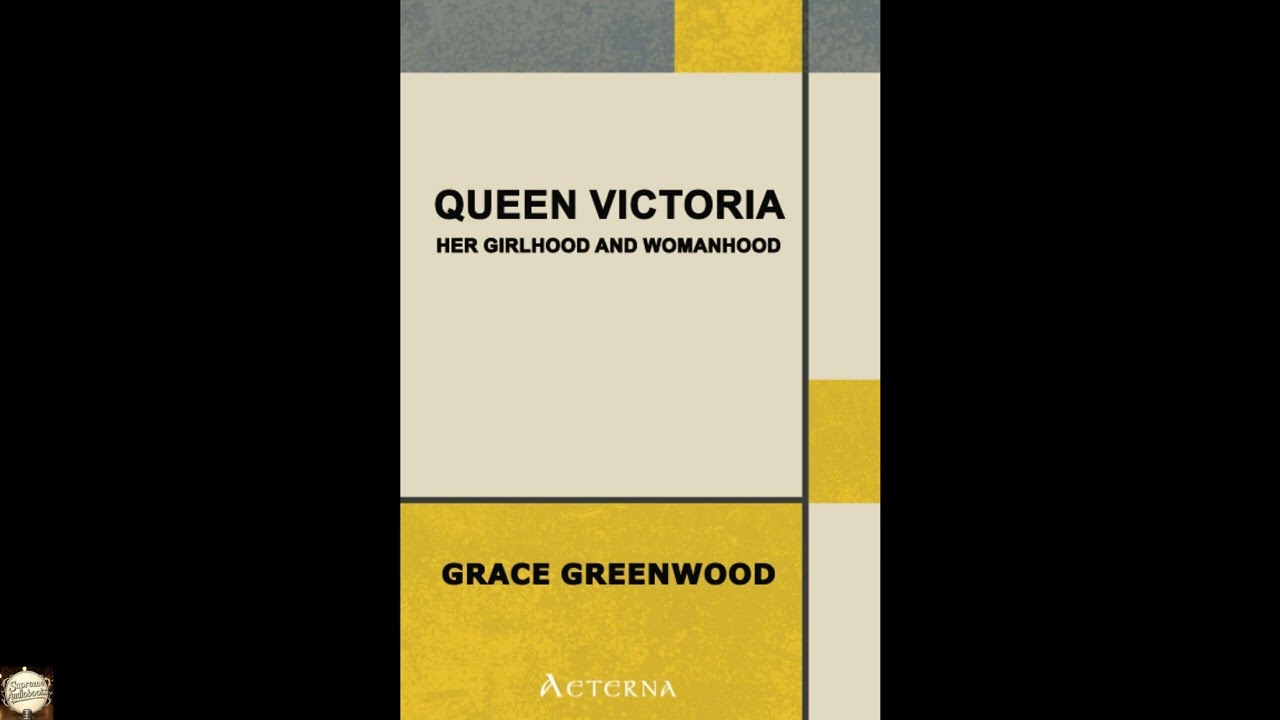
Queen Victoria, her girlhood and womanhood
Enter the private chambers of a queen, not as a remote, iconic figure, but as a young woman navigating a world of immense expectation and personal struggle. Grace Greenwood's "Queen Victoria, her girlhood and womanhood" offers a remarkably intimate glimpse into the formative years of one of history's most enduring monarchs. This isn't merely a chronicle of statecraft and royal lineage; it's a deeply human narrative, presenting Victoria's story as a relatable tale of growth, self-discovery, and the daunting challenge of finding one's voice amidst the clamor of public duty. For anyone fascinated by the true individuals behind historical titles, or those who appreciate seeing the raw humanity within figures of immense power, this audiobook provides an enlightening and moving experience, revealing the real woman who would come to define an entire era. The narrative opens with Victoria's earliest years, portraying her as a rather solitary child, overshadowed by the protective, often overbearing, influence of her mother, the Duchess of Kent, and her comptroller, Sir John Conroy. Her childhood in Kensington Palace is painted with vivid strokes, detailing the rigid "Kensington System" designed to isolate her and control her access to information, which paradoxously fueled her independent spirit. We witness the young Princess Alexandrina Victoria, as she was known, coming to terms with the monumental truth of her destiny – that she was heir apparent to the British throne – a revelation that reportedly stirred her resolve more than fear. The tension between her natural vivacity and the stifling protocols of her upbringing forms a palpable undercurrent throughout these early chapters. As the story progresses, the listener experiences the sudden, pivotal moment of her accession at the tender age of eighteen. The narrative skillfully captures the immediate shift in power dynamics, as the newly crowned Queen Victoria asserts her authority with remarkable clarity and firmness, effectively dismissing the influences that had constrained her girlhood. From this point, the focus shifts to her early reign, her earnest attempts to master the intricacies of governance, and, most profoundly, her relationship with her beloved cousin, Prince Albert of Saxe-Coburg and Gotha. Their courtship, initially marked by Victoria's royal prerogative, evolves into a profound partnership, showcasing the development of a bond that would not only define her personal life but also shape her reign and the future of the British monarchy. Greenwood carefully outlines how Albert became her indispensable confidant and advisor, the one person with whom she could truly be herself, while never revealing the full sweep of their eventual partnership. The author, Grace Greenwood – born Sara Jane Lippincott (née Clarke) in 1823 – was a celebrated American writer, poet, and journalist of her time. A formidable literary figure of the late 19th century, Greenwood was known for her sharp wit, engaging prose, and progressive views. She was a prominent voice for women's rights and the abolitionist movement, using her platform to advocate for social change. Her career began with contributions to newspapers and magazines, quickly gaining renown for her "Greenwood Leaves" essays and sketches, which offered keen observations on society and travel. She lectured widely across the United States and Europe, captivating audiences with her eloquence and conviction, and served as a war correspondent during the American Civil War, offering a unique perspective on the conflict. Greenwood's literary output was diverse, including children's books like "History of My Pets" and collections of stories and legends, but it was her biographical and journalistic writings that often showcased her keen analytical mind and empathetic understanding of human character. She was part of a wave of female authors who, in the post-Civil War era, began to assert their presence in the public sphere, often blending personal reflection with social commentary. Her ability to craft accessible yet insightful narratives about historical figures, like Victoria, placed her squarely within the tradition of popular history writing, making complex lives understandable and appealing to a broad readership. She continued writing and lecturing well into her later years, passing away in 1904, leaving behind a legacy as a trailblazer for women in journalism and a respected literary voice. One of the central themes illuminated by Greenwood's account is the profound tension between public duty and private desire. From her earliest years, Victoria is presented as a person torn between the expectations placed upon a future monarch and her own spirited personality and longing for genuine connection. For instance, the detailed descriptions of her constrained childhood—the constant chaperoning, the lack of true companions, the strict schedule—vividly demonstrate how her personal freedoms were sacrificed at the altar of her royal destiny. This theme becomes even more pronounced as she matures, particularly in her search for a suitable consort, a decision fraught with both personal affection and dynastic implications, highlighting the rare intersection where a queen's heart and her crown must align. Another significant theme is the formation of identity under extreme pressure. Greenwood meticulously shows how Victoria’s sense of self was not inherited but actively forged through experiences, challenges, and self-assertion. The scene where the young Victoria, upon hearing of her succession, declares with quiet authority, "I will be good," is a powerful example of her taking ownership of her destiny, rather than simply accepting it. This moment, along with her decisive actions in her early days as queen, such as her firmness with her mother's advisors, illustrates her evolution from a sheltered princess to a self-assured ruler, demonstrating how personal character can develop and strengthen in the face of extraordinary public demands. When this book appeared, the world was steeped in the very era Victoria had shaped. Greenwood, writing in the late 19th century, offered her American audience a contemporary yet reflective look at a reigning monarch who had become a global symbol. The Victorian era itself was a period of immense change: industrialization was transforming societies, scientific discoveries were challenging old beliefs, and Britain's empire was expanding rapidly. Culturally, there was a great interest in biography and popular history, as people sought to understand the forces and figures defining their times. Greenwood's work satisfied this demand, providing a portrait of Queen Victoria that resonated with an audience fascinated by the human element behind power, especially from a journalist known for her independent perspective. Her take on Victoria, likely shaped by her own progressive views, offered a nuanced view that might have differed from more formal, court-sanctioned histories. Listening to "Queen Victoria, her girlhood and womanhood" as an audiobook brings an added layer of intimacy to Grace Greenwood's already engaging prose. The experience is like being read a private correspondence or a well-spun fireside tale, allowing the listener to absorb the nuances of Victoria's early life with an immediacy that reading a physical book might not always provide. The narrator's voice becomes the conduit for Greenwood's vivid descriptions, bringing to life the quiet moments of a lonely princess and the dramatic shifts as a young woman ascends to the throne. The pacing of the narration can perfectly reflect the ebb and flow of Victoria's growth, from the constrained tempo of her childhood to the more confident rhythm of her early reign. The several hours of listening time unfold Victoria's story with a comfortable momentum, allowing for a sustained immersion in a remarkable life, and making the subtle shifts in her character and situation particularly resonant.
Enjoyed Queen Victoria, her girlhood and womanhood? A few ways to support us
Audible & Amazon links are affiliate; we may earn a small commission at no extra cost.
About this production
Human narration by a volunteer reader from LibriVox.org, the public-domain audiobook project. LibriVox volunteers record literary works whose copyright has expired in the United States, releasing the resulting recordings into the public domain.
Queen Victoria, her girlhood and womanhood by Grace Greenwood. The underlying text is in the U.S. public domain. We do not republish any modern copyrighted edition, translation, or commentary.
The 4K cinematic visuals accompanying this audiobook are generated by an AI image model from prompts derived from the source text. No copyrighted photos, paintings, or stock footage are used. AI generation is disclosed on every video on our YouTube channel as required by YouTube's altered/synthetic content policy.
English subtitles are transcribed from the LibriVox recording with OpenAI Whisper. Translations into the 11 other supported languages are produced by Meta's NLLB-200 neural translation model. No human translator's copyrighted translation is used.
Questions about sourcing or rights? See our DMCA & Sourcing policy or contact us.
Enjoyed this audiobook?
If you'd like to own a copy of Queen Victoria, her girlhood and womanhood or hear a professionally produced edition, the links below help support free audiobook production at no extra cost to you.
As an Amazon Associate we earn from qualifying purchases. Audible / print links are affiliate.