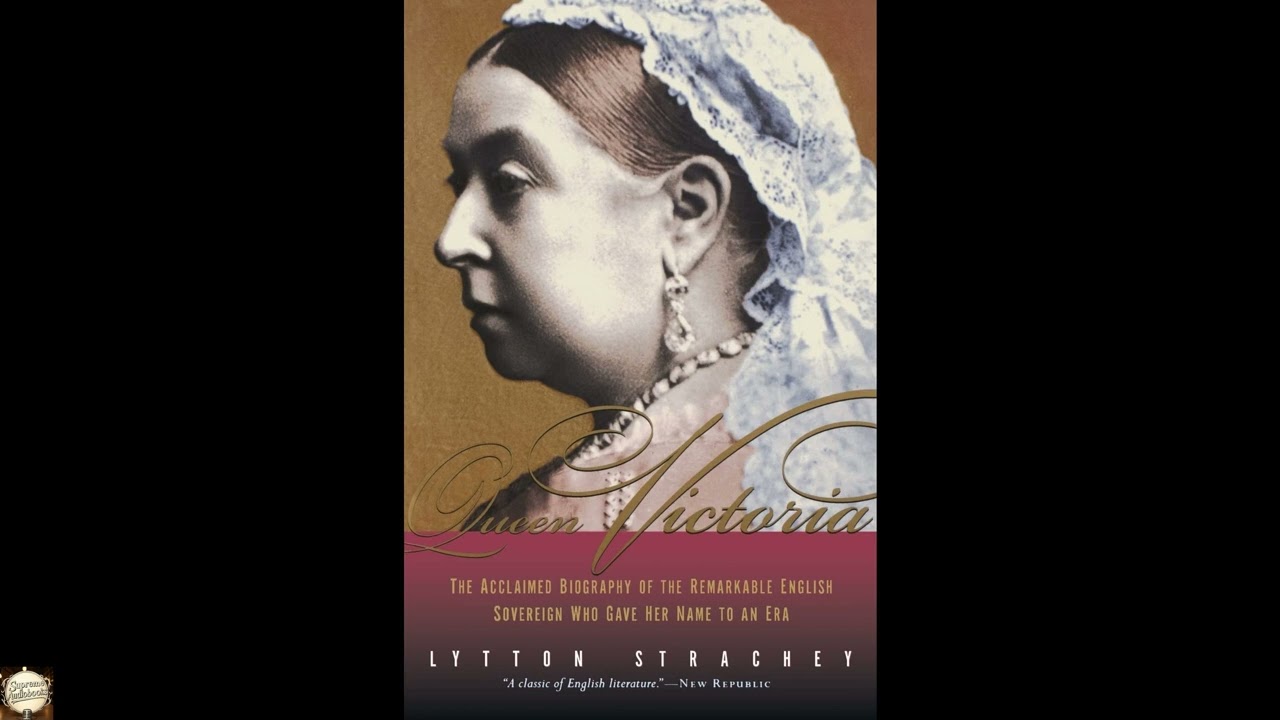
Queen Victoria
When we speak of the "Victorian Era," we conjure images of a specific time, a certain moral code, a sprawling empire, and a queen whose name became synonymous with her age. But who was the woman behind the myth, the stoic figure in black who reigned for over six decades? Lytton Strachey's Queen Victoria, published in 1921, offers a revolutionary answer, stripping away generations of reverent biography to reveal a human being of formidable will, profound passions, and surprising vulnerabilities. This book is not merely a chronicle of events; it's a vibrant, often humorous, and deeply insightful character study that allows us to understand how one monarch came to define an epoch, and why her legacy continues to resonate with our own questions about leadership, personal life, and public duty. Strachey begins his account not with the coronation, but with Victoria's rather isolated and sheltered childhood, sketching her emergence from the shadow of her ambitious mother, the Duchess of Kent, and her domineering advisor, Sir John Conroy. She ascended to the throne in 1837 as a young, inexperienced woman of eighteen, propelled into a world of complex politics and immense national expectation. The early years of her reign are marked by her reliance on the seasoned Prime Minister Lord Melbourne, a father figure who patiently guided her through the intricacies of governance and court life. Her marriage to her German cousin, Prince Albert of Saxe-Coburg and Gotha, swiftly becomes the emotional and political anchor of her life, transforming her from a spirited girl into a devoted wife and mother, deeply invested in the intellectual and moral improvement of her nation. The story progresses through the flourishing years of their partnership, during which Albert profoundly influenced British policy, industry, and even the royal household's decorum. Their union was a powerful force, both personally and politically, leading to the establishment of the modern royal family and a period of unprecedented national confidence. Strachey then portrays the catastrophic blow of Albert's sudden death in 1861. This event plunges Victoria into a period of intense, almost pathological mourning, withdrawing her from public life for many years and earning her the moniker "the Widow of Windsor." Her eventual re-emergence, facilitated by the astute political maneuvering of Benjamin Disraeli and her peculiar attachment to her Scottish ghillie, John Brown, sets the stage for her final decades as the revered matriarch of a global empire—an icon whose sheer longevity and steadfastness made her an almost mythical figure by the close of the century. The author, Giles Lytton Strachey, was born in London in 1880, the eleventh of thirteen children. Educated at Trinity College, Cambridge, he quickly distinguished himself as an intellectual and a sharp wit. It was there he formed close friendships with a circle of writers, artists, and thinkers who would become known as the Bloomsbury Group, a collective that challenged Victorian orthodoxies in art, literature, and social conventions. Strachey's life was marked by his unconventional sensibilities and his open homosexuality, both of which set him apart from the mainstream of his time. He was a conscientious objector during World War I, reflecting his pacifist views and general disdain for jingoism. His literary career truly took flight with the publication of Eminent Victorians in 1918, a collection of four short biographies that famously used psychological insight and ironic detachment to dismantle the hagiographic reputations of celebrated figures like Florence Nightingale and Thomas Arnold. This groundbreaking work redefined the art of biography, establishing Strachey as a formidable, if controversial, literary voice. He followed this success with Queen Victoria in 1921 and later Elizabeth and Essex in 1928, solidifying his place in the literary canon as a master of modern biographical writing. Strachey passed away in 1932, leaving a lasting legacy that continues to influence how history and its figures are approached. Strachey's Queen Victoria skillfully enacts several enduring themes. One prominent theme is the burden of monarchy and public expectation. Victoria's story constantly illustrates the tension between personal desire and the immense weight of state duty. We see this vividly in her early years, when as a young queen, she struggled with the advice of her ministers and the often-conflicting demands of Parliament and public opinion. Her reliance on Lord Melbourne, and later her profound emotional and intellectual dependence on Prince Albert, underscores her need for counsel and companionship to navigate her singular, isolated role. Another powerful theme is grief and its transformative power. Albert's death is not just a personal tragedy but a national event that reshapes Victoria's identity and her relationship with her people. Strachey recounts the decades of deep mourning that followed, describing her withdrawal into an almost pathological solitude at Osborne and Balmoral, showcasing how such profound personal loss can alter a monarch's public persona and the very fabric of governance. The book also addresses the clash between personality and protocol. Victoria, despite her royal training, possessed a fiery temper and strong opinions. Strachey frequently highlights these human inconsistencies, such as her famous "We are not amused" pronouncement (though the exact phrase may be apocryphal, the sentiment certainly captures her imperious side), or her often difficult relationships with her children and various political figures. This contrasts sharply with the expectation of an impassive, stately sovereign, demonstrating the constant negotiation between the private individual and the public symbol. Finally, Strachey subtly critiques the nature of Victorian morality and its underlying complexities. While his tone is rarely outright condemnatory, his ironic prose and selective focus often reveal the inherent contradictions and occasional hypocrisies of the era's grand pronouncements on duty, piety, and respectability, inviting the reader to look beyond the surface of a seemingly rigid age. When Queen Victoria was published in 1921, the world was still reeling from the aftermath of World War I. The "Great War" had profoundly shaken European societies, leading to a widespread questioning of traditional values, institutions, and the very figures who had represented them. The Edwardian era, which immediately followed Victoria's reign, had already begun to loosen the strictures of Victorian morality, but the post-war disillusionment intensified this critical reassessment. Culturally, this was the era of Modernism, a period marked by experimentation, skepticism towards authority, and a focus on psychological realism in the arts. Strachey's work emerged directly from this cultural shift. His Eminent Victorians, published just three years prior, had already established a new template for biography: one that moved away from the dutiful, often hagiographic accounts of the 19th century toward a more analytical, witty, and psychologically nuanced portraiture. Readers were ready for a biography of their recently departed monarch that was neither wholly reverent nor overly critical, but simply real. Strachey's timing was perfect; his work offered a fresh, discerning lens through which a changed nation could re-examine the woman who had presided over an era now largely seen as having run its course. Listening to Queen Victoria as an audiobook offers a unique opportunity to appreciate Strachey's distinctive voice and the subtle artistry of his prose. The run length, several hours in total, provides ample time to immerse oneself in the grandeur of the Victorian age and the intimate details of the Queen's life. A skilled narrator can bring to life Strachey's famous irony, allowing the listener to catch the humor and pointed observations that might be missed in a quick reading. The pacing of the narration can highlight the dramatic sweep of historical events—from the exuberant youth of the young monarch to the somber withdrawal of her middle years, and finally to the stately solemnity of her late reign. The narrator's voice will modulate to convey the different personalities—the gruff pragmatism of Lord Melbourne, the passionate earnestness of Albert, the political showmanship of Disraeli, and Victoria's own evolving character, from spirited girl to formidable empress. It's a chance to experience history not as a dry recitation of facts, but as a compelling human drama, narrated with a literary flair that shaped biographical writing for decades to come.
Enjoyed Queen Victoria? A few ways to support us
Audible & Amazon links are affiliate; we may earn a small commission at no extra cost.
About this production
Human narration by a volunteer reader from LibriVox.org, the public-domain audiobook project. LibriVox volunteers record literary works whose copyright has expired in the United States, releasing the resulting recordings into the public domain.
Queen Victoria by Lytton Strachey. The underlying text is in the U.S. public domain. We do not republish any modern copyrighted edition, translation, or commentary.
The 4K cinematic visuals accompanying this audiobook are generated by an AI image model from prompts derived from the source text. No copyrighted photos, paintings, or stock footage are used. AI generation is disclosed on every video on our YouTube channel as required by YouTube's altered/synthetic content policy.
English subtitles are transcribed from the LibriVox recording with OpenAI Whisper. Translations into the 11 other supported languages are produced by Meta's NLLB-200 neural translation model. No human translator's copyrighted translation is used.
Questions about sourcing or rights? See our DMCA & Sourcing policy or contact us.
Enjoyed this audiobook?
If you'd like to own a copy of Queen Victoria or hear a professionally produced edition, the links below help support free audiobook production at no extra cost to you.
As an Amazon Associate we earn from qualifying purchases. Audible / print links are affiliate.