Project Trinity 1945-1946
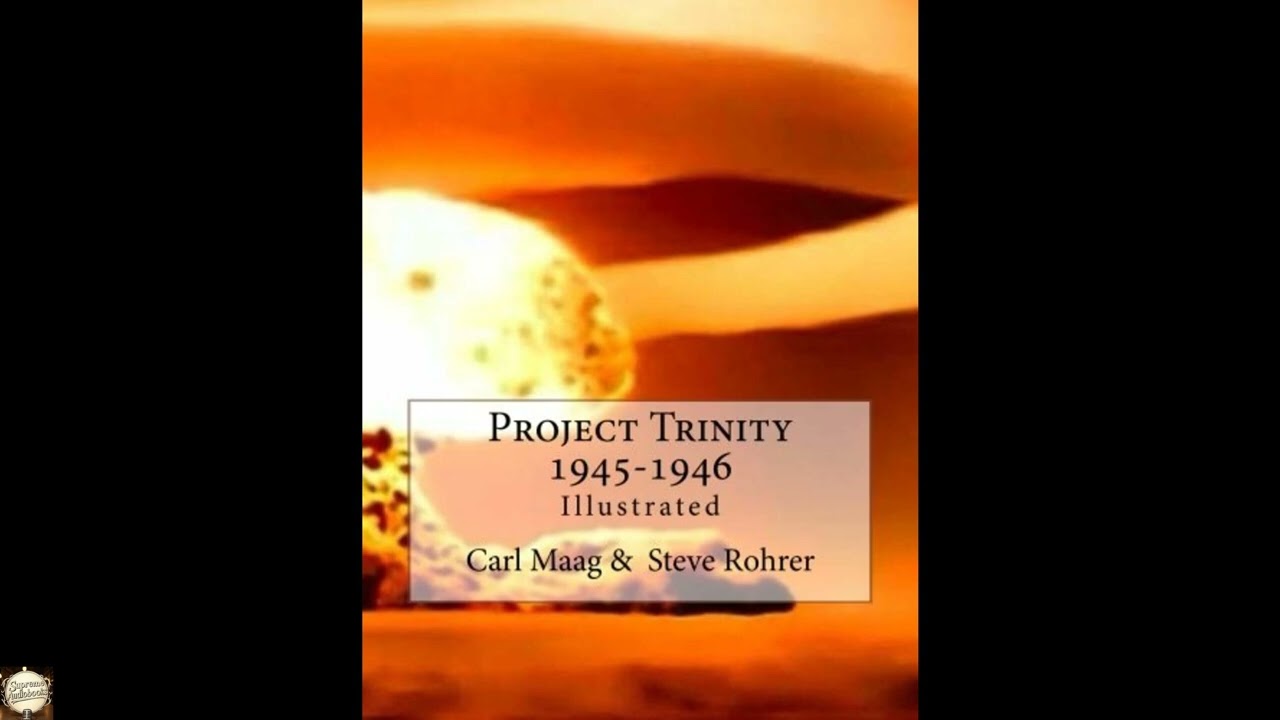
Imagine a single flash, a man-made sun ignited in the desert, marking the precise instant humanity gained the power to obliterate itself. Carl Maag’s Project Trinity 1945-1946 plunges listeners into the crucible of this transformative moment, a period of unparalleled scientific achievement and profound moral reckoning. This isn't just a historical recounting; it is an intimate examination of the minds and motives of the individuals who stood at the precipice of a new age, grappling with the weight of their creation. Why listen today? Because the questions wrestled with in those isolated laboratories – questions of scientific responsibility, geopolitical power, and the ethical limits of human ingenuity – remain as urgent and unresolved now as they were in the immediate aftermath of the Second World War. The narrative transports us to the stark, secretive landscapes of wartime America, primarily the desolate reaches of the New Mexico desert. Here, amidst the dust and silence, a cadre of the world's most brilliant scientific minds, driven by a desperate race against the Nazi regime, labored on the Manhattan Project. We meet figures like the project's intellectual leader, a brilliant theoretical physicist torn between the exhilaration of discovery and the creeping horror of its implications, and a stern military general, tasked with transforming abstract equations into a tangible weapon of unprecedented destructive force. The story tracks the intense, claustrophobic atmosphere of Los Alamos, where the greatest secrets of the war were guarded not just by fences and armed patrols, but by the very isolation of the brilliant men and women working within. The central conflict simmers beneath the surface of daily scientific endeavor: the internal ethical battle faced by the scientists themselves, who understand the destructive power they are harnessing, set against the relentless external pressure of a global conflict demanding a swift, decisive end. Maag meticulously details the relentless pursuit of the impossible, from the first theoretical calculations to the construction of the test device, known chillingly as "The Gadget." The story builds towards the inevitable moment of the Trinity test in July 1945, a controlled detonation intended to prove the bomb's viability. But the book does not stop there. It extends into the crucial months of 1946, examining the immediate aftermath of the bomb’s deployment and the nascent, terrifying dawning of the Atomic Age. This period forces the characters to confront the global repercussions of their work, shifting from the urgent demands of war to the bewildering uncertainties of a world forever altered, where the concept of total annihilation became a stark reality. The arc of the story follows these individuals as they wrestle not only with the success of their scientific enterprise, but with the moral burden of having fundamentally reshaped human destiny, their triumph shadowed by an inescapable sense of dread for the future. Carl Maag, a significant voice in twentieth-century literature, dedicated his literary career to illuminating the moral complexities of modern existence. Born in the early decades of the twentieth century, he came of age during a period of profound global upheaval, witnessing firsthand the cataclysms of two world wars and the subsequent ideological struggles that defined the Cold War era. This direct experience instilled in him a deep concern for human responsibility in the face of escalating technological power. His education at prestigious European and American universities exposed him to the cutting edge of scientific and philosophical thought, which he deftly wove into his narratives. Maag was known for his rigorous historical research, often drawing from primary sources and personal testimonies to lend an unparalleled authenticity to his literary portrayals of pivotal historical moments. His early experiences as a journalist covering post-war Europe provided him with a keen eye for detail and a nuanced understanding of human suffering and resilience. This foundation enriched his later fictional and semi-fictional works, which consistently challenged readers to confront difficult ethical questions. While Project Trinity 1945-1946 stands as a defining achievement, Maag’s broader body of work frequently returned to themes of power, progress, and the individual conscience within vast institutional systems. He was often associated with literary circles that sought to make sense of the new scientific paradigm and its societal impact, a movement that grappled with the implications of an increasingly technological and interconnected world. His distinctive blend of historical accuracy, psychological depth, and philosophical inquiry firmly established his place as a writer whose influence continues to resonate in contemporary literary discourse. One of the central themes Maag brings to life is the immense burden of scientific knowledge. He illustrates this through scenes where a lead theoretical physicist, having painstakingly derived the equations for fission, experiences a chilling realization of the power he is unlocking – not just an abstract force, but a tangible means of destruction. He shows us the precise moment when the purity of scientific inquiry collides with the terrifying reality of its application, as a scientist’s hands tremble not from exhaustion, but from the existential weight of a discovery that promises both salvation and ultimate ruin. Another powerful theme is the nature of power and its ethical limits. This emerges in tense discussions among the project's leadership: military strategists advocating for the bomb's use to hasten victory, and scientists who, while having built the weapon, begin to question the morality of deploying such an apocalyptic force. Maag presents these internal and external debates without easy answers, forcing the listener to confront the difficult choices made under extreme duress. The work also speaks to the profound transformation of warfare and human civilization. The book underscores how the development of the atomic bomb instantly rendered all previous forms of combat obsolete, ushering in an era where the scale of destruction shifted from localized conflict to the potential for global annihilation. This dramatic shift is palpable in the anxious conversations of 1946, as the world struggles to comprehend a future defined by an atomic arms race. Finally, Maag addresses the theme of moral ambiguity in times of crisis. The narrative avoids simplistic portrayals of heroes and villains, instead presenting figures driven by a complex mix of patriotism, scientific curiosity, fear, and a desperate desire for an end to the war. A particularly resonant scene involves a group of junior scientists celebrating the successful Trinity test, only to fall silent as the desert sunrise illuminates their faces, each person privately confronting the terrifying reality of what they have unleashed. When Project Trinity 1945-1946 first appeared, the world was still reeling from the immediate aftermath of World War II and entering the perilous dawn of the Cold War. The existential threat of nuclear weapons hung heavy in the global consciousness, shaping political discourse, popular culture, and individual anxieties. Culturally, there was an intense need to process the shock and implications of Hiroshima and Nagasaki, leading to a surge in literature, film, and art attempting to grasp the new reality of atomic power. Politically, the arms race between the United States and the Soviet Union was already beginning to escalate, fostering an atmosphere of paranoia and heightened geopolitical tension. In the literary world, writers were grappling with post-war disillusionment, the rise of science fiction as a serious genre exploring technological futures, and a renewed focus on historical realism that sought to understand the recent, catastrophic past. This work emerged precisely from this context, a powerful literary response to the defining event of the twentieth century, seeking to provide not just a historical account, but a deeply human and ethical reflection on the unprecedented power mankind had unleashed. Maag gave voice to the pervasive unease and the urgent moral questions that dominated the era, providing a means for a traumatized society to begin understanding its new, terrifying trajectory. Listening to Project Trinity 1945-1946 as an audiobook offers a uniquely immersive and powerful experience. The carefully crafted narration allows the listener to absorb the historical weight and the profound moral quandaries at the heart of the story. Its substantial run length provides ample time for deep immersion, allowing the complex ideas and character developments to unfold gradually and thoughtfully. Listen for the subtle shifts in pacing, which expertly build tension during the scientific breakthroughs and the lead-up to the test, then slow to a reflective tempo during the post-bomb reckoning. The voice work in the character interactions conveys the intellectual rigor of the scientists, the gravitas of the military leaders, and the quiet despair of those who witness the consequences. Dialogue exchanges are particularly potent, capturing the urgency of wartime decision-making and the philosophical debates that echo long after the final page. The atmospheric descriptions, from the vast emptiness of the New Mexico desert to the hushed intensity of the laboratories, are rendered with a vividness that transports you directly into those pivotal years, making the monumental events of 1945 and 1946 resonate with chilling clarity.
Enjoyed Project Trinity 1945-1946? A few ways to support us
Audible & Amazon links are affiliate; we may earn a small commission at no extra cost.
About this production
Human narration by a volunteer reader from LibriVox.org, the public-domain audiobook project. LibriVox volunteers record literary works whose copyright has expired in the United States, releasing the resulting recordings into the public domain.
Project Trinity 1945-1946 by Carl Maag. The underlying text is in the U.S. public domain. We do not republish any modern copyrighted edition, translation, or commentary.
The 4K cinematic visuals accompanying this audiobook are generated by an AI image model from prompts derived from the source text. No copyrighted photos, paintings, or stock footage are used. AI generation is disclosed on every video on our YouTube channel as required by YouTube's altered/synthetic content policy.
English subtitles are transcribed from the LibriVox recording with OpenAI Whisper. Translations into the 11 other supported languages are produced by Meta's NLLB-200 neural translation model. No human translator's copyrighted translation is used.
Questions about sourcing or rights? See our DMCA & Sourcing policy or contact us.
View 10 famous quotes from this book →
Enjoyed this audiobook?
If you'd like to own a copy of Project Trinity 1945-1946 or hear a professionally produced edition, the links below help support free audiobook production at no extra cost to you.
As an Amazon Associate we earn from qualifying purchases. Audible / print links are affiliate.