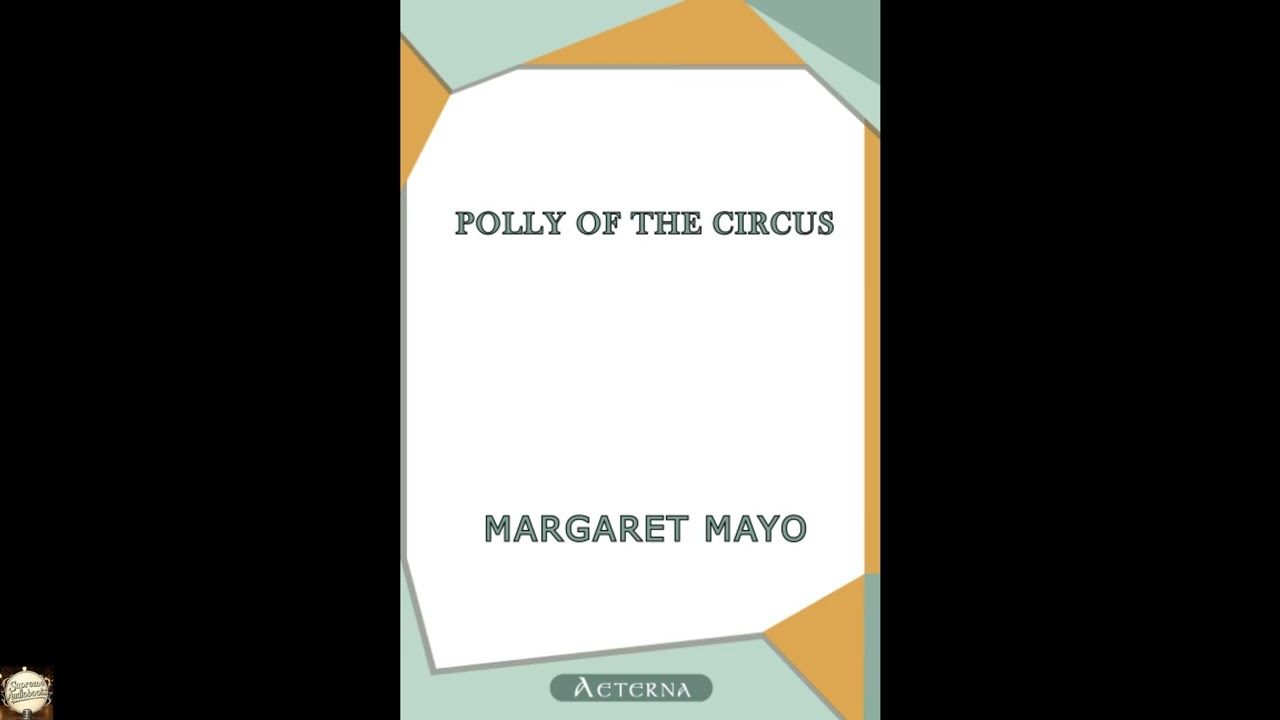
Polly of the Circus
Step into a world where the sawdust and tinsel of the circus collide with the hushed sanctity of a rural parsonage, a place where a spirited performer and an earnest minister find their lives inextricably entwined by fate. "Polly of the Circus," by the notable American playwright and novelist Margaret Mayo, presents a timeless tale of unexpected affection, societal judgment, and the courage it takes to defy the expectations of one's world for the sake of true connection. Originally a triumphant Broadway play that captivated audiences with its blend of melodrama and genuine human emotion, then quickly adapted into a novel by Mayo herself, this story holds a mirror to the enduring human fascination with forbidden love and the often-hypocritical boundaries society constructs between different walks of life. Its charm lies not just in its romantic core, but in its insightful look at what truly defines morality and happiness, a question as relevant today as it was in the early twentieth century. The story opens with Polly, a gifted and fearless bareback rider, a jewel in the crown of a traveling circus. Her life is one of transient spectacle, camaraderie among her fellow performers, and an existence far removed from conventional society. However, a sudden, devastating accident under the big top leaves her severely injured and stranded, unable to continue with the circus when it moves on. Through a twist of fate, she is taken in by Reverend John Hartley, the young, upright minister of a small, conservative town. Hartley’s world is one of duty, decorum, and strict moral codes, a stark contrast to Polly’s upbringing among the boisterous and free-spirited circus folk. As Polly convalesces in the parsonage, the initial discomfort and mutual suspicion between her and the reverend slowly begin to melt away. Polly, with her unvarnished honesty and vibrant spirit, brings an unexpected warmth and a touch of the unconventional into Hartley’s austere life. He, in turn, offers her a safe haven and a quiet kindness she hadn’t known existed outside her flamboyant world. Their growing affection, however, sparks immediate scandal and outrage among the narrow-minded parishioners. The town, unable to reconcile the image of their minister with a "circus girl," views Polly as an affront to their values, a dangerous temptation, and a threat to Hartley’s reputation and ministry. The central drama unfolds as John must choose between his sacred vows to his community and the profound, unconventional love that has blossomed in his heart, while Polly grapples with her own identity and her place in a world that seems determined to reject her. Margaret Mayo (1882-1951) was an influential figure in American theater during the early decades of the twentieth century, celebrated for her skill as both an actress and a prolific playwright. Born Lillian Elizabeth Slatten in Fairport, Louisiana, she adopted the stage name Margaret Mayo and began her career as a performer before transitioning to writing. Her work often resonated with audiences because it blended popular entertainment with a keen sense of human drama and often a touch of social commentary. "Polly of the Circus" premiered as a play in 1907, starring Mabel Taliaferro, and became an immediate sensation on Broadway, leading Mayo to novelize her own successful stage production in 1908. This act of authoring both play and novel for the same story highlights her versatile talent and her understanding of how to translate a narrative across different mediums. Mayo’s career flourished, and she went on to pen numerous other successful plays, including "Baby Mine" (1910) and "Twin Beds" (1914), solidifying her reputation as a formidable presence in American theatrical production. Her ability to craft engaging narratives with strong, often unconventional female characters marked her as a significant voice in a period when women writers and playwrights were gaining greater recognition. Later in her career, like many successful playwrights of her era, she transitioned to Hollywood, contributing to screenplays and further demonstrating her adaptive storytelling prowess across the burgeoning film industry. Though perhaps not as frequently studied in academic literary circles as some of her contemporaries, Mayo holds a meaningful place in the history of popular American storytelling, bridging the eras of the stage play and early cinema, and crafting narratives that spoke directly to the public's desires for romance, drama, and heartfelt emotion. At its core, "Polly of the Circus" explores the compelling theme of love transcending social boundaries. The stark contrast between Polly, the free-spirited circus performer, and John Hartley, the buttoned-down minister, is not merely a backdrop but the central engine of the story. Their affection defies the rigid class distinctions and moral prejudices of their time, illustrating how genuine connection can blossom in the most unexpected places. For example, the scenes where Polly, initially a source of scandal, begins to gently challenge John’s rigid worldview, show how their unlikely bond forces both characters to re-evaluate their preconceived notions about what constitutes a good life or a righteous person. Another significant theme is the clash between societal judgment and individual authenticity. The townsfolk’s outrage at Polly’s presence in the parsonage is a potent example of collective hypocrisy, where appearance and social standing are valued above character or compassion. Polly, despite her profession, exhibits a profound honesty and an unwavering spirit that often contrasts sharply with the narrow-mindedness of the "respectable" citizens. Her struggle to find acceptance, and John’s courageous stand against the judgment of his congregation, underscore the painful realities of social ostracism and the courage required to live truthfully when faced with public condemnation. The narrative also touches on the transformative power of empathy, as both Polly and John learn to understand and appreciate a world entirely different from their own, growing individually through their shared experience and challenging the very definitions of "sacred" and "profane." "Polly of the Circus" emerged at a fascinating juncture in American history, the Progressive Era of the early twentieth century. This was a period marked by significant social change, intense moralizing, and a burgeoning popular culture. The circus itself, a symbol of both thrilling entertainment and perceived moral laxity, held a unique place in the American imagination. Society was grappling with changing gender roles, urbanization, and a perceived erosion of traditional values, making the story of a "fallen woman" (as Polly might have been perceived by some) finding love with a man of God particularly provocative and intriguing. The popularity of the play, and subsequent novel, tapped into public debates about morality, class distinctions, and the nature of true virtue, offering a romantic narrative that simultaneously entertained and subtly challenged societal norms. It also reflected the growing trend of adapting successful stage productions into novels, allowing a wider audience to experience popular stories and showing the commercial synergy developing between different forms of media. To experience "Polly of the Circus" as an audiobook is to truly immerse oneself in the dramatic shifts of atmosphere and emotion that define this story. A skilled narrator brings to life the stark contrast between the boisterous, almost carnival-like energy of the circus world and the quiet, often stifling solemnity of the small-town parsonage. Listen for the distinct vocalizations that differentiate Polly’s unvarnished charm and spirited retorts from John Hartley’s more formal, yet increasingly earnest, declarations. The pacing of the narration will allow the listener to feel the gradual build-up of their unconventional romance, the escalating tension of societal disapproval, and the poignant moments of introspection. The dialogue, rich with the language and sensibilities of the early 1900s, takes on new depth when performed, capturing both the period’s wit and the raw emotional honesty that drives the narrative. This production promises an engaging and moving encounter with a classic tale of love, prejudice, and the enduring power of the human heart.
Enjoyed Polly of the Circus? A few ways to support us
Audible & Amazon links are affiliate; we may earn a small commission at no extra cost.
About this production
Human narration by a volunteer reader from LibriVox.org, the public-domain audiobook project. LibriVox volunteers record literary works whose copyright has expired in the United States, releasing the resulting recordings into the public domain.
Polly of the Circus by Margaret Mayo. The underlying text is in the U.S. public domain. We do not republish any modern copyrighted edition, translation, or commentary.
The 4K cinematic visuals accompanying this audiobook are generated by an AI image model from prompts derived from the source text. No copyrighted photos, paintings, or stock footage are used. AI generation is disclosed on every video on our YouTube channel as required by YouTube's altered/synthetic content policy.
English subtitles are transcribed from the LibriVox recording with OpenAI Whisper. Translations into the 11 other supported languages are produced by Meta's NLLB-200 neural translation model. No human translator's copyrighted translation is used.
Questions about sourcing or rights? See our DMCA & Sourcing policy or contact us.
Enjoyed this audiobook?
If you'd like to own a copy of Polly of the Circus or hear a professionally produced edition, the links below help support free audiobook production at no extra cost to you.
As an Amazon Associate we earn from qualifying purchases. Audible / print links are affiliate.