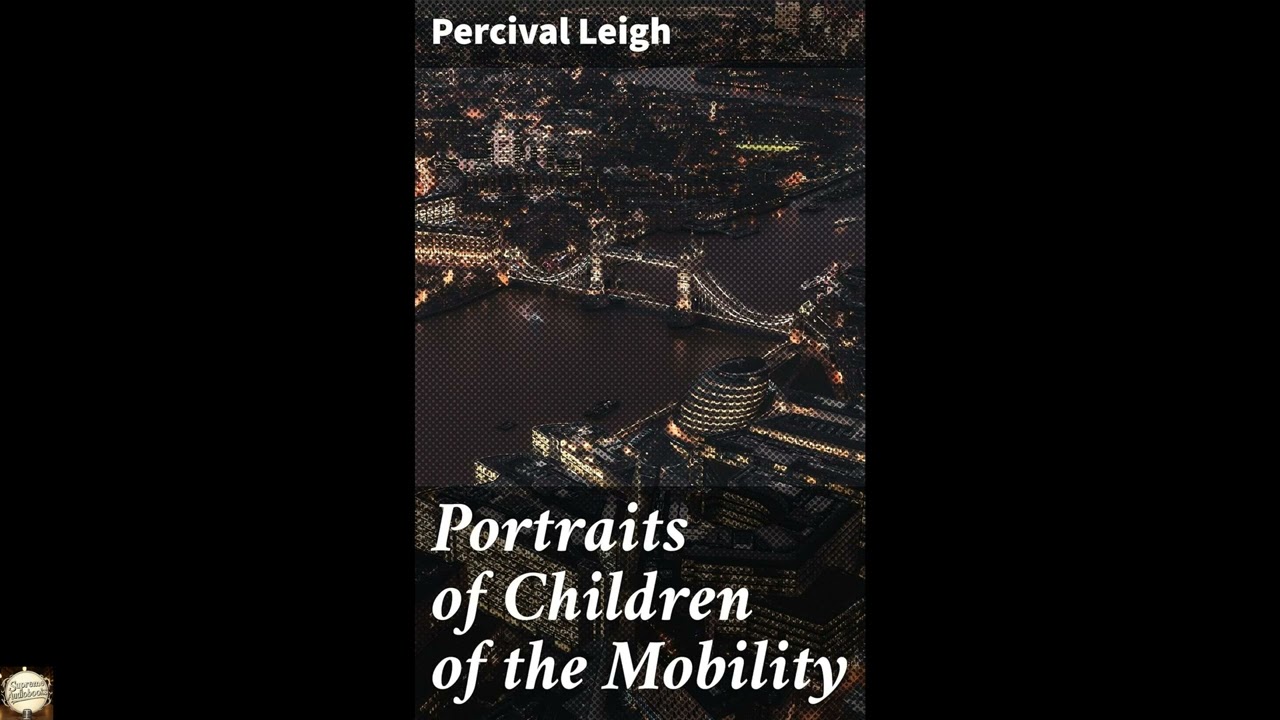
Portraits of Children of the Mobility: Exploring Childhood through Victorian Social
Step into the bustling, complex world of Victorian England through a collection of narratives that scrutinize the lives of its most vulnerable inhabitants: children. "Portraits of Children of the Mobility: Exploring Childhood through Victorian Social" offers an unparalleled glimpse into the shifting social landscapes of the 19th century, seen through the eyes and experiences of its youngest citizens. This compelling series of observations doesn't just chronicle history; it brings to life the universal struggles and triumphs of growing up amidst profound societal change. It challenges our contemporary understanding of childhood, revealing the diverse realities that shaped identity, class, and destiny long before modern protections existed, making its insights remarkably relevant to discussions of social justice and individual resilience even today. Rather than following a single protagonist through a linear tale, "Portraits of Children of the Mobility" presents a mosaic of distinct lives, each a vignette sketching a different facet of Victorian childhood. The setting primarily encompasses England's rapidly industrializing urban centers, the stark contrasts of its impoverished tenements, and the rigid, often isolated, confines of its country estates. We meet a parade of unforgettable young individuals: the quick-witted street hawker navigating the perilous alleys of East London, a child factory worker enduring long hours in stifling conditions, the lonely offspring of a prosperous but distant merchant family, and the quiet daughter of a governess, ever watchful of the social ladder she can neither climb nor entirely escape. Each character, though transient, leaves an indelible mark, representing not just themselves but the broader struggles of their station. The central conflict animating these portraits is the relentless pressure of social and economic forces upon fragile young lives. Children are depicted as subjects of circumstances largely beyond their control, forced to adapt to their families' fortunes, the whims of their employers, or the strictures of their class. Their innocence is often pitted against the harsh realities of poverty, the demands of labor, or the expectations of a society obsessed with propriety and status. The arc of these collective stories isn't a dramatic confrontation with a single antagonist, but rather a slow, unfolding revelation of how profoundly social "mobility"—both upward, downward, and geographical—reshaped individual destinies, fostering resilience in some, while tragically breaking others. The narratives offer no easy answers, instead prompting profound reflection on the human cost of a rapidly changing world. The authorship of "Portraits of Children of the Mobility" remains shrouded in the anonymity common to many keen social observers and diarists of the Victorian age. This anonymity allowed the creator—or creators, as it may be a compilation of keen insights—to present an unflinching, direct account of their subjects without the need for personal endorsement or the potential biases associated with a named individual. Such texts often arose from a burgeoning interest in social reform and a more systematic approach to understanding the conditions of the working classes and the vulnerable. Its emergence reflects a period when documentation and realistic depiction began to gain prominence, often preceding or informing more formalized sociological studies. The very lack of a named author reinforces the work's focus on its subjects, giving voice to those who might otherwise have remained unheard and unseen, rather than to the one recording them. This collection holds a significant place within the tradition of Victorian social commentary, standing alongside the great realist writers who sought to expose the darker corners of society. It resonates with the era's growing conscience, which fueled calls for child labor laws and educational reform. Rather than a sentimentalized view of childhood, it presents a stark, often heartbreaking, realism. One prominent theme is the stark class divide and its impact on opportunity. For instance, a portrait might show a child from a respectable but declining family, whose education is cut short to conserve dwindling resources, contrasted with a street orphan whose wit and adaptability offer a different, perilous path to survival. A second significant theme is the precariousness of innocence. Children are repeatedly shown being stripped of their carefree years by economic necessity, forced into adult roles far too soon, whether in the mills, the mines, or as tiny domestic servants. One scene might depict a small boy, his hands calloused and face smudged with soot, mechanically operating machinery, his youthful spirit slowly eroded by repetition and exhaustion. A third theme is the evolving concept of childhood itself. While the Victorians idealized childhood as a sacred stage, this work reveals the chasm between that ideal and the lived reality for the majority of children, especially those experiencing any form of social flux. It questions who truly benefited from the era's growing sentimentality towards children, and who was left behind. A portrait of a child shuffled between distant relatives after a parent's death, navigating unfamiliar social rules and emotional neglect, vividly enacts this theme. The book consistently highlights the resilience and resourcefulness of children in the face of adversity. Despite their vulnerability, many of these young individuals demonstrate remarkable ingenuity, empathy, and determination, finding small moments of joy or asserting their individuality even within the most restrictive environments—a flicker of defiant hope in a world that often offered little. The late Victorian period, when such observations gained traction, was a time of immense social and economic upheaval. The Industrial Revolution had transformed Britain from an agrarian society into an industrial powerhouse, leading to unprecedented urbanization, the growth of a massive working class, and the simultaneous creation of vast wealth and crushing poverty. Politically, movements for social reform, public health initiatives, and early labor rights were gaining momentum, fueled by a growing awareness of the abysmal conditions faced by many. Literarily, realism was a dominant force, with authors seeking to depict life as it truly was, often focusing on social issues. "Portraits of Children of the Mobility" emerged from this confluence of societal concern and a commitment to documentary-style storytelling, serving as a powerful, albeit anonymous, testament to the need for greater understanding and compassion towards the young lives caught in the maelstrom of progress. It stands as a vital record of an era grappling with the consequences of its own rapid growth. Listening to "Portraits of Children of the Mobility: Exploring Childhood through Victorian Social" as an audiobook offers a uniquely immersive way to absorb these vital narratives. A skilled narrator breathes distinct life into each of the individual children and the myriad adults they encounter, lending a voice to the voiceless and capturing the essence of each social stratum. The "several hours" run length allows for a sustained period of reflection and empathy, giving ample space for the listener to contemplate the subtle nuances of social class, the pangs of hunger, or the fleeting moments of childhood joy described. Listen for the narrator's subtle shifts in pacing, reflecting the hurried pace of city life against the desolate quiet of the countryside, and how vocal performance subtly conveys the innocence, weariness, or hardened practicality of each young subject. The spoken word brings the atmospheric details—the clatter of cobbled streets, the hum of factory machinery, the hushed tones of a privileged nursery—to the forefront, making the Victorian world vividly immediate and deeply personal.
Enjoyed Portraits of Children of the Mobility: Exploring Childhood through Victorian Social? A few ways to support us
Audible & Amazon links are affiliate; we may earn a small commission at no extra cost.
About this production
Human narration by a volunteer reader from LibriVox.org, the public-domain audiobook project. LibriVox volunteers record literary works whose copyright has expired in the United States, releasing the resulting recordings into the public domain.
Portraits of Children of the Mobility: Exploring Childhood through Victorian Social by Catherine D. Leverkus. The underlying text is in the U.S. public domain. We do not republish any modern copyrighted edition, translation, or commentary.
The 4K cinematic visuals accompanying this audiobook are generated by an AI image model from prompts derived from the source text. No copyrighted photos, paintings, or stock footage are used. AI generation is disclosed on every video on our YouTube channel as required by YouTube's altered/synthetic content policy.
English subtitles are transcribed from the LibriVox recording with OpenAI Whisper. Translations into the 11 other supported languages are produced by Meta's NLLB-200 neural translation model. No human translator's copyrighted translation is used.
Questions about sourcing or rights? See our DMCA & Sourcing policy or contact us.
Enjoyed this audiobook?
If you'd like to own a copy of Portraits of Children of the Mobility: Exploring Childhood through Victorian Social or hear a professionally produced edition, the links below help support free audiobook production at no extra cost to you.
As an Amazon Associate we earn from qualifying purchases. Audible / print links are affiliate.