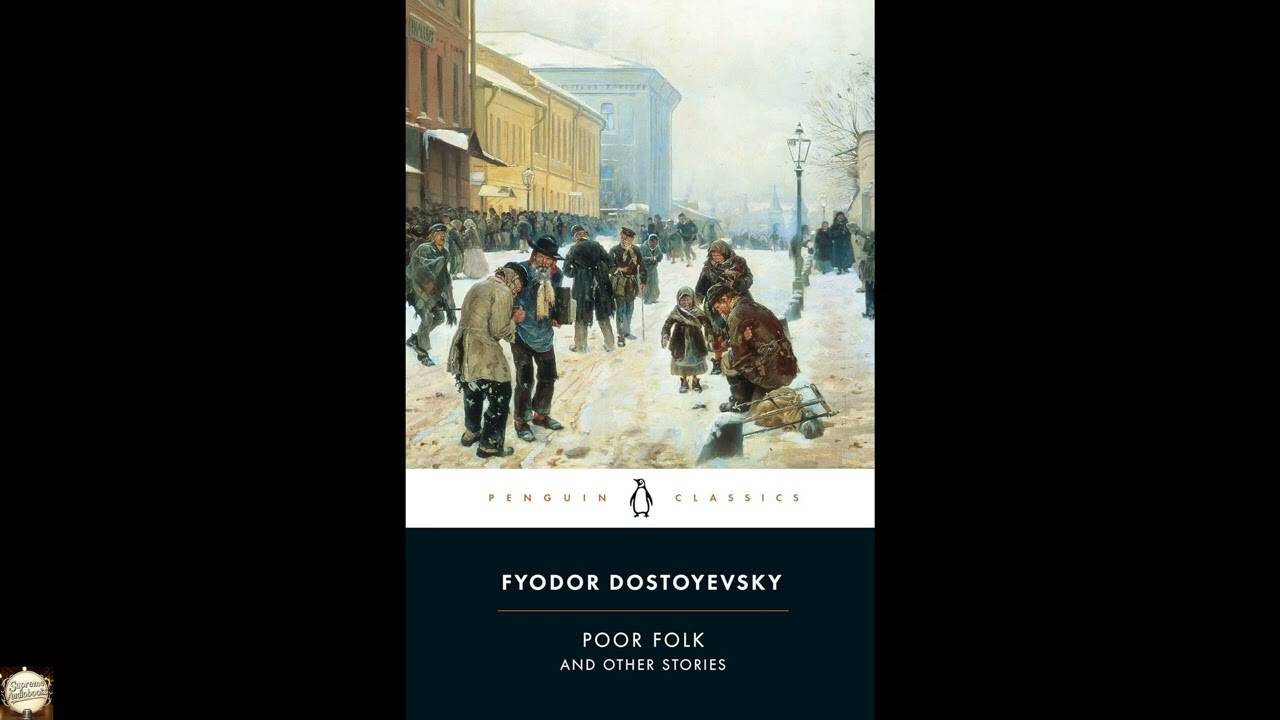
Poor Folk and Other Stories
Fyodor Dostoyevsky’s Poor Folk and Other Stories introduces listeners to the foundational voice of one of literature’s most penetrating minds. More than just a collection of early works, this volume presents his very first novel, Poor Folk, a groundbreaking narrative that immediately established his unique brand of psychological realism and profound human insight. What makes this particular book resonate even today, nearly two centuries after its initial publication, is its unflinching gaze into the lives of individuals struggling on the margins of society, grappling with poverty, loneliness, and the relentless quest for dignity. It offers a window into the souls of forgotten people, revealing the universal emotional truths that bind us all, regardless of station or era, proving that empathy remains a currency more valuable than gold. Poor Folk, presented as a series of letters exchanged between an elderly, impoverished government clerk named Makar Devushkin and his young, distant relative, Varvara Dobroselova, paints a poignant picture of mid-19th century St. Petersburg. The city itself becomes a character—cold, indifferent, sprawling, a place where grand boulevards hide squalid courtyards and freezing garrets. Makar and Varvara live across from each other in these cramped, dismal quarters, separated by a grimy courtyard, yet intimately connected by their shared destitution and a tender, platonic affection. Makar, a man acutely sensitive to the opinions of others, is constantly humiliated by his threadbare clothes and his low position, while Varvara, orphaned and delicate, endures chronic illness and the constant threat of further degradation. Their correspondence forms the core of the story, allowing each to voice their daily anxieties, small triumphs, and deep-seated fears. Makar tries desperately to shield Varvara from the harsh realities of their existence, spending what little money he has on small comforts for her—a ribbon, a pot of geraniums, a few sweets—often at the expense of his own meager needs. He sees himself as her protector, even as his own circumstances grow increasingly dire. Varvara, in turn, shares her past hardships, her memories of a happier rural childhood, and her growing despair about their future. The central conflict arises from their desperate efforts to maintain a semblance of respectability and hope in the face of overwhelming poverty and societal indifference, their bond a fragile bulwark against a world that seems determined to crush them. Fyodor Mikhailovich Dostoyevsky was born in Moscow in 1821, the son of a doctor at a public hospital, giving him early exposure to human suffering and the lives of the less fortunate. Although he trained as a military engineer, literature quickly became his true calling. Poor Folk, published in 1846, brought him immediate critical acclaim, hailed by the influential critic Vissarion Belinsky as the emergence of a new Russian genius. However, Dostoyevsky's early success was interrupted by a harrowing experience that would forever alter his perspective and infuse his later writings with an unparalleled depth. In 1849, he was arrested for his involvement with the Petrashevsky Circle, a group that discussed utopian socialist ideals and criticized the tsarist regime. Sentenced to death, he endured a mock execution, standing before a firing squad only to have his sentence commuted at the last moment to penal servitude in Siberia. He spent four years in a katorga prison camp, followed by several years of compulsory military service in exile. This period of intense suffering, reflection, and spiritual conversion profoundly shaped his views on human nature, faith, freedom, and the nature of evil. Upon his return to St. Petersburg, he would go on to create some of the most enduring works of world literature, including Notes from Underground, Crime and Punishment, The Idiot, Demons, and his culminating achievement, The Brothers Karamazov, securing his place as one of the towering figures of psychological realism and proto-existentialist thought. He died in 1881, leaving behind a legacy that continues to challenge and illuminate human experience. Poor Folk enacts several profound themes that would continue to occupy Dostoyevsky throughout his career. Foremost among these is the dehumanizing impact of poverty and social inequality. Through Makar’s struggles to afford new boots or pay his rent, and Varvara’s constant battle with illness exacerbated by her living conditions, the text vividly illustrates how destitution strips individuals of their autonomy and subjects them to perpetual shame. We witness Makar's attempts to hide his shabby clothing from his superiors, a small but powerful example of the constant anxiety the poor face over their outward appearance and public perception. Another central theme is the enduring quest for human dignity and self-respect. Makar is acutely aware of his social standing and struggles to maintain a sense of worth despite his lowly position. He clings to the idea of his "cleverness" and "originality" in his letters, even as he knows he is considered a mere copyist. His furious reaction when a superior offers him a small sum of money, seeing it as an insult rather than charity, underscores his desperate need to preserve his inner self, even when his external circumstances offer no support. Finally, the story stands as a testament to the quiet power of compassion and empathy, which blossom between Makar and Varvara. Their mutual solicitude, the way they support each other through simple gestures and heartfelt words, forms a refuge from their harsh reality. Their letters become a shared sanctuary where their true selves can exist, free from the judgment and indifference of the outside world. Poor Folk emerged from a specific cultural and literary milieu in mid-19th century Russia. This was a period of intense social stratification under the tsarist autocracy, where serfdom still existed and a vast chasm separated the aristocracy from the burgeoning urban poor and the rural peasantry. Intellectually, it was a time of burgeoning radical thought among the intelligentsia, who questioned existing social structures and sought reforms. In the literary world, the "Natural School" of realism was gaining traction, moving away from romantic idealism to focus on the lives of ordinary people, often the downtrodden. Dostoyevsky, influenced by Nikolai Gogol's "The Overcoat," took this focus on the "little man" and elevated it, imbuing his characters with a complex psychological interiority that transcended mere social commentary. He wasn't just portraying poverty; he was probing its emotional and spiritual toll. The novel's epistolary format also allowed for a more intimate and subjective portrayal of these characters, giving voice to those who were otherwise voiceless in society. It was a cry for recognition for the forgotten, a testament to their inner lives amidst their outer suffering, making it a foundational work for future explorations of the human psyche in Russian literature. Listening to Poor Folk and Other Stories as an audiobook offers a particularly immediate and intimate connection to Dostoyevsky’s words. The very structure of Poor Folk as an epistolary novel—a story told entirely through letters—makes it ideal for audio presentation. Hearing the voices of Makar and Varvara read aloud allows the listener to experience their written correspondence as if receiving the letters themselves, immersing one directly into their anxieties, their quiet affections, and their alternating hopes and despairs. The several hours of narration provide ample time to settle into the rhythms of their lives, to appreciate the careful pacing that mirrors the slow, grinding nature of their existence. Pay attention to the subtle shifts in the narrator's voice, reflecting Makar's awkward pride, his desperate cheerfulness, and his creeping despair, or Varvara's quiet resignation and fleeting memories of comfort. The nuances of their dialogue, unfolding letter by letter, become a direct conduit to their souls, making their plight and their enduring human spirit profoundly palpable.
Enjoyed Poor Folk and Other Stories? A few ways to support us
Audible & Amazon links are affiliate; we may earn a small commission at no extra cost.
About this production
Human narration by a volunteer reader from LibriVox.org, the public-domain audiobook project. LibriVox volunteers record literary works whose copyright has expired in the United States, releasing the resulting recordings into the public domain.
Poor Folk and Other Stories by Fyodor Dostoyevsky. The underlying text is in the U.S. public domain. We do not republish any modern copyrighted edition, translation, or commentary.
The 4K cinematic visuals accompanying this audiobook are generated by an AI image model from prompts derived from the source text. No copyrighted photos, paintings, or stock footage are used. AI generation is disclosed on every video on our YouTube channel as required by YouTube's altered/synthetic content policy.
English subtitles are transcribed from the LibriVox recording with OpenAI Whisper. Translations into the 11 other supported languages are produced by Meta's NLLB-200 neural translation model. No human translator's copyrighted translation is used.
Questions about sourcing or rights? See our DMCA & Sourcing policy or contact us.
Enjoyed this audiobook?
If you'd like to own a copy of Poor Folk and Other Stories or hear a professionally produced edition, the links below help support free audiobook production at no extra cost to you.
As an Amazon Associate we earn from qualifying purchases. Audible / print links are affiliate.