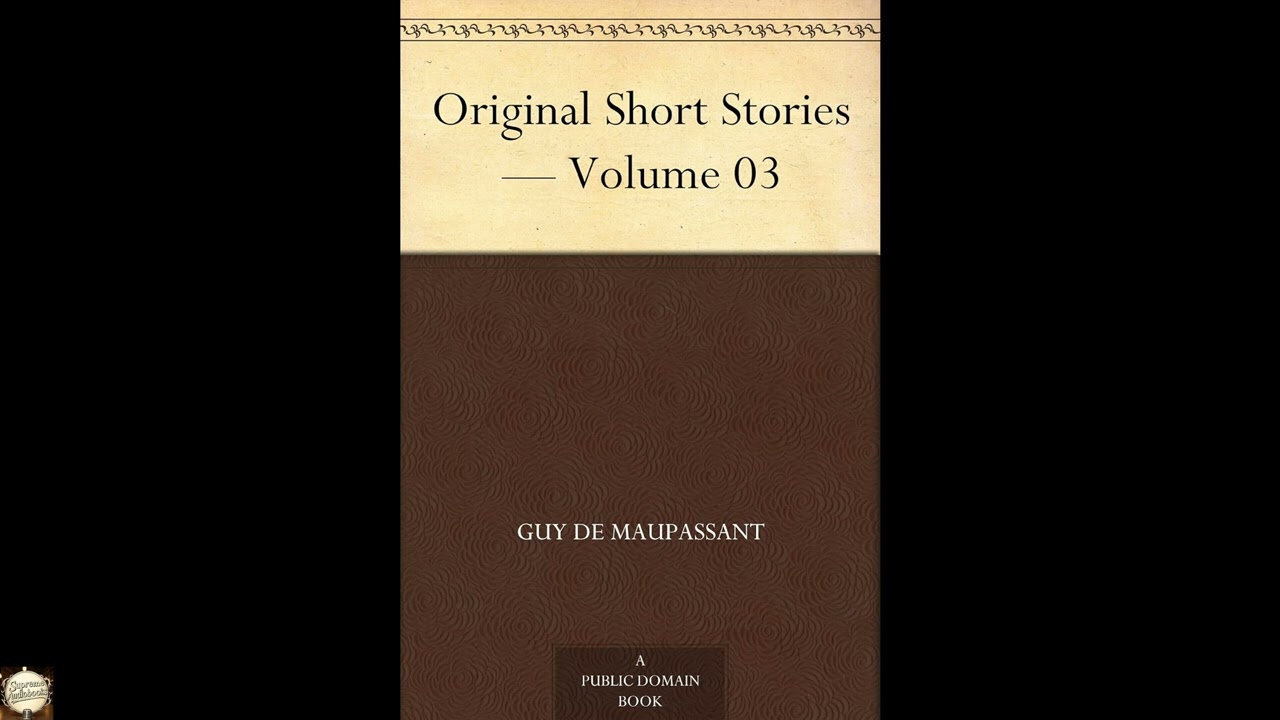
Original Short Stories — Volume 03
Dive into the world of nineteenth-century France, a place of stark social divisions, simmering desires, and often brutal realities, through the eyes of one of literature's most precise and penetrating observers. "Original Short Stories — Volume 03" presents another compelling collection from Guy de Maupassant, a writer who perfected the art of the short narrative, offering readers a window into the human condition that remains startlingly clear and relevant today. These stories, each a self-contained gem, strip away pretense to reveal the raw impulses, the quiet struggles, and the unexpected twists that shape ordinary lives. A listener today will find in these pages a mirror reflecting timeless themes of ambition, vanity, class, and the often-unforgiving hand of fate, all presented with an unflinching honesty that resonates across centuries. Within these pages, listeners will typically encounter a varied cast of characters, from the ambitious bourgeois to the desperate peasant, the cynical soldier to the naive young woman, all navigating the complex social landscape of France after the Franco-Prussian War. Maupassant excels at quickly establishing a sense of place, whether it's a bustling Parisian café, a quiet Norman village, or a fog-shrouded battlefield. His narratives often center on a seemingly simple event or decision that spirals into unforeseen consequences, or a subtle observation that exposes the true nature of a person or a society. Listeners might find themselves observing a clerk dreaming of social ascent, a wife contemplating an act of desperation, or a group of soldiers facing the grim realities of conflict. The arc of these stories often begins with an introduction to a character or a situation, building steadily toward a point of tension or crisis. The central conflict usually involves a collision between individual desire and social expectation, or a confrontation with the often-indifferent forces of fate. Maupassant masterfully builds suspense through sharp dialogue and vivid descriptions, leading to a conclusion that is frequently abrupt, often ironic, and always thought-provoking. He avoids elaborate resolutions, instead preferring to leave the listener with a keen sense of life’s inherent ambiguities and the lingering echo of human folly or resilience. No easy answers are provided, only stark, memorable depictions of human experience. Guy de Maupassant, born Henri René Albert Guy de Maupassant in 1850 in Normandy, was a literary meteor who blazed brightly but briefly across the French literary sky. His upbringing, split between his mother's aristocratic sensibilities and his father's more bohemian leanings, gave him a unique perspective on French society. His literary career truly began under the tutelage of Gustave Flaubert, a close friend of his mother, who instilled in him a rigorous discipline for writing and a profound respect for precise observation and economical prose. Flaubert guided Maupassant, advising him to choose "something you alone have seen and said," a maxim he would follow with devastating effectiveness. Maupassant’s personal experiences deeply influenced his output. He served as a soldier during the Franco-Prussian War, witnessing firsthand the brutality and absurdity of conflict, experiences that would fuel some of his most poignant and cynical stories, such as "Boule de Suif." After the war, he worked as a civil servant in Paris, a position that exposed him to the mundane yet often tragic lives of the urban middle class and bureaucracy. His prodigious output—nearly 300 short stories, six novels, and several travel books—was accomplished in little over a decade. His other notable novels include Bel-Ami, a biting satire of journalism and social ambition, and the unsettling psychological novella, The Horla. He tragically succumbed to the effects of syphilis and mental illness, dying in 1893 at the young age of 42, leaving behind an indelible mark on literature. He is considered one of the foremost practitioners of Realism and Naturalism, and a foundational figure in the development of the modern short story. Maupassant’s stories frequently illuminate the complex interplay of social class and hypocrisy within 19th-century French society. He unflinchingly exposes the pretenses of the bourgeoisie, showing how superficial appearances often mask deeper moral failings or profound personal suffering. For instance, in stories reminiscent of his famous "The Necklace," a character's desperate attempt to maintain social standing through a borrowed object can lead to a lifetime of grinding poverty and lost dreams, revealing the crushing weight of vanity and societal expectation. These narratives serve as a potent critique of a society obsessed with status and reputation, where the veneer of respectability often conceals a harsh reality. Another recurring theme is the stark brutality and fundamental absurdity of war. Having experienced the Franco-Prussian conflict, Maupassant often depicts the devastating impact of armed conflict not just on soldiers, but on innocent civilians caught in its path. He frequently shows how war can strip away human dignity, forcing ordinary people into extraordinary, often morally compromising, situations. The random nature of survival and death, the sudden loss of innocence, and the lasting psychological scars are all rendered with a chilling, objective clarity, offering a powerful commentary on the human cost of conflict and the folly of nationalism. Maupassant’s works often convey a sense of human frailty and the arbitrary nature of fate, demonstrating how seemingly insignificant choices or chance encounters can alter a life’s trajectory irrevocably. The late nineteenth century in France was a period of immense social and political upheaval, following the devastating Franco-Prussian War and the subsequent establishment of the Third Republic. It was an era marked by rapid industrialization, growing urban populations, and significant shifts in class structure. Culturally, this was the ascendancy of Realism and Naturalism in literature, movements that sought to depict life with scientific objectivity and unflinching honesty, often focusing on the struggles of ordinary people and the deterministic forces shaping their lives. Writers like Émile Zola and Gustave Flaubert championed this approach, moving away from romantic idealism towards a more gritty, observational style. Maupassant emerged directly from this fertile literary ground. His concise, unsentimental prose and his focus on psychological realism and social critique perfectly aligned with the prevailing literary trends. The proliferation of newspapers and popular journals during this period also provided a ready platform for short stories, allowing Maupassant to publish prolifically and gain widespread recognition. His work became a vital part of the cultural conversation, reflecting and commenting on the anxieties, ambitions, and moral compromises of a society grappling with modernity and its consequences. He refined the short story into a keen instrument for social commentary and psychological analysis, making it accessible and impactful for a wide readership. Listening to "Original Short Stories — Volume 03" as an audiobook offers a uniquely immersive experience, allowing the narratives to unfold with an intimate immediacy. A skilled narrator can bring out the precise rhythm of Maupassant’s prose, highlighting the subtle ironies and emotional depths embedded in his language. The pacing often begins methodically, drawing the listener into the scene, before accelerating towards a often-sudden, impactful conclusion. Listen for the distinct voices given to different characters, bringing to life the dialogues that are so central to Maupassant's character development and social commentary. The atmospheric descriptions of 19th-century landscapes and Parisian interiors truly come alive through spoken word, conjuring a vivid sense of time and place. These stories, "several hours" in total length, are ideal for focused listening, perhaps during a commute or a quiet evening, where each tale can be absorbed and contemplated fully, leaving a lasting impression.
Enjoyed Original Short Stories — Volume 03? A few ways to support us
Audible & Amazon links are affiliate; we may earn a small commission at no extra cost.
About this production
Human narration by a volunteer reader from LibriVox.org, the public-domain audiobook project. LibriVox volunteers record literary works whose copyright has expired in the United States, releasing the resulting recordings into the public domain.
Original Short Stories — Volume 03 by Guy de Maupassant. The underlying text is in the U.S. public domain. We do not republish any modern copyrighted edition, translation, or commentary.
The 4K cinematic visuals accompanying this audiobook are generated by an AI image model from prompts derived from the source text. No copyrighted photos, paintings, or stock footage are used. AI generation is disclosed on every video on our YouTube channel as required by YouTube's altered/synthetic content policy.
English subtitles are transcribed from the LibriVox recording with OpenAI Whisper. Translations into the 11 other supported languages are produced by Meta's NLLB-200 neural translation model. No human translator's copyrighted translation is used.
Questions about sourcing or rights? See our DMCA & Sourcing policy or contact us.
Enjoyed this audiobook?
If you'd like to own a copy of Original Short Stories — Volume 03 or hear a professionally produced edition, the links below help support free audiobook production at no extra cost to you.
As an Amazon Associate we earn from qualifying purchases. Audible / print links are affiliate.