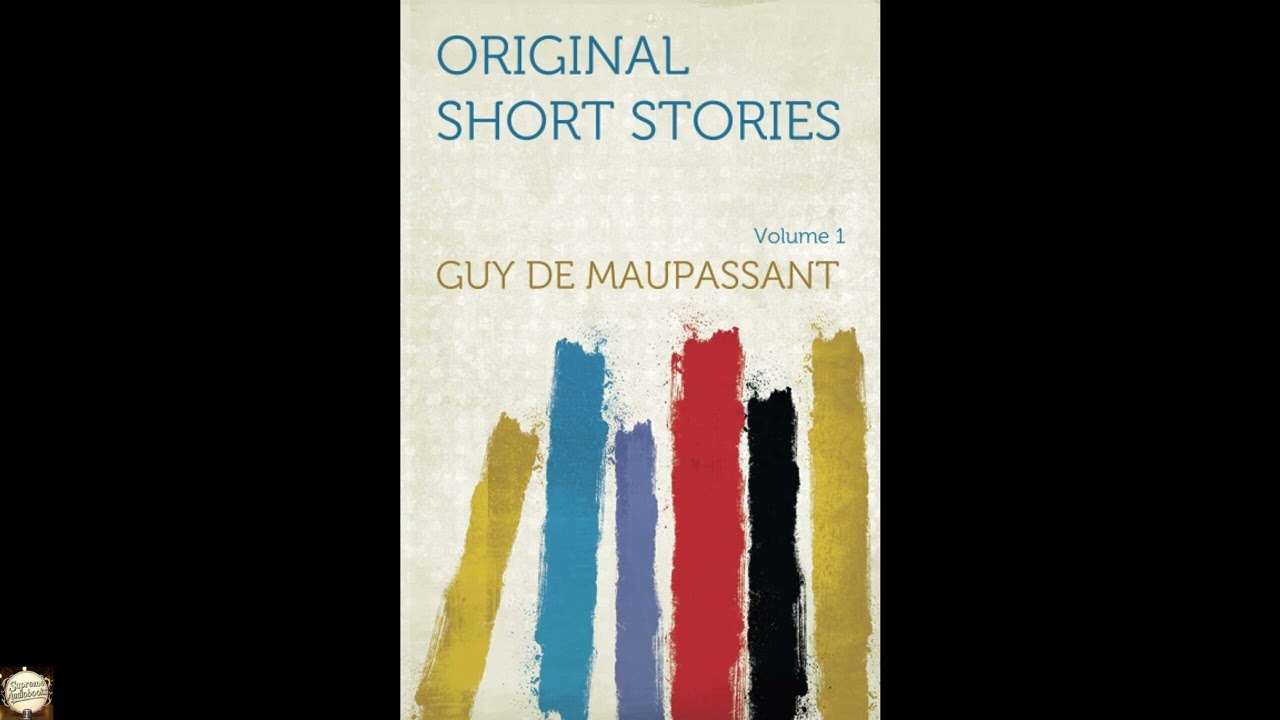
Original Short Stories — Volume 01"
In the shifting landscape of literature, some voices achieve an almost prophetic clarity, speaking across generations with undiminished force. Guy de Maupassant stands as one such figure, his collection, "Original Short Stories — Volume 01," offering not just a window into a bygone era, but a mirror reflecting the persistent foibles, desires, and ironies of human existence. Listening to his work today is to engage with a writer who stripped away pretense to expose the raw nerve of life, presenting stories that are as piercing and relevant now as they were upon their initial publication. This collection is an invitation to confront the subtleties of human nature and society, rendered with a precision that remains astounding. Listeners will find themselves transported to late 19th-century France, a world where the quiet rhythms of rural Normandy intersect with the bustling, often superficial, elegance of Parisian life. Maupassant introduces an expansive cast of characters, from the striving middle-class clerk anxious about appearances to the pragmatic Norman peasant rooted in the soil, the elegant but frequently hypocritical aristocrat, the hardened soldier grappling with the brutalities of war, and the street-smart courtesan navigating social judgment. Each narrative, while distinct in its particulars, often places these individuals in situations that test their morality, expose their hidden desires, or reveal the often-cruel hand of fate. The central conflict in many of these narratives arises from the clash between societal expectations and individual reality. Maupassant frequently begins with a seemingly mundane premise—a borrowed necklace, a chance encounter, a simple misunderstanding over a piece of string—only to unravel it with disarming objectivity, laying bare the profound consequences of pride, greed, social climbing, or the arbitrary nature of reputation. The arc of these stories often moves from an initial state of relative normalcy or aspiration towards an unexpected, frequently ironic, and sometimes tragic conclusion, leaving the listener to ponder the often-bleak implications of human folly and circumstance. Born Henri René Albert Guy de Maupassant in 1850 in Tourville-sur-Arques, France, the author’s life, though relatively short, was intensely prolific and deeply intertwined with the literary currents of his time. He was a protégé of the eminent novelist Gustave Flaubert, who served as a stern but invaluable mentor, shaping Maupassant’s rigorous prose style and insistence on precise observation. His early career also saw him serving in the Franco-Prussian War, an experience that would profoundly influence the realistic and often grim depictions of conflict found in many of his later works. Following the war, he worked as a civil servant, a role that provided him with ample opportunity to observe the bureaucratic absurdities and social strata he would later satirize. Maupassant’s literary output was astonishingly concentrated, with the vast majority of his more than 300 short stories and six novels appearing between 1880 and 1890. He quickly established himself as a leading figure in the Naturalist and Realist movements, alongside contemporaries like Émile Zola. His place in the literary canon is secure as one of the undisputed masters of the short story, revered for his concise, objective style, his psychological acuity, and his unflinching portrayal of human experience. His tragic decline due to syphilis, leading to his death in 1893 in Paris, cut short a career that had already left an indelible mark on literature. A recurring theme within Maupassant's collection is the pervasive presence of irony and the indifferent hand of fate. Consider a story like "The Necklace," where a woman’s desperate pursuit of social status through a borrowed piece of jewelry leads to a decade of crushing poverty and labor, only for a final revelation to underscore the futility of her sacrifice. Similarly, "A Piece of String" demonstrates how a simple, misunderstood act of a peasant picking up a discarded item can escalate into a public accusation, destroying a man's reputation and ultimately his life, highlighting the destructive power of rumor and prejudice. Maupassant’s narrative technique consistently sets up expectations only to subvert them, exposing the often-cruel disjunct between appearance and reality. Another central concern is the incisive critique of social hypocrisy and the stark divisions between classes. In a story such as "Boule de Suif," a group of "respectable" bourgeois citizens, fleeing the Prussian invasion, relies on the good-hearted, patriotic courtesan for their safety and sustenance, only to ostracize and condemn her once their immediate needs are met. This narrative lays bare the shallow moralizing and self-serving nature of the privileged, contrasting it with the genuine, albeit socially unaccepted, integrity of the protagonist. Maupassant dissects the pretenses of society, showing how status and outward respectability often mask profound moral failings. The late 19th century, the period during which Maupassant produced most of his celebrated work, was a time of significant cultural and political upheaval in France. The nation was grappling with the aftermath of the devastating Franco-Prussian War (1870-71) and the establishment of the Third French Republic, which brought with it a period of democratic, if sometimes unstable, governance. This era saw rapid industrialization, urbanization, and the rise of a powerful middle class, but also significant social stratification and anxieties about national identity and recovery. In the literary world, this period marked the ascendancy of Realism and Naturalism, movements that championed objective observation and a scientific approach to depicting life, often as a reaction against the perceived excesses of Romanticism. Maupassant’s work, with its emphasis on meticulous detail, psychological realism, and a dispassionate gaze at human behavior influenced by environment and heredity, perfectly embodied these literary trends. His stories emerged from a society keen to examine its own wounds, its aspirations, and its often-unflattering reflections in the mirror of everyday life. Listening to "Original Short Stories — Volume 01" as an audiobook offers a uniquely intimate and engaging way to experience Maupassant’s precise prose. The skilled narrator's voice becomes the conduit for Maupassant's keen observations, bringing to life the subtle inflections of dialogue and the unspoken currents of emotion beneath the surface. With several hours of listening material, this collection allows for sustained immersion, whether consumed in segments over time or enjoyed during a focused session. Pay attention to the narrator’s pacing, which can build tension in suspenseful moments or allow the full weight of Maupassant's ironic twists to settle. The distinct voices given to different characters enhance the atmosphere, helping to distinguish the petty bureaucrats from the stoic peasants, and the cunning socialites from the weary soldiers. This auditory experience amplifies the human predicaments Maupassant so expertly renders, ensuring their lasting relevance is felt anew with every spoken word.
Enjoyed Original Short Stories — Volume 01"? A few ways to support us
Audible & Amazon links are affiliate; we may earn a small commission at no extra cost.
About this production
Human narration by a volunteer reader from LibriVox.org, the public-domain audiobook project. LibriVox volunteers record literary works whose copyright has expired in the United States, releasing the resulting recordings into the public domain.
Original Short Stories — Volume 01" by Guy de Maupassant. The underlying text is in the U.S. public domain. We do not republish any modern copyrighted edition, translation, or commentary.
The 4K cinematic visuals accompanying this audiobook are generated by an AI image model from prompts derived from the source text. No copyrighted photos, paintings, or stock footage are used. AI generation is disclosed on every video on our YouTube channel as required by YouTube's altered/synthetic content policy.
English subtitles are transcribed from the LibriVox recording with OpenAI Whisper. Translations into the 11 other supported languages are produced by Meta's NLLB-200 neural translation model. No human translator's copyrighted translation is used.
Questions about sourcing or rights? See our DMCA & Sourcing policy or contact us.
Enjoyed this audiobook?
If you'd like to own a copy of Original Short Stories — Volume 01" or hear a professionally produced edition, the links below help support free audiobook production at no extra cost to you.
As an Amazon Associate we earn from qualifying purchases. Audible / print links are affiliate.