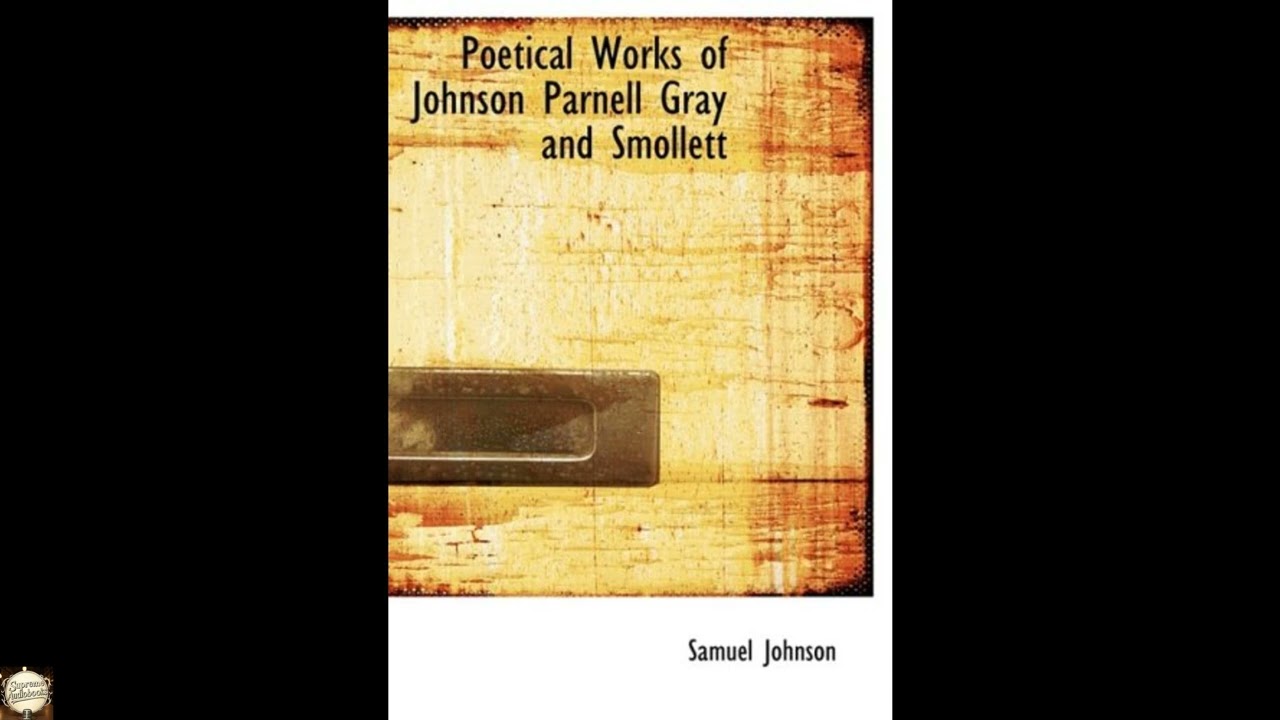
Poetical Works of Johnson Parnell Gray and Smollett: With Memoirs Critical Disserta
Step into a direct encounter with the very foundations of English literature, an anthology that brings together the esteemed poetical works of Samuel Johnson, Thomas Parnell, Thomas Gray, and Tobias Smollett. This collection, more than a mere compilation of verse, acts as a profound literary artifact, offering a window into the intellectual and emotional currents that defined a transformative era. It is a portal to the eighteenth century, presenting not only the poems themselves but also—as the title suggests—accompanying memoirs and critical dissertations that frame each poet's output. For anyone seeking to grasp the full breadth of classical verse, to understand the roots from which later Romantic and Victorian traditions sprang, or simply to immerse themselves in language crafted with elegant precision and deep feeling, this assemblage is an essential listen. It is where reason finds its eloquent expression and sentiment begins its subtle, persistent assertion. The content presents a varied landscape of eighteenth-century poetic expression, inviting listeners through different emotional registers and formal constructions. We begin with the formidable intellectual force of Samuel Johnson, whose contributions often reflect a keen moral sensibility and a robust engagement with the human condition, frequently couched in Augustan forms. His verse might present a satirical look at London life or a philosophical meditation on ambition's futility. From Johnson's critical eye, the collection might shift to the gentler, more contemplative lines of Thomas Parnell, whose work often possesses a quiet solemnity and a subtle grace, perhaps exploring themes of solitude, faith, or the natural world with a restrained elegance. As the collection unfolds, listeners encounter the celebrated genius of Thomas Gray, an author whose careful artistry and profound emotional depth forged some of the most enduring poems of his age. His contributions often balance classical structure with a burgeoning appreciation for sentiment and nature's serene beauty, sometimes tinged with melancholia. Finally, the collection introduces the often overlooked poetical contributions of Tobias Smollett, better known for his groundbreaking novels. His verses might surprise with their energy, their narrative drive, or perhaps even a flash of the satirical wit that animates his prose, adding another distinctive voice to this chorus of eighteenth-century bards. The overall experience is less a linear story and more a curated exhibition of diverse literary craftsmanship, each poet presenting a unique perspective on life, morality, and the art of language itself. Though the specific editor of this particular compilation remains uncredited on the listing, the assembled works speak volumes about the literary prominence of the featured poets. Samuel Johnson, born in Lichfield in 1709, was a colossal figure of the English Enlightenment, a lexicographer, essayist, biographer, and poet whose influence permeated virtually every corner of his era's literary output. His monumental Dictionary of the English Language (1755) not only codified English but also helped standardize its usage. As a poet, he is remembered for works like "London" (1738) and "The Vanity of Human Wishes" (1749), which showcase his characteristic blend of classical allusion, moral instruction, and incisive social observation. Johnson’s life was marked by struggle and eventual triumph, becoming one of the most respected intellectuals of his age, presiding over the literary society of London until his death in 1784. Thomas Parnell, an Irish poet and clergyman, lived a shorter life (1679-1718), but his contributions left a distinct mark on early eighteenth-century verse. A friend of Alexander Pope and Jonathan Swift, Parnell was part of the Scriblerus Club, a group of wits who satirized literary pretentiousness. His most notable poem, "A Night-Piece on Death," exemplifies the "Graveyard School" of poetry, blending classical allusions with Christian reflection and a nascent sensibility for the sublime and melancholic. His work often reflects a pastoral simplicity and a pensive introspection that stands apart from the more overtly satirical or didactic verse of some of his contemporaries. Thomas Gray (1716-1771), a scholar at Cambridge University, was known for his meticulous craftsmanship and reserved nature. He published relatively little during his lifetime, but his "Elegy Written in a Country Churchyard" (1751) secured his place as one of the most beloved and influential poets of the century. The "Elegy" is a powerful meditation on mortality, common life, and the unfulfilled potential of the anonymous dead, all rendered with exquisite language and a blend of classical restraint and emerging Romantic sensibility. His Odes, such as "Ode on a Distant Prospect of Eton College," further demonstrate his mastery of complex poetic forms and his capacity for profound emotional and philosophical insight. Tobias Smollett (1721-1771), a Scottish physician, novelist, and poet, is primarily celebrated for his picaresque novels like Roderick Random and Humphry Clinker. While his poetic output is less extensive, his verse often possesses the same vigor, satirical edge, and keen observation of human foibles found in his prose. His poems, often more direct and less formally intricate than Gray's, offer a glimpse into the broader talents of a writer who helped define the early English novel. The collection, through these diverse voices, enacts several enduring themes that resonated deeply in the eighteenth century and continue to resonate today. One prominent theme is the ongoing dialogue between reason and emotion. Johnson's verse, for instance, often presents a rational critique of human folly, as seen in "The Vanity of Human Wishes," which systematically dissects various human aspirations—wealth, power, learning—and exposes their ultimate emptiness without virtue. Conversely, Gray’s "Elegy Written in a Country Churchyard" exemplifies the burgeoning appreciation for subjective feeling and individual sorrow, moving from generalized meditation to a deeply personal reflection on life and death in a rural setting, a subtle shift away from purely rational discourse. Another recurring preoccupation is mortality and the ephemerality of human life. Parnell's "A Night-Piece on Death" directly confronts the finality of existence, using imagery of graves and solemn contemplation to ponder the fate of the soul and the transience of worldly achievements. Gray’s "Elegy" further underscores this, contrasting the grandeur of societal figures with the unrecorded lives and deaths of ordinary villagers, asserting that "The paths of glory lead but to the grave." This theme invites listeners to reflect on their own place in the continuum of history and the inevitable end awaiting all, encouraging both humility and a re-evaluation of life's true values. Additionally, the collection often touches on social critique and the complexities of urban versus rural life. Johnson’s "London" satirizes the corruption and vice of the burgeoning metropolis, contrasting it with an idealized vision of rural innocence, a common trope of the era that nonetheless allowed for sharp commentary on societal ills. The eighteenth century was a period of immense cultural, political, and intellectual ferment in Britain. Often referred to as the Age of Enlightenment or the Augustan Age in its earlier phase, it saw the consolidation of parliamentary power, the expansion of the British Empire, and a burgeoning interest in scientific inquiry and rational thought. Isaac Newton's principles had revolutionized understanding of the natural world, fostering a belief in universal laws and observable order. This worldview heavily influenced literature, leading to a preference for classical forms, clarity, balance, and a focus on public morality and universal truths—qualities evident in much of Johnson's and Parnell's work. However, beneath this veneer of rational order, profound shifts were occurring. The rise of a middle class, increasing literacy, and a growing commercial publishing market began to democratize literature, moving it away from exclusive courtly patronage. Concurrently, a new sensibility began to emerge—one that valued individual emotion, the sublime in nature, and a more introspective, even melancholic, mode of thought. This pre-Romantic sentimentality is powerfully articulated in Gray's work, which bridges the gap between the classical precision of the earlier century and the emotional effusions that would characterize the Romantic movement to follow. These poets thus stand at a fascinating crossroads, reflecting both the established literary traditions and the innovative stirrings that would reshape English literature in the decades to come. Listening to these poetical works as an audiobook offers an unparalleled opportunity to connect with the material on an intimate, visceral level. Poetry, by its very nature, is an oral art form, designed to be heard and felt through the rhythmic cadences of the spoken word. A skilled narrator breathes life into the precise meters and deliberate word choices of these classical poets, clarifying the often complex syntax and revealing the emotional nuances hidden within the carefully constructed lines. The sustained length of this collection—several hours—provides ample time for focused immersion, allowing the listener to absorb the distinct voices and styles of each poet without interruption. Pay attention to how the narrator’s pacing enhances Gray’s reflective pauses, or how a more assertive tone underscores Johnson’s moral pronouncements. The subtle shifts in vocal delivery can illuminate the atmosphere of a rural churchyard or the bustling chaos of London, making these historical poems feel immediate and deeply resonant in the present moment.
Enjoyed Poetical Works of Johnson Parnell Gray and Smollett: With Memoirs Critical Disserta? A few ways to support us
Audible & Amazon links are affiliate; we may earn a small commission at no extra cost.
About this production
Human narration by a volunteer reader from LibriVox.org, the public-domain audiobook project. LibriVox volunteers record literary works whose copyright has expired in the United States, releasing the resulting recordings into the public domain.
Poetical Works of Johnson Parnell Gray and Smollett: With Memoirs Critical Disserta. The underlying text is in the U.S. public domain. We do not republish any modern copyrighted edition, translation, or commentary.
The 4K cinematic visuals accompanying this audiobook are generated by an AI image model from prompts derived from the source text. No copyrighted photos, paintings, or stock footage are used. AI generation is disclosed on every video on our YouTube channel as required by YouTube's altered/synthetic content policy.
English subtitles are transcribed from the LibriVox recording with OpenAI Whisper. Translations into the 11 other supported languages are produced by Meta's NLLB-200 neural translation model. No human translator's copyrighted translation is used.
Questions about sourcing or rights? See our DMCA & Sourcing policy or contact us.
Enjoyed this audiobook?
If you'd like to own a copy of Poetical Works of Johnson Parnell Gray and Smollett: With Memoirs Critical Disserta or hear a professionally produced edition, the links below help support free audiobook production at no extra cost to you.
As an Amazon Associate we earn from qualifying purchases. Audible / print links are affiliate.
More by Unknown
Notes and Queries, Number 175, March 5, 1853

Cast Away In The Cold: An Old Man's Story Of A Young Man's Adventures, As Related By- Full Audiobook
Rosamond, or, the Youthful Error: A Tale of Riverside; And Other Stories