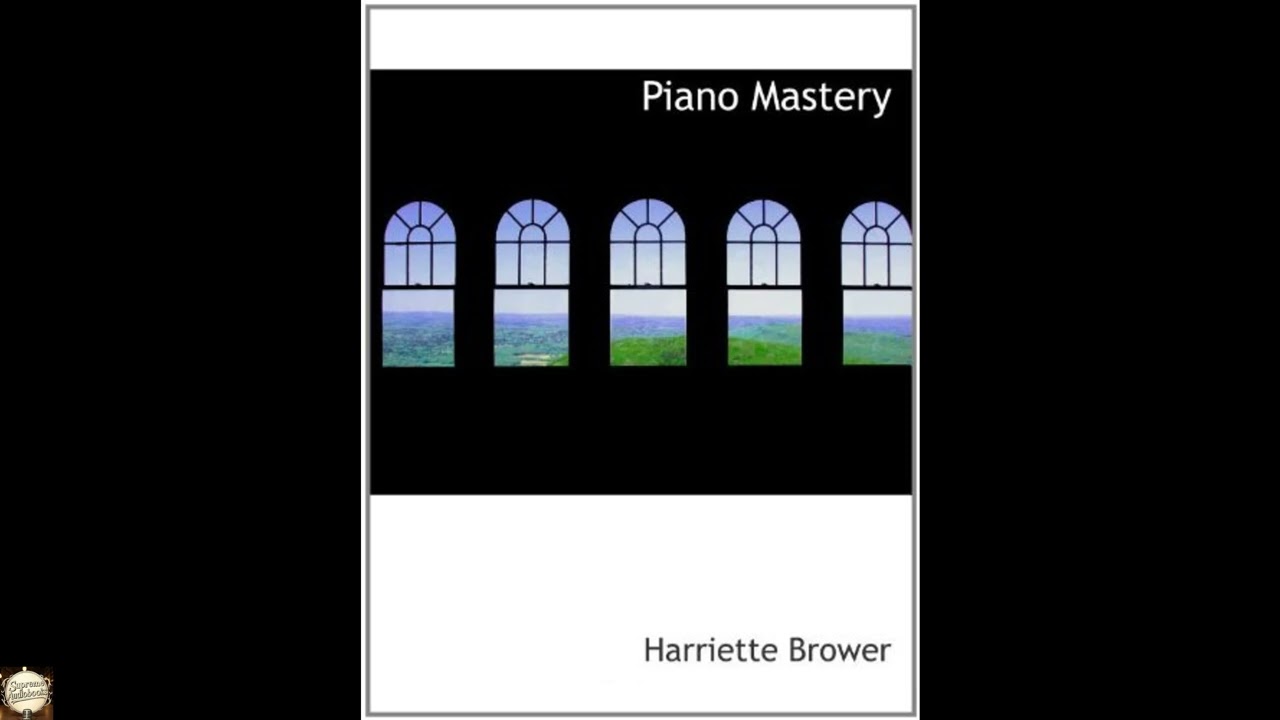
Piano Mastery: Talks with Master Pianists and Teachers
The world of the piano, with its demanding technique and profound expressive potential, has long drawn both the dedicated student and the devoted listener. What does it truly take to unlock its secrets, to move beyond merely playing notes to truly making music? Harriette Brower's Piano Mastery: Talks with Master Pianists and Teachers offers a rare window into this very question, a collection of insights drawn directly from the titans of the keyboard at a pivotal moment in musical history. It stands as a testament to the enduring pursuit of artistic excellence and remains remarkably relevant today for anyone who has ever sat before eighty-eight keys, whether a seasoned performer, an earnest student, or simply an admirer of the art. This remarkable volume functions not as a traditional narrative, but rather as an intellectual salon, a series of intimate conversations unfolding across the pages. The setting is the vibrant, often competitive, world of classical piano in the early twentieth century, a period when virtuosity was celebrated, and new pedagogical approaches were constantly being debated. Harriette Brower, acting as our perceptive guide, introduces us to a pantheon of legendary pianists and influential teachers. These are the main characters of our story: figures like Josef Hofmann, famed for his intellectual rigor and technical command; the Polish statesman and poet-pianist Ignacy Jan Paderewski, whose playing stirred nationalistic fervor; the legendary Venezuelan virtuosa Teresa Carreño, a formidable presence on stage; and the profound pedagogue Leopold Godowsky, among many others. The central dynamic, then, is the dialogue between Brower's insightful questions and her subjects' candid responses. Each chapter brings a new master to the fore, revealing their personal philosophies, practice methods, interpretations of classic repertoire, and advice for aspiring musicians. The "arc" of this extraordinary collection moves from fundamental principles of technique – finger independence, wrist flexibility, pedaling – to the more ethereal realms of musical interpretation, memorization, stage presence, and the cultivation of artistic personality. It is a progression from the mechanical to the magical, illustrating how the physical act of playing transforms into a profound act of creation. Throughout these talks, a consensus begins to emerge: that true piano mastery is not merely about speed or power, but about the profound marriage of intellect, emotion, and discipline. Harriette Brower, born Harriette Moore in 1863, was an American pianist, music educator, and author who dedicated her life to the study and dissemination of musical knowledge. Her formative years were spent immersed in the burgeoning musical culture of the late nineteenth century, a time of increasing professionalization for musicians and a growing appreciation for classical music in America. Her career was distinguished by a deep commitment to pedagogical principles and a keen journalistic sensibility, enabling her to capture the essence of her interviews with precision and clarity. Brower's ability to engage with the leading figures of her time—many of whom were European-trained and represented the pinnacle of their art—lent immense credibility and substance to her publications. Beyond Piano Mastery, Brower penned several other significant works that solidified her place as a prominent voice in music education. Titles such as Art of the Pianist, What to Play, What to Teach, and Modern Masters of the Keyboard further illustrate her sustained interest in the practical and theoretical aspects of piano playing and teaching. Her writings consistently aimed to demystify the art form, making the wisdom of the masters accessible to a broader audience of students and teachers. Brower's contributions are often regarded as vital historical documents, preserving the pedagogical wisdom and performance practices of a golden age of piano playing. She passed away in 1955, leaving behind a legacy that continues to influence music education. The book enacts several key themes with striking clarity. One prominent theme is the primacy of diligent, intelligent practice. Josef Hofmann, for instance, emphasizes not simply the quantity but the quality of practice, detailing methods for mental practice away from the keyboard and the importance of focused attention in every repetition. He warns against "mindless repetition" and advocates for a deep understanding of the score before even touching the keys, showing how his analytical approach transforms drudgery into purposeful endeavor. Another significant theme is the cultivation of individuality and artistic voice. Teresa Carreño often speaks to the necessity of finding one's own interpretive path, urging students to respect the composer's intentions while infusing their performance with personal feeling and conviction, illustrating this through her own dynamic and often passionate stage presence. Furthermore, the book champions the idea of holistic musicianship, moving beyond mere technical facility to embrace a profound connection to the music's emotional and intellectual core. Many interviewees, including Leopold Godowsky, discuss the importance of listening, phrasing, tone color, and the architectural sweep of a piece. They demonstrate through their recounted experiences that true artistry emerges from a deep cultural understanding, a sensitive ear, and the ability to project a coherent musical narrative. Finally, the collection speaks to the enduring mentor-apprentice relationship within classical music. Brower’s conversations reveal how these masters, many of whom were themselves products of renowned European schools, saw their role as not just performers but also as custodians of a tradition, responsible for passing on knowledge to the next generation. Each chapter serves as a mini-lesson from a legendary teacher. Piano Mastery emerged during a period of intense growth and change in the Western classical music world, particularly in the United States. The late nineteenth and early twentieth centuries saw the establishment of major conservatories, a significant increase in public concerts, and a widespread cultural reverence for European artistic traditions. It was a time when touring virtuosos from Europe were celebrated like rock stars, and American students eagerly sought to emulate their techniques. Harriette Brower's work served a crucial function within this environment, providing accessible yet authoritative guidance to an increasingly enthusiastic and ambitious musical public. Her book helped to democratize the insights of the elite, making the wisdom of the world's greatest pianists available to any aspiring musician, regardless of their access to top-tier private instruction. This work captured the zeitgeist of an era defined by a fervent belief in progress, education, and the power of art to uplift and inspire. Listening to Piano Mastery: Talks with Master Pianists and Teachers as an audiobook transforms it into a series of intimate lectures, bringing the words of these legendary musicians directly to the listener's ear. The several hours of content allow ample time to absorb the profound wisdom offered by each master, paced thoughtfully to encourage reflection. A skilled narrator gives distinct voices to Brower’s questions and the varied responses of her interviewees, helping to distinguish each master's personality and pedagogical approach. The absence of visual text encourages a focus on the nuanced language and the practical implications of the advice, allowing one to imagine the scene as if present in the master’s studio or salon. The conversational tone, rendered through careful vocal delivery, makes complex musical concepts approachable, creating an atmosphere of shared learning that deepens the appreciation for the dedication required in the pursuit of piano mastery.
Enjoyed Piano Mastery: Talks with Master Pianists and Teachers? A few ways to support us
Audible & Amazon links are affiliate; we may earn a small commission at no extra cost.
About this production
Human narration by a volunteer reader from LibriVox.org, the public-domain audiobook project. LibriVox volunteers record literary works whose copyright has expired in the United States, releasing the resulting recordings into the public domain.
Piano Mastery: Talks with Master Pianists and Teachers by Harriette Brower. The underlying text is in the U.S. public domain. We do not republish any modern copyrighted edition, translation, or commentary.
The 4K cinematic visuals accompanying this audiobook are generated by an AI image model from prompts derived from the source text. No copyrighted photos, paintings, or stock footage are used. AI generation is disclosed on every video on our YouTube channel as required by YouTube's altered/synthetic content policy.
English subtitles are transcribed from the LibriVox recording with OpenAI Whisper. Translations into the 11 other supported languages are produced by Meta's NLLB-200 neural translation model. No human translator's copyrighted translation is used.
Questions about sourcing or rights? See our DMCA & Sourcing policy or contact us.
Enjoyed this audiobook?
If you'd like to own a copy of Piano Mastery: Talks with Master Pianists and Teachers or hear a professionally produced edition, the links below help support free audiobook production at no extra cost to you.
As an Amazon Associate we earn from qualifying purchases. Audible / print links are affiliate.