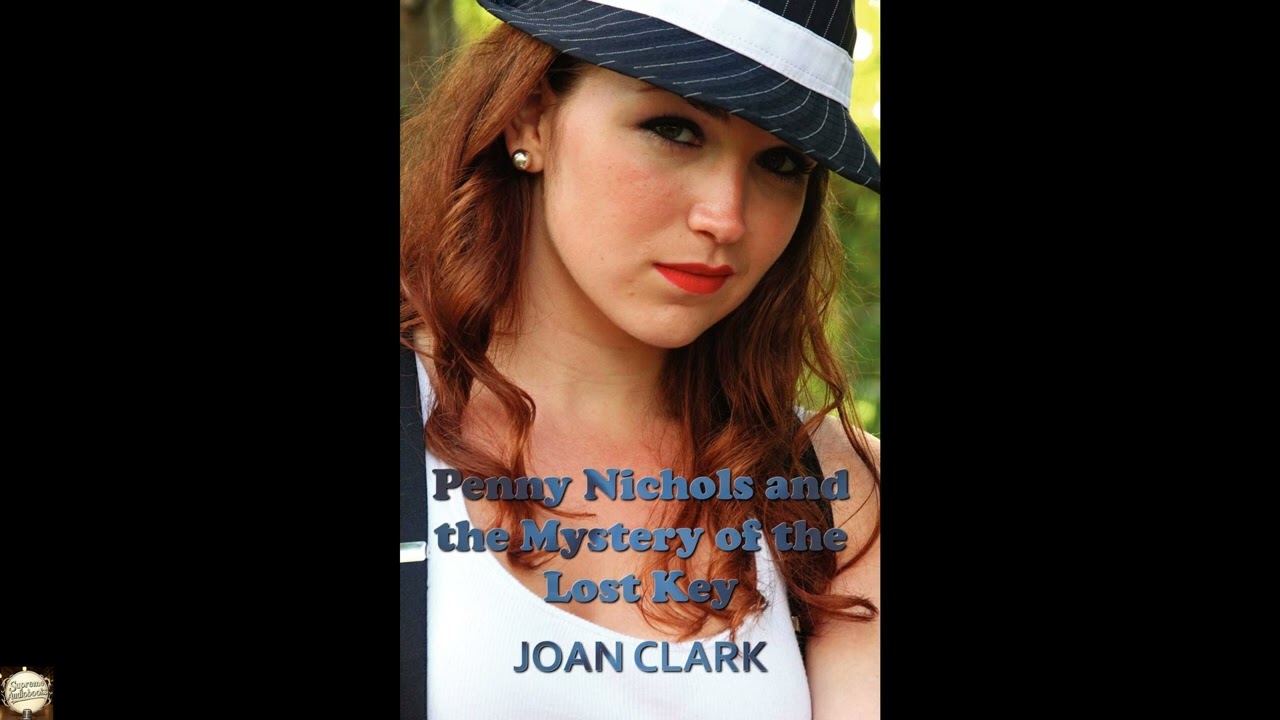
Penny Nichols and the Mystery of the Lost Key
The quiet village of Alderbrook, with its ancient stone cottages and winding lanes, often appears idyllic, a haven untouched by the clamor of the modern world. Yet, beneath this tranquil surface, human frailties, long-held secrets, and the chilling hand of deceit find fertile ground. It is into such a world that Joan Clark introduces us with her enduring classic, "Penny Nichols and the Mystery of the Lost Key." This novel stands as a testament to the power of keen observation and the relentless pursuit of truth, offering readers then, and listeners now, a meticulously crafted tale that peels back the layers of polite society to reveal the complex machinery of human motivation. Why should a story spun from the seemingly simple disappearance of an object resonate so deeply today? Because the questions it raises—about trust, loyalty, and the hidden costs of keeping up appearances—remain as potent and relevant as ever. Our story opens at Blackwood Manor, an imposing country estate whose venerable stones seem to absorb the very light of the autumnal English countryside. It is here we meet Penny Nichols, a young woman of sharp intellect and an uncanny knack for noticing the seemingly insignificant details others overlook. Penny arrives at Blackwood as a companion to the somewhat reclusive Mrs. Alistair Tremaine, matriarch of a family whose reputation for respectability is as unshakeable as the manor itself. The household includes Mrs. Tremaine's reserved son, Edgar, a man burdened by ancestral expectations, and her flighty niece, Clara, whose outward cheerfulness barely masks a deeper anxiety. The rhythm of their lives, steeped in routine and unspoken rules, is abruptly shattered one crisp morning when a small, ornate silver key, a cherished family heirloom and the rumored key to a significant legacy, vanishes from its locked display case in the drawing room. What begins as a domestic inconvenience swiftly escalates into a chilling predicament. Accusations, thinly veiled, begin to circulate among the manor's inhabitants and staff. The village constable, a man of good intentions but limited imagination, is baffled. It quickly becomes apparent that the key's disappearance is no mere accident, but a deliberate act designed to expose a long-buried secret or to prevent one from coming to light. Penny, with her quiet perceptiveness, finds herself drawn into the heart of the mystery, noticing the subtle shifts in demeanor, the half-whispered conversations, and the curious arrangements of household objects that hint at a more sinister truth. She must navigate a labyrinth of false leads, personal histories, and mounting suspicion, all while a palpable sense of dread settles over Blackwood Manor, threatening to unravel not just the Tremaine family, but Penny's own safety. The novel follows her patient, logical steps as she gathers fragmented clues, facing both the open hostility and the subtle manipulations of those who wish the key—and its implications—to remain forever lost. Joan Clark M.S C.D.E R.D., a name that hints at a background as unique as her literary voice, carved a distinct niche for herself in the annals of early twentieth-century British literature. Born into a family of academics and independent thinkers in the late 1870s, Clark possessed an unusual breadth of interests for a woman of her era. Her early life was marked by extensive travel and a fascination with human psychology, observations that would later infuse her fiction with remarkable depth and authenticity. While she shunned the more overtly political movements of her time, her works often subtly critiqued societal conventions and gender roles through the actions and internal lives of her characters. "Penny Nichols and the Mystery of the Lost Key," published during the interwar period, quickly established her as a formidable presence, celebrated for her elegant prose and ingenious plotting. Clark’s literary output, though not voluminous, was consistently praised for its intellectual rigor and psychological insight. Other notable works, such as "The Shadow at Merriweather House" and "The Crimson Seal," further cemented her reputation for crafting atmospheric mysteries that prioritized character development and intricate deduction over sensationalism. She was often seen as a bridge between the more florid Victorian sensation novels and the emerging "Golden Age" of detective fiction, bringing a thoughtful, often philosophical dimension to the genre. Her place in the literary canon is secured by her ability to transcend mere puzzle-solving, imbuing her stories with a sense of moral gravity and a profound understanding of the human condition, traits that resonated deeply with a readership grappling with rapid social change and the aftermath of global conflict. "Penny Nichols and the Mystery of the Lost Key" is a masterclass in several enduring themes, woven seamlessly into its suspenseful narrative. One prominent theme is the disparity between appearance and reality. Blackwood Manor, with its facade of genteel respectability, meticulously maintained despite its age, is a symbol for the Tremaine family itself. Penny gradually uncovers how beneath the veneer of tradition and polite society lie layers of resentment, ambition, and long-held secrets. The carefully orchestrated routines of the household are ultimately revealed to be a fragile shield, unable to withstand the truth the lost key promises to unlock. For instance, the seemingly placid demeanor of Edgar Tremaine is slowly unveiled to hide a turbulent inner life, a man constrained by both his duties and his desires. Another central theme is the power of meticulous observation and quiet intellect. Penny Nichols is no dashing detective, but rather a woman whose greatest strength lies in her ability to notice what others dismiss as irrelevant. Her method involves patient watching, listening carefully to unspoken words, and cataloging minute details—a misplaced book, a faint scent, a subtle change in someone's posture. A key scene involves Penny quietly observing a dust mote dancing in a sunbeam, which leads her to a crucial realization about the true state of a room's undisturbed nature. This emphasis on subtle perception underscores the idea that truth often resides not in grand pronouncements, but in the overlooked corners of everyday life, showcasing how an unassuming individual can possess extraordinary insight. The period in which "Penny Nichols and the Mystery of the Lost Key" emerged, the early part of the twentieth century, was a crucible of profound societal shifts. The aftermath of the First World War had shattered many long-held beliefs about progress and stability, leading to a new era of questioning and introspection. Simultaneously, the rise of the "New Woman" challenged traditional gender roles, creating a space for characters like Penny Nichols—intelligent, independent, and capable of intellectual pursuit outside conventional feminine spheres. The growing popularity of detective fiction itself reflected a public desire for order and logical resolution in a world that often felt chaotic and unpredictable. Clark's work, with its emphasis on rationality and the unraveling of complex human motives, provided a sense of comforting closure while subtly reflecting the anxieties and changing social landscape of its time. Listening to "Penny Nichols and the Mystery of the Lost Key" as an audiobook offers a singularly immersive experience. The narrator's skilled portrayal breathes life into each character, from Penny's thoughtful internal monologue to the clipped tones of Edgar Tremaine and the fluttering anxieties of Clara. The pacing of the narration mirrors Clark's own deliberate prose, allowing listeners to savor the unfolding mystery, the slow accumulation of clues, and the building atmospheric tension. Over its several hours' run length, the unfolding plot becomes a companion, perfect for contemplative evenings or long journeys. Pay particular attention to the nuances in dialogue and the subtle shifts in vocal tone that betray characters' true feelings, even when their words suggest otherwise. The richness of the descriptive language, painting vivid pictures of Blackwood Manor and its autumnal surroundings, truly comes alive when read aloud, drawing one deeper into the heart of Alderbrook's hidden secrets.
Enjoyed Penny Nichols and the Mystery of the Lost Key? A few ways to support us
Audible & Amazon links are affiliate; we may earn a small commission at no extra cost.
About this production
Human narration by a volunteer reader from LibriVox.org, the public-domain audiobook project. LibriVox volunteers record literary works whose copyright has expired in the United States, releasing the resulting recordings into the public domain.
Penny Nichols and the Mystery of the Lost Key by Joan Clark M.S C.D.E R.D. The underlying text is in the U.S. public domain. We do not republish any modern copyrighted edition, translation, or commentary.
The 4K cinematic visuals accompanying this audiobook are generated by an AI image model from prompts derived from the source text. No copyrighted photos, paintings, or stock footage are used. AI generation is disclosed on every video on our YouTube channel as required by YouTube's altered/synthetic content policy.
English subtitles are transcribed from the LibriVox recording with OpenAI Whisper. Translations into the 11 other supported languages are produced by Meta's NLLB-200 neural translation model. No human translator's copyrighted translation is used.
Questions about sourcing or rights? See our DMCA & Sourcing policy or contact us.
Enjoyed this audiobook?
If you'd like to own a copy of Penny Nichols and the Mystery of the Lost Key or hear a professionally produced edition, the links below help support free audiobook production at no extra cost to you.
As an Amazon Associate we earn from qualifying purchases. Audible / print links are affiliate.