Paris From the Earliest Period to the Present Day: V. 2
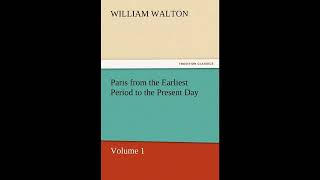
For centuries, Paris has stood as more than just a city; it has been a crucible of culture, a stage for revolution, and a living monument to human aspiration. William Walton's monumental series, Paris From the Earliest Period to the Present Day, offers an unparalleled historical panorama, and in Volume 2, listeners will find themselves plunged into the city's most transformative eras. This is not merely a chronicle of dates and names, but a grand narrative that brings the stones, boulevards, and even the very air of Paris to life. It’s an invitation to understand how the foundational city we know today was forged through centuries of passion, conflict, and artistic endeavor, providing essential context for anyone who has ever dreamed of, visited, or simply admired the French capital. Volume 2 of Walton's extensive history takes up the narrative after Paris had established its medieval foundations, guiding us through the profound shifts that marked its emergence as a truly global center. The narrative begins as the city sheds the last vestiges of its gothic past, embracing the Renaissance's new ideas in art, philosophy, and governance. We witness the construction of magnificent palaces and the laying out of early urban plans that began to reshape its medieval maze into a more orderly, yet still evolving, metropolis. The influence of powerful monarchs and their grand visions for France often centered directly on Paris, making the city a canvas for their ambition. The narrative then pushes forward through the tumultuous religious wars that scarred the nation, showing how even periods of intense upheaval contributed to the city's enduring resilience and the eventual consolidation of royal power that would characterize the absolute monarchy. As the story progresses, the focus shifts to the age of Enlightenment and the dramatic run-up to the French Revolution. Walton meticulously details the social stratification of Paris—from the opulent court life, often removed to Versailles but ever-present in the city's aspirations, to the bustling markets and the crowded streets where revolutionary fervor would eventually ignite. He chronicles the intellectual ferment in salons and coffeehouses, where ideas that would reshape the world were debated, and introduces us to the key figures—philosophers, writers, and nascent political leaders—who helped to fan the flames of change. The profound societal cleavages, the burgeoning discontent, and the growing hunger for liberty are depicted not as abstract forces but as lived experiences within the city's diverse neighborhoods, all building toward the cataclysmic events that would permanently alter Paris and indeed, the course of European history. William Walton, an American art critic, editor, and translator, brought a keen eye for detail and a profound appreciation for European culture to his many literary undertakings. Born in Philadelphia in 1843, he became a significant figure in American letters during the late nineteenth and early twentieth centuries, known for his ability to bridge the cultural gap between the Old World and the New. Walton spent considerable time abroad, particularly in France, which deeply informed his work and provided him with firsthand knowledge of the art, architecture, and social customs he so meticulously described. His career was marked by a consistent effort to introduce American audiences to the richness of French artistic and historical traditions. Beyond his comprehensive historical series on Paris, Walton was celebrated for his editorial prowess and his translations of prominent French authors, including luminaries like Émile Zola and Guy de Maupassant, making their works accessible to English-speaking readers. He also edited and contributed to other substantial illustrated publications that documented major international events, such as the World's Columbian Exposition in Chicago and the Paris Universal Exposition of 1900. These projects underscore his dedication to detailed reportage and cultural exposition, cementing his reputation as an authoritative voice on French culture and its global impact, positioning him as a crucial interpreter of European aesthetic and historical developments for a burgeoning American intellectual class. Central to Walton's recounting of Parisian history in Volume 2 is the persistent theme of urban metamorphosis. He shows how the city is not a static entity but a continually evolving organism, shaped by political ambition, technological innovation, and societal demands. For instance, the transformation of the Louvre from a medieval fortress to a grand royal palace, and later a museum, perfectly illustrates how buildings accrue layers of meaning and function, reflecting the changing priorities of each successive era. Another significant theme is the dynamic interplay between power and populace. Walton vividly portrays how the authority of the monarchy, despite its attempts to centralize control, was continuously challenged by the diverse forces within the city—from the influential guilds to the burgeoning intellectual class and, ultimately, the mass movements that culminated in revolution. Furthermore, the volume illuminates the enduring role of art and architecture as expressions of civic identity and national pride. From the Baroque grandeur that sought to project the king’s absolute power to the emergence of more public-facing structures and monuments, the city's built environment actively participated in shaping its self-image. Walton consistently demonstrates how the very stones of Paris tell a story of human ambition, artistic innovation, and ideological struggle. The evolving Parisian streetscape, the construction of new bridges, and the gradual modernization of its infrastructure all serve as concrete examples of how material culture can embody and narrate profound historical change, making the physical city itself a protagonist in its own story. This comprehensive history emerged at a specific moment in time—the late nineteenth and early twentieth centuries—a period often referred to as the Belle Époque in France, marked by economic prosperity, technological advancements, and a flourishing of arts and culture. There was a widespread fascination with history, particularly the grand narratives of nations and capital cities, reflecting a globalizing world and an increasing interest in urbanism. The publication of multi-volume historical works like Walton's was common, catering to an educated public eager for encyclopedic knowledge and richly illustrated texts. It was also a time of significant Franco-American cultural exchange, and Walton’s work served to deepen American understanding and appreciation of French heritage, celebrating Paris as a symbol of European civilization and a benchmark for modern urban development. To experience Paris From the Earliest Period to the Present Day: V. 2 as an audiobook is to allow oneself to be fully immersed in the flow of history. The narrator’s measured pace and clear articulation make the detailed accounts of architectural changes, political intrigue, and social developments particularly accessible. Listen for the subtle shifts in tone as the narrative moves from descriptions of courtly splendor to the gritty realities of revolutionary Paris, conveying the inherent drama of these eras. The long run length, spread over several hours, encourages a contemplative absorption of the material, allowing the listener to truly dwell in each historical epoch, imagining the sights and sounds of a Paris long past but still resonant today. This is an opportunity to let the unfolding story of one of the world's most cherished cities wash over you, providing a deep and lasting understanding of its profound historical legacy.
Enjoyed Paris From the Earliest Period to the Present Day: V. 2? A few ways to support us
Audible & Amazon links are affiliate; we may earn a small commission at no extra cost.
About this production
Human narration by a volunteer reader from LibriVox.org, the public-domain audiobook project. LibriVox volunteers record literary works whose copyright has expired in the United States, releasing the resulting recordings into the public domain.
Paris From the Earliest Period to the Present Day: V. 2 by William. Walton. The underlying text is in the U.S. public domain. We do not republish any modern copyrighted edition, translation, or commentary.
The 4K cinematic visuals accompanying this audiobook are generated by an AI image model from prompts derived from the source text. No copyrighted photos, paintings, or stock footage are used. AI generation is disclosed on every video on our YouTube channel as required by YouTube's altered/synthetic content policy.
English subtitles are transcribed from the LibriVox recording with OpenAI Whisper. Translations into the 11 other supported languages are produced by Meta's NLLB-200 neural translation model. No human translator's copyrighted translation is used.
Questions about sourcing or rights? See our DMCA & Sourcing policy or contact us.
Enjoyed this audiobook?
If you'd like to own a copy of Paris From the Earliest Period to the Present Day: V. 2 or hear a professionally produced edition, the links below help support free audiobook production at no extra cost to you.
As an Amazon Associate we earn from qualifying purchases. Audible / print links are affiliate.