Paradoxes of Catholicism
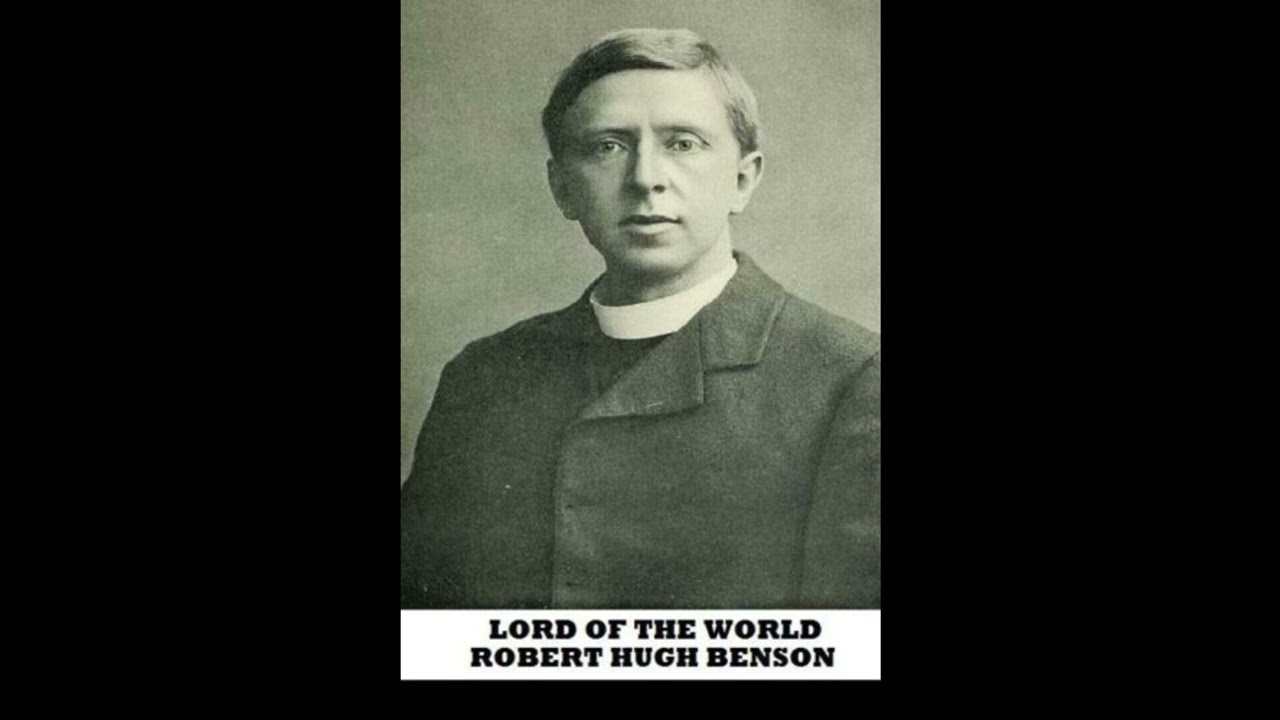
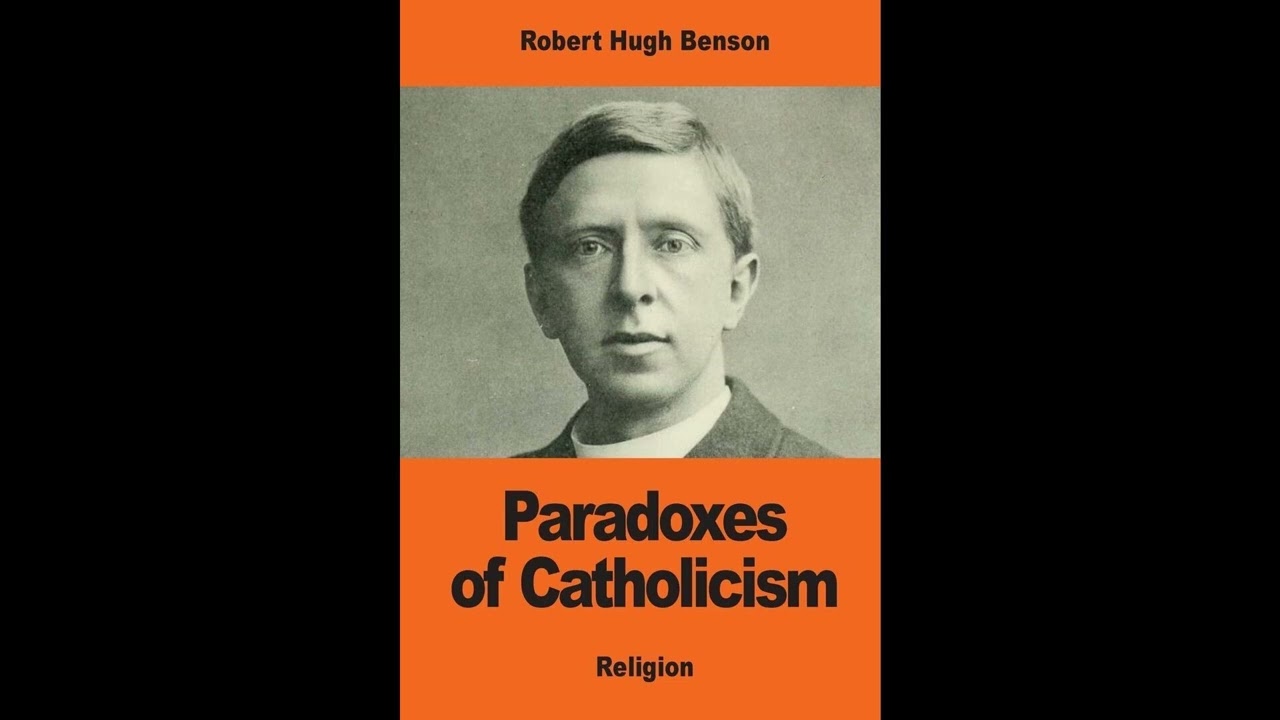
To truly understand a profound system of thought, one often must grapple not just with its direct statements, but with the very points where it seems to contradict itself, where logic appears to twist into an enigma. Robert Hugh Benson’s Paradoxes of Catholicism stands as a brilliant and enduring testament to this principle. This book is not merely a defense of a particular faith, but a deeply intelligent investigation into the nature of spiritual truth, arguing that what often seems irrational or conflicting on the surface can, upon closer inspection, reveal a deeper, more coherent reality. In an age still wrestling with the tension between tradition and modernity, individual freedom and communal authority, Benson’s clear-sighted analysis offers a compelling framework for thinking about belief itself, making his observations as potent and relevant today as they were over a century ago. Benson sets out to confront head-on the common accusations leveled against Catholicism, framing these criticisms not as flaws, but as apparent paradoxes waiting to be understood. He acknowledges that to the casual observer, or even to the earnest seeker, the Church often appears to hold irreconcilable positions: it champions both reason and faith, demands both absolute obedience and fosters individual sanctity, promotes both rigorous discipline and boundless mercy. The structure of the book is less a traditional narrative and more a carefully constructed intellectual journey, where each chapter unpacks one of these seeming contradictions. Benson takes up charges that the Church is too ancient to be relevant, too strict to be liberating, too dogmatic to be intellectually honest. He acts as a guide, leading the listener through the philosophical and theological arguments that underpin these doctrines. The journey he outlines is one of re-evaluation. He examines the charge of exclusivity versus universality, or the tension between the unchanging nature of divine truth and the Church’s historical adaptability. The central conflict of the work is the human mind’s natural discomfort with ambiguity and its tendency to demand simple, either/or answers from a reality that is often far more complex. Benson’s "characters" are not individuals in a story, but rather the entrenched viewpoints and intellectual prejudices that color perceptions of the sacred. The arc of his argument is a steady, persuasive unveiling of how these apparent contradictions are not weaknesses, but rather evidence of the Catholic system’s robust, comprehensive, and divinely inspired nature, capable of holding seemingly opposite truths in perfect equilibrium. The reader is invited to shed preconceived notions and see unity where before there was only division, and profound sense where once there appeared only absurdity. Robert Hugh Benson, born in 1871, possessed a uniquely insightful perspective on the spiritual landscape he so eloquently described. He was the youngest son of Edward White Benson, who would become the Archbishop of Canterbury, the highest spiritual office in the Church of England. Raised within the very heart of Anglicanism, educated at Eton College and Trinity College, Cambridge, Benson initially followed his family's path, being ordained as an Anglican priest in 1895. His early career saw him serving in various parishes and as a member of the Community of the Resurrection, an Anglican religious order. His background gave him an intimate understanding of the theological and spiritual debates within English Protestantism, equipping him with a comprehensive view of the questions and criticisms often directed towards Rome. However, a profound intellectual and spiritual realignment led Benson to a pivotal decision. In 1903, after years of intense study and prayer, he converted to Catholicism, a move that was both personally momentous and publicly sensational, given his lineage. He was ordained a Catholic priest in 1904, and from that point until his early death in 1914, he became an exceptionally prolific writer and speaker. Besides his apologetic works like Paradoxes of Catholicism, he achieved considerable fame for his fiction, particularly his historical novels that vividly recreated various periods of Christian history. Perhaps his most famous novel, Lord of the World, a chilling dystopian vision of an anti-Christian future, cemented his place in literature, earning praise from figures as diverse as Pope Francis and G.K. Chesterton. His writings, whether fiction or non-fiction, consistently addressed themes of faith, conversion, and the spiritual challenges of the modern era, securing his position as a significant voice in early 20th-century Catholic literature. The central theme woven throughout Paradoxes of Catholicism is, naturally, the very nature of paradox itself as a window into deeper truth. Benson does not shy away from the idea that religious belief can, and often does, present ideas that defy simplistic human understanding. For instance, he discusses the paradox of divine omnipotence coexisting with human free will. Rather than seeing this as an intractable logical problem, Benson argues it points to a profound mystery: God’s power is so absolute that it encompasses and sustains the freedom of His creation, allowing humanity genuine choice without diminishing His sovereignty. It is not an either/or situation, but a magnificent expression of both. Another significant theme Benson unpacks is the dynamic interplay between faith and reason. He critiques the notion that these two pillars of human understanding are necessarily at odds, presenting numerous examples of how they are, in fact, complementary and mutually reinforcing. He demonstrates that far from demanding blind adherence, Catholicism offers a thoroughly reasoned approach to belief, one that invites intellectual rigor while acknowledging the limits of human reason. He shows how the Church’s teaching on the Eucharist, for example, while requiring an act of faith, is built upon centuries of theological reasoning and philosophical inquiry, presenting a system where rational thought can lead one to the threshold of a truth that ultimately transcends pure logic. The book consistently highlights how apparent difficulties within doctrine often serve to strengthen, rather than weaken, the intellectual integrity of the faith. The early twentieth century, the period in which Benson penned Paradoxes of Catholicism, was a time of immense intellectual and social upheaval. The accelerating pace of scientific discovery, particularly in fields like evolutionary biology and psychology, was challenging traditional religious frameworks and creating new questions about humanity’s place in the universe. Philosophies such as positivism and various forms of skepticism were gaining traction, often presenting religion as a relic of a less enlightened age. Politically, the seeds of future global conflicts were being sown, and established social orders were beginning to crumble under the weight of industrialization and nascent democratic movements. In this atmosphere of profound change and often aggressive questioning, the Catholic Church was frequently portrayed as an anachronism—a rigid, authoritarian institution resisting all progress. Benson’s work emerged directly from this cultural milieu, serving as a powerful and articulate response to these critiques. It was written to show that the Church was not only intellectually defensible but that its perceived conservatism and complex doctrines were, in fact, its enduring strengths, offering stability and profound meaning in a rapidly disorienting world. His apologetics were part of a broader Catholic intellectual revival, seeking to reassert the faith’s relevance and demonstrate its capacity to engage with—and offer answers to—the most pressing modern questions. Listening to Paradoxes of Catholicism as an audiobook offers a unique opportunity to engage with Benson’s arguments in a way that truly brings his measured prose and persuasive logic to life. The book’s length, stretching over several hours, is ideal for thoughtful absorption, allowing the listener to follow Benson’s step-by-step reasoning without feeling rushed. A skilled narrator can amplify the clarity of Benson’s argumentation, highlighting the rhetorical power with which he dismantles common objections and reconstructs them into profound insights. His writing has the cadence of a thoughtful lecture or an impassioned but controlled sermon, making it particularly well-suited for the spoken word. The nuanced tone and careful structure of his arguments become even more apparent when articulated, inviting contemplation and allowing the listener to fully appreciate the depth of his intellectual defense of the faith.
Enjoyed Paradoxes of Catholicism? A few ways to support us
Audible & Amazon links are affiliate; we may earn a small commission at no extra cost.
About this production
Human narration by a volunteer reader from LibriVox.org, the public-domain audiobook project. LibriVox volunteers record literary works whose copyright has expired in the United States, releasing the resulting recordings into the public domain.
Paradoxes of Catholicism by Robert Hugh Benson. The underlying text is in the U.S. public domain. We do not republish any modern copyrighted edition, translation, or commentary.
The 4K cinematic visuals accompanying this audiobook are generated by an AI image model from prompts derived from the source text. No copyrighted photos, paintings, or stock footage are used. AI generation is disclosed on every video on our YouTube channel as required by YouTube's altered/synthetic content policy.
English subtitles are transcribed from the LibriVox recording with OpenAI Whisper. Translations into the 11 other supported languages are produced by Meta's NLLB-200 neural translation model. No human translator's copyrighted translation is used.
Questions about sourcing or rights? See our DMCA & Sourcing policy or contact us.
Enjoyed this audiobook?
If you'd like to own a copy of Paradoxes of Catholicism or hear a professionally produced edition, the links below help support free audiobook production at no extra cost to you.
As an Amazon Associate we earn from qualifying purchases. Audible / print links are affiliate.