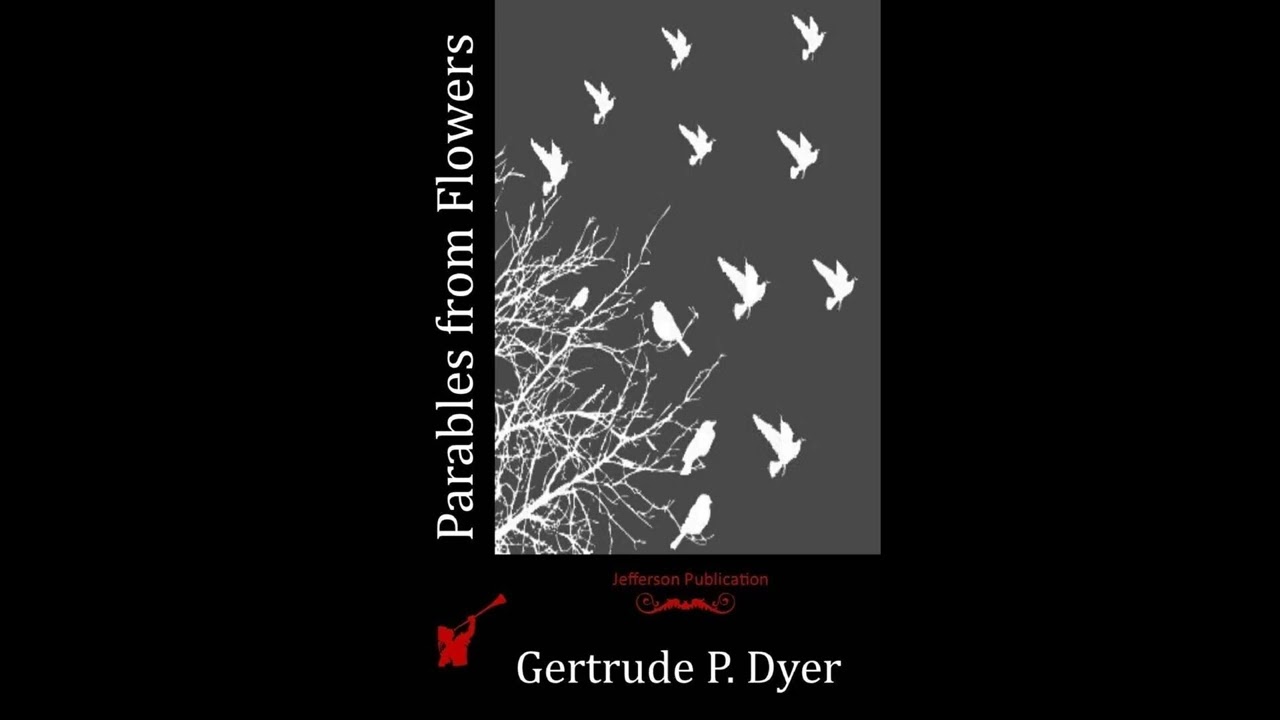
Parables from Flowers
Among the vast gardens of classic literature, certain voices emerge not with booming pronouncements but with a quiet, persistent wisdom, offering clarity through the simplest observations. Gertrude P. Dyer's "Parables from Flowers" stands as one such gentle yet profound offering, a collection that distills life's most enduring truths through the delicate lens of the natural world. This is not merely a book about flowers; it is a profound meditation through them, inviting listeners to pause, reflect, and rediscover the fundamental lessons inherent in growth, decay, beauty, and resilience. For anyone seeking solace, moral guidance, or simply a deeper connection to the quiet rhythm of existence, these parables offer a refreshing draught from the wellspring of timeless human experience, reminding us that the grandest insights often reside in the smallest, most unassuming details. The structure of "Parables from Flowers" is not that of a conventional novel with a linear plot, but rather a series of distinct yet interconnected allegories, each centered around a specific bloom or botanical phenomenon. Listeners are transported to a myriad of natural settings—from sun-drenched meadows where daisies innocently unfold, to shadowed forest floors where unseen mosses cling to ancient stones, to vibrant gardens tended with meticulous care. There are no named human protagonists who carry a narrative across chapters; instead, the "characters" are the flowers themselves, personified or presented as potent symbols. A hardy dandelion might illustrate perseverance in the face of adversity, while a wilting rose could speak to the fleeting nature of superficial beauty. Each parable presents a miniature world, often featuring a subtle tension or a quiet revelation. Perhaps a proud sunflower struggles with its singular ambition, oblivious to the community of smaller blossoms around it, or a hidden violet yearns for recognition while unknowingly providing perfume to all who pass. The central conflict in each piece often resides in a moral dilemma, a philosophical query, or a simple observation that turns into a profound teaching about human nature, virtue, or spiritual understanding. Dyer masterfully employs these botanical vignettes to reflect universal human experiences—jealousy, humility, generosity, sacrifice, and the enduring cycles of hope and despair. The overarching arc of the collection guides the listener through a garden of human virtues and vices, ultimately pointing towards a more harmonious and reflective way of living. While no single story builds to a grand climax, the cumulative effect of these gentle lessons is a subtle transformation of perspective. Listeners are invited to see their own lives, their relationships, and their aspirations mirrored in the simple narratives of petals and leaves, roots and shoots. The tension is in the recognition, the quiet "aha!" moment that dawns as a flower's struggle or triumph illuminates a parallel in one's own human condition. Gertrude P. Dyer, though her specific biographical details remain somewhat elusive to contemporary record, left an indelible mark through works like "Parables from Flowers." Her writing style suggests an individual deeply attuned to the natural world, possessing a keen eye for detail and a profound meditative spirit. Many authors from the late nineteenth and early twentieth centuries, particularly women writers, often found their voices in themes of nature, morality, and domestic life, producing works that, while not always widely publicized in their era, resonated deeply with readers seeking spiritual and ethical guidance. Dyer’s legacy rests primarily in the quiet power of her words, rather than in public accolades or a dramatic personal history. One can surmise that Dyer was a person of deep contemplation, someone who found significant meaning and instruction in the rhythms and forms of plant life. Her ability to translate the silent lessons of the garden into relatable human allegories speaks to an empathetic and insightful mind. Though specific birth and death dates, or detailed accounts of her travels and personal relationships, might not be readily available, her work itself provides a window into her sensibility—that of a thoughtful observer, a gentle philosopher, and a moral educator who believed in the inherent wisdom present in the everyday world. Such authors remind us that true literary value often transcends the clamor of celebrity, residing instead in the enduring resonance of a well-told truth. Among the salient themes that bloom throughout "Parables from Flowers," one finds the profound idea of nature as a moral instructor. The very act of observing a blossoming seed or a sturdy oak becomes a lesson in patience, perseverance, or humility. For instance, one parable might feature a delicate flower, seemingly insignificant, which provides essential sustenance to a busy bee, thereby illustrating the often-unseen importance of every living thing and the interconnectedness of existence. Another pervasive theme is that of inner versus outer beauty. Time and again, Dyer uses the transient glory of a showy bloom versus the enduring strength of a modest root system to highlight the superficiality of outward appearance compared to the lasting value of character and inner virtue. A third recurring theme is resilience and growth. A tiny sprout pushing through hardened earth or a vine twisting towards the light often stands as a testament to the indomitable spirit required to overcome adversity. These allegories often demonstrate that even in the face of daunting challenges, there is an inherent drive towards development and flourishing. Lastly, the concept of interdependence weaves through many of the parables, showing how different elements of the natural world—from the sun and rain to the soil and other plants—rely upon one another for survival and prosperity, reflecting the fundamental need for community and mutual support in human society. The era in which "Parables from Flowers" likely emerged—the late nineteenth and early twentieth centuries—was a period ripe for such reflective literature. The industrial revolution, with its rapid urbanization and technological advancements, often left people longing for a connection to the natural world and a sense of timeless spiritual values. There was a burgeoning interest in nature writing, not just for scientific observation, but for its aesthetic and moral instruction. Authors and readers alike sought solace and guidance in allegorical tales that subtly critiqued the increasing materialism of the age and reaffirmed traditional virtues. This period also saw the rise of various movements, such as the Arts and Crafts movement, which celebrated craftsmanship, natural forms, and a return to simpler, more meaningful ways of living. Works like Dyer's fit seamlessly into this cultural landscape, offering a gentle counterpoint to the hurried pace of modern life. They provided a space for contemplation, a reminder of the enduring beauty and wisdom found in the non-human world, and a reinforcement of ethical principles through accessible, relatable metaphors drawn directly from gardens and fields—places that many still had a tangible connection to, or at least a nostalgic ideal of. Listening to "Parables from Flowers" as an audiobook offers a uniquely intimate and meditative experience. With several hours of content, it provides ample opportunity for extended periods of quiet contemplation, whether one is tending a garden, taking a leisurely walk, or simply seeking an oasis of calm in a busy day. The carefully modulated pacing of a skilled narrator breathes life into Dyer’s lyrical prose, allowing the listener to fully absorb the gentle rhythm and profound meaning of each parable. The absence of traditional dialogue means the narrator's voice becomes the primary conduit for the author's wisdom, creating an atmosphere that is both soothing and intellectually stimulating. This format encourages a slower, more deliberate engagement with the text, transforming what might be a quick read into a deeply resonant auditory experience, perfect for savoring each lesson as it unfolds.
Enjoyed Parables from Flowers? A few ways to support us
Audible & Amazon links are affiliate; we may earn a small commission at no extra cost.
About this production
Human narration by a volunteer reader from LibriVox.org, the public-domain audiobook project. LibriVox volunteers record literary works whose copyright has expired in the United States, releasing the resulting recordings into the public domain.
Parables from Flowers by Gertrude P. Dyer. The underlying text is in the U.S. public domain. We do not republish any modern copyrighted edition, translation, or commentary.
The 4K cinematic visuals accompanying this audiobook are generated by an AI image model from prompts derived from the source text. No copyrighted photos, paintings, or stock footage are used. AI generation is disclosed on every video on our YouTube channel as required by YouTube's altered/synthetic content policy.
English subtitles are transcribed from the LibriVox recording with OpenAI Whisper. Translations into the 11 other supported languages are produced by Meta's NLLB-200 neural translation model. No human translator's copyrighted translation is used.
Questions about sourcing or rights? See our DMCA & Sourcing policy or contact us.
Enjoyed this audiobook?
If you'd like to own a copy of Parables from Flowers or hear a professionally produced edition, the links below help support free audiobook production at no extra cost to you.
As an Amazon Associate we earn from qualifying purchases. Audible / print links are affiliate.