Otto of the Silver Hand
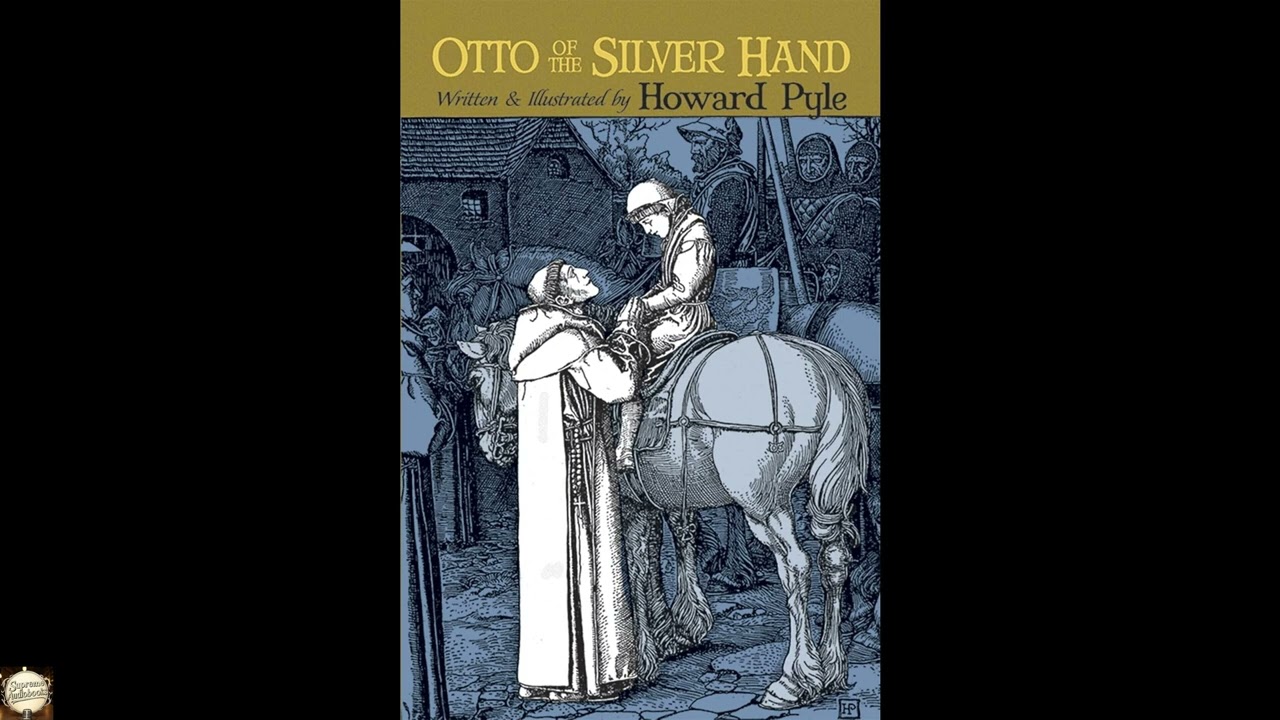
Step into a world suspended between the austere piety of the monastery and the brutal grandeur of the medieval German castle. Howard Pyle’s Otto of the Silver Hand is a poignant tale of innocence confronted by a harsh, unforgiving age, a classic work of historical fiction that continues to resonate with listeners today. It tells the story of a young boy’s struggle to find his place and uphold his values amidst a society gripped by ancient feuds and the stark realities of power. This isn’t merely a period piece; it’s a profound meditation on the enduring conflict between peace and violence, compassion and cruelty, offering a mirror to our own choices in a world that often demands we compromise our ideals. The story opens in 13th-century Germany, a landscape of towering fortresses and dense forests, where robber barons hold sway and the Holy Roman Empire struggles to assert its fragmented authority. Here we meet Otto, a boy born to Baron Conrad, a formidable and ruthless knight known for his merciless raids and unyielding pride. Otto’s gentle, devout mother passes away shortly after his birth, leaving him an orphan in a world ill-suited for his delicate nature. To shield him from the savagery of his father’s court, Otto is sent to the secluded monastery of Kloster-Michel, a haven of learning and quiet contemplation. Under the tutelage of kindly monks, Otto spends his formative years immersed in scholarly pursuits, prayer, and the cultivation of a gentle spirit, far removed from the clang of swords and the clamor of conflict that defines his lineage. Years pass, and the peaceful existence Otto has known is abruptly shattered. Baron Conrad, now softened by age and a yearning for an heir, recalls his son to the ancestral castle. Otto, now a young boy brimming with monastic virtue, is thrust into a world of stark contrast: the grim stone walls, the boisterous knights, the entrenched feuds, and the constant threat of violence that underlies daily life. He must navigate the treacherous currents of feudal politics, reconcile his peaceful upbringing with his birthright, and seek to understand the father who is both a legend of brutality and a distant figure of authority. The central conflict lies in Otto’s attempts to maintain his innate goodness and apply the lessons of compassion in a world that seems to understand only strength and retribution. He encounters both genuine kindness and profound betrayal, forging his character through a series of trials that will ultimately define him, leading to the incident that tragically but decisively gives him his famous silver hand. The narrative progresses towards a dramatic culmination of the ancient rivalries that plague his family, forcing Otto to make choices that will shape not only his own destiny but potentially the future of his war-torn land. Howard Pyle, the esteemed author and illustrator, was born in Wilmington, Delaware, in 1853. His Quaker upbringing instilled in him a strong moral compass and an appreciation for storytelling. Pyle displayed an early talent for drawing, which he honed through studies at the Franklin Institute of Philadelphia. He later moved to New York City, where he quickly made a name for himself as an illustrator for popular magazines like Harper's Weekly and St. Nicholas Magazine. Pyle’s unique ability to merge compelling narratives with evocative imagery revolutionized the field of American illustration, creating a distinct visual language that would inspire generations. Beyond Otto of the Silver Hand, Pyle penned and illustrated numerous enduring works that became cornerstones of American literature for young readers. His other notable titles include The Merry Adventures of Robin Hood, published in 1883, which brought a vibrant, fresh interpretation to the classic English legend; Men of Iron, a vivid tale of knighthood and training; and The Story of King Arthur and His Knights, which re-imagined the Arthurian legends for a new audience. Pyle’s dedication to historical accuracy, combined with his lively prose and dynamic artwork, established him as a key figure in the "Golden Age" of illustration and a foundational voice in American children’s literature. He was not merely an artist or an author, but a visionary educator, founding his own art school in Wilmington, which produced some of America's most celebrated illustrators, including N.C. Wyeth, Maxfield Parrish, and Frank Schoonover, cementing his lasting legacy. Otto of the Silver Hand eloquently portrays several profound themes. One prominent theme is the enduring clash between peace and violence, exemplified by Otto's upbringing in the cloister versus his harsh reality at his father's castle. Otto’s gentle attempts to mediate disputes with words rather than weapons, often met with ridicule or misunderstanding, underscore the monumental difficulty of injecting compassion into a world steeped in brute force. Another significant theme is identity and destiny; Otto struggles to reconcile the gentle soul nurtured by the monks with the violent heritage of his noble bloodline. The physical mark of his silver hand becomes a powerful symbol of his unique identity, a constant reminder of the pain he endured and the choices he must make to forge his own path, rather than simply following the expectations of his name. The narrative also powerfully illustrates the destructive cycle of vengeance that defines feudal society. The relentless pursuit of retribution, passed down through generations of noble families, drives much of the story's conflict and tragedy. Otto's innate desire for justice, unclouded by personal animosity, frequently places him at odds with the prevailing customs, showcasing a nascent form of morality striving against ingrained hatred. Furthermore, the theme of forgiveness and compassion shines through Otto's interactions, particularly in his capacity to see beyond the initial hostility of others, offering kindness even to those who have wronged him. This quiet strength ultimately proves to be a more potent force than any sword, hinting at a higher form of honor than mere chivalric display. Howard Pyle wrote and published Otto of the Silver Hand in 1888, during a fascinating period in American cultural and literary history. The late nineteenth century in the United States was a time of immense change, characterized by rapid industrialization, burgeoning cities, and the lingering social and political questions following the Civil War. There was a widespread appetite for historical romances and tales that offered an escape from the complexities of modern life, yet often contained underlying moral lessons. Pyle’s work, alongside that of contemporaries who also looked to European history and folklore, helped to define a new genre of historical adventure for young Americans. These stories served not only to entertain but also to instill virtues like courage, integrity, and honor in a rapidly evolving society that sometimes felt it was losing its traditional moral compass. Pyle’s commitment to historical detail, combined with his focus on character and moral development, positioned his tales as both educational and thrilling, making them stand out in the literary landscape of the era. Listening to Otto of the Silver Hand as an audiobook offers a unique opportunity to truly immerse oneself in the world Howard Pyle crafted. A skilled narrator brings to life the diverse voices of medieval Germany – the serene, measured tones of the Kloster-Michel monks, the gruff pronouncements of Baron Conrad, the earnestness of young Otto, and the varied accents of the common folk and knights. The multi-hour run length is perfectly suited for extended periods of focused listening, whether during commutes, while engaged in household tasks, or during quiet evenings. Listeners can appreciate the narrator's pacing, which expertly shifts from the tranquil, contemplative scenes within the monastery to the sudden, dramatic tension of battle or confrontation, reflecting the story's own emotional ebbs and flows. The spoken word highlights the beauty of Pyle’s prose and the subtle nuances of his dialogue, painting a vivid auditory picture of stone castles, shadowy forests, and the clatter of armor, allowing the atmosphere of a bygone era to envelop the imagination.
Enjoyed Otto of the Silver Hand? A few ways to support us
Audible & Amazon links are affiliate; we may earn a small commission at no extra cost.
About this production
Human narration by a volunteer reader from LibriVox.org, the public-domain audiobook project. LibriVox volunteers record literary works whose copyright has expired in the United States, releasing the resulting recordings into the public domain.
Otto of the Silver Hand by Howard Pyle. The underlying text is in the U.S. public domain. We do not republish any modern copyrighted edition, translation, or commentary.
The 4K cinematic visuals accompanying this audiobook are generated by an AI image model from prompts derived from the source text. No copyrighted photos, paintings, or stock footage are used. AI generation is disclosed on every video on our YouTube channel as required by YouTube's altered/synthetic content policy.
English subtitles are transcribed from the LibriVox recording with OpenAI Whisper. Translations into the 11 other supported languages are produced by Meta's NLLB-200 neural translation model. No human translator's copyrighted translation is used.
Questions about sourcing or rights? See our DMCA & Sourcing policy or contact us.
Enjoyed this audiobook?
If you'd like to own a copy of Otto of the Silver Hand or hear a professionally produced edition, the links below help support free audiobook production at no extra cost to you.
As an Amazon Associate we earn from qualifying purchases. Audible / print links are affiliate.