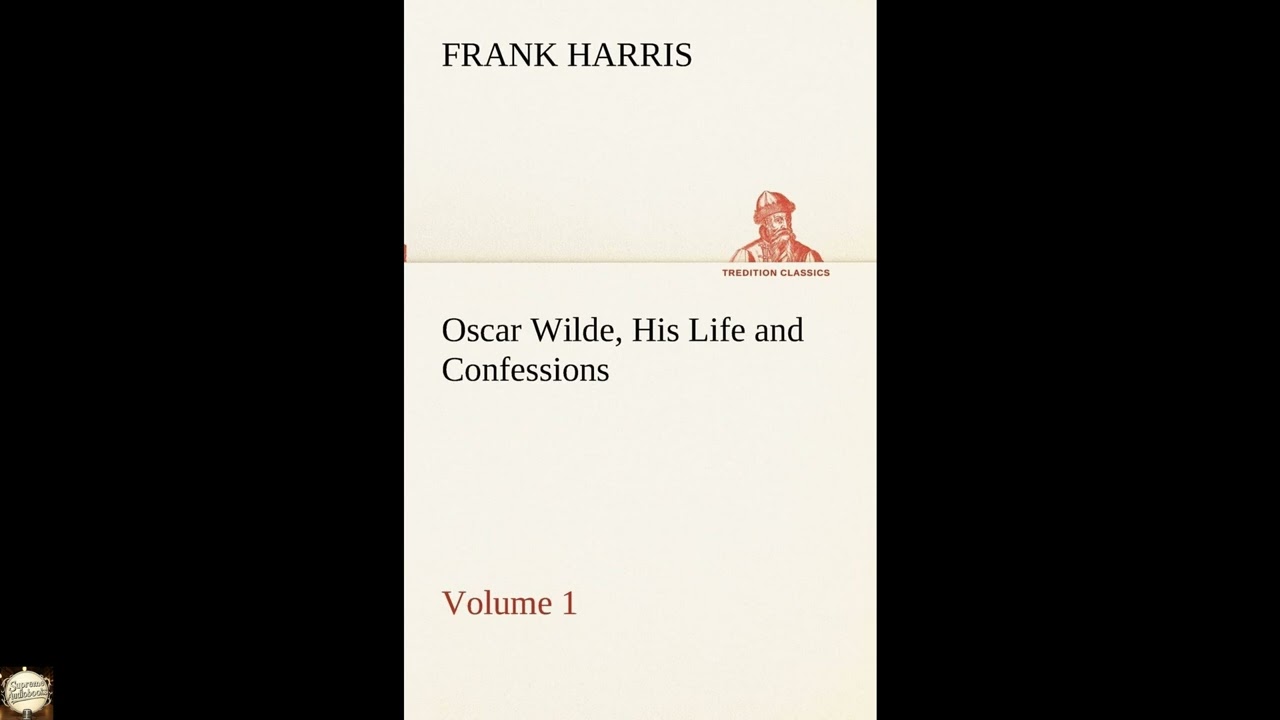
Oscar Wilde, His Life and Confessions - Volume 1
Dive into the glittering, often contradictory world of Oscar Wilde through the discerning, sometimes controversial, eyes of Frank Harris. This is not merely a chronicle of events, but a deeply personal portrait, a conversational re-telling that seeks to capture the spirit and genius of one of the nineteenth century’s most electrifying figures. Why should listeners care today? Because Wilde’s wit, his challenge to convention, and his ultimate tragic fall resonate profoundly, speaking to enduring questions about identity, art, and the often-harsh judgment of society. This first volume offers an intimate look at the formative years and rising star of a man whose legend only grows with time, revealing the human being behind the iconic persona. Harris’s narrative begins in the provincial, yet culturally rich, Ireland of Wilde’s youth, painting a picture of a precocious boy born into an intellectual Dublin family. We witness young Oscar’s early brilliance, his distinctive personality already forming, attracting notice from both peers and elders. The story soon transitions to his transformative years at Oxford University, where his aesthetic sensibilities blossomed, and he began to articulate the philosophy of "art for art's sake" that would define his public persona. The listener sees him cultivating his signature style – the flamboyant dress, the cutting wit, the deliberate provocations – all designed to challenge Victorian staidness and elevate beauty above all else. The narrative arc of this volume tracks Wilde’s ascent from promising student to celebrated London figure. We follow his initial forays into poetry and drama, his impactful lecture tour of America where he introduced aestheticism to a new continent, and his growing reputation as a bon vivant and conversationalist whose company was eagerly sought. Harris meticulously details Wilde’s early literary successes, his marriage to Constance Lloyd, and the establishment of his family life, all while subtly hinting at the underlying currents of his increasingly unconventional private world. This period captures Wilde at the height of his social and artistic powers, basking in the admiration of society, yet always pushing the boundaries of what was acceptable. Frank Harris, born in 1856 in Ireland, carved out a truly unique and often scandalous path through the late Victorian and early twentieth-century literary landscape. A journalist, editor, and ultimately a prolific author, Harris’s life was as colorful and controversial as some of the subjects he chronicled. After an unconventional youth that included periods in America, he became a prominent editor in London, presiding over influential publications such as The Fortnightly Review and The Saturday Review, where he championed emerging writers like H.G. Wells and George Bernard Shaw. His editorial tenure was marked by a keen eye for talent and a willingness to publish daring new voices, establishing him as a significant, albeit often dictatorial, figure in literary circles. Beyond his editorial work, Harris is perhaps best known for his biographies and memoirs, which often blurred the lines between fact and fiction, drawing criticism for their embellishments and self-aggrandizement. His most famous, or infamous, work is My Life and Loves, a four-volume autobiography notorious for its explicit sexual content and candid, often shocking, recollections. Yet, despite his reputation for unreliability and sensationalism, Harris possessed an undeniable talent for capturing the essence of an era and the personalities of his contemporaries. His friendships with luminaries like Guy de Maupassant and his close association with Wilde gave him unparalleled access and insight, making his accounts, however biased, incredibly compelling and historically valuable snapshots of a bygone literary world. Among the specific themes enacted throughout Harris’s portrayal of Wilde, the most prominent is arguably the nature of genius and its inevitable friction with societal norms. Harris consistently highlights Wilde’s extraordinary intellect and conversational brilliance, often through direct anecdotes or recounted witticisms. For instance, Harris describes Wilde holding court in salons, effortlessly weaving paradoxes and epigrams that both charmed and unsettled his listeners, demonstrating how his very brilliance set him apart and potentially on a collision course with Victorian sensibilities. Another key theme is the allure and dangers of aestheticism itself. The book illustrates how Wilde’s dedication to beauty, artifice, and the rejection of moralizing in art captivated a generation, yet also marked him as an outsider, attracting both fervent admirers and virulent critics. Harris shows Wilde's embrace of the aesthetic movement from his student days, adorning his rooms with lilies and peacock feathers, a concrete example of his deliberate challenge to the prevailing utilitarian spirit. A third central theme emerges as the performative aspect of identity and the construction of self in public life. Wilde consciously crafted his public image, treating his life itself as a work of art, a performance designed to provoke and entertain. Harris frequently notes Wilde’s theatrical gestures, his elaborate attire, and his carefully honed epigrams, all contributing to a persona that was both genuine and a deliberate creation. This volume showcases the meticulous effort Wilde put into curating his public self, underscoring the era’s fascination with personality and spectacle. These themes are not merely abstract concepts; they are woven into the very fabric of Harris’s anecdotes and descriptions, making them tangible aspects of Wilde’s unfolding story. Frank Harris published Oscar Wilde, His Life and Confessions in 1916, more than fifteen years after Wilde’s death in 1900 and over two decades after the infamous trials of 1895. The work emerged during a fascinating transitional period in British society, marked by the seismic shifts of the Great War, which overshadowed but did not erase the lingering cultural memory of the rigid Victorian era. While the immediate aftermath of Wilde’s conviction had seen a collective societal silence and condemnation, the intervening years allowed for a gradual softening of attitudes, a greater willingness to revisit the scandal with more nuance. Harris, along with others like Robert Sherard, took it upon himself to offer a more personal, albeit often partisan, account of Wilde's life, aiming to move beyond the sensational headlines and into the deeper complexities of his character and artistic legacy. The book thus served as an early attempt to reclaim Wilde from the depths of infamy, presenting a human figure rather than just a moral lesson. Listening to Oscar Wilde, His Life and Confessions - Volume 1 as an audiobook offers a unique intimacy, a sense of sitting in on a series of lively, often gossipy, conversations with a direct witness to Wilde's life. The narration brings Harris’s distinctive authorial voice to the forefront, allowing listeners to appreciate his conversational prose, his anecdotes, and his often-opinionated observations. The several hours of running length provide ample time to immerse oneself in the world of late nineteenth-century London, absorbing the details of Wilde’s youth and his meteoric rise. Listen for the subtle shifts in the narrator’s tone as Harris moves between admiration for Wilde's genius and criticism of his personal choices, and the careful pacing that builds anticipation for the unfolding drama of Wilde’s life. It’s an auditory window into a vanished era, told by someone who lived through it and knew its players intimately.
Enjoyed Oscar Wilde, His Life and Confessions - Volume 1? A few ways to support us
Audible & Amazon links are affiliate; we may earn a small commission at no extra cost.
About this production
Human narration by a volunteer reader from LibriVox.org, the public-domain audiobook project. LibriVox volunteers record literary works whose copyright has expired in the United States, releasing the resulting recordings into the public domain.
Oscar Wilde, His Life and Confessions - Volume 1 by Frank Harris. The underlying text is in the U.S. public domain. We do not republish any modern copyrighted edition, translation, or commentary.
The 4K cinematic visuals accompanying this audiobook are generated by an AI image model from prompts derived from the source text. No copyrighted photos, paintings, or stock footage are used. AI generation is disclosed on every video on our YouTube channel as required by YouTube's altered/synthetic content policy.
English subtitles are transcribed from the LibriVox recording with OpenAI Whisper. Translations into the 11 other supported languages are produced by Meta's NLLB-200 neural translation model. No human translator's copyrighted translation is used.
Questions about sourcing or rights? See our DMCA & Sourcing policy or contact us.
Enjoyed this audiobook?
If you'd like to own a copy of Oscar Wilde, His Life and Confessions - Volume 1 or hear a professionally produced edition, the links below help support free audiobook production at no extra cost to you.
As an Amazon Associate we earn from qualifying purchases. Audible / print links are affiliate.