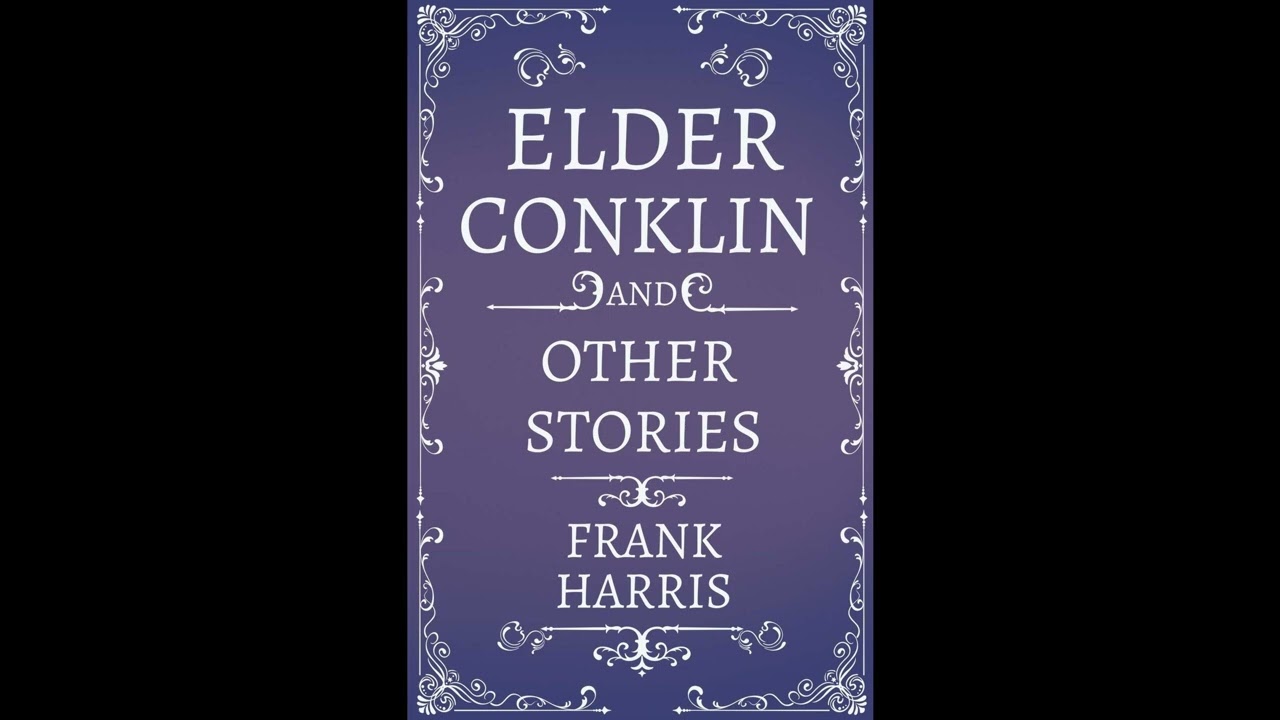
Elder Conklin - And Other Stories
Frank Harris's collection, "Elder Conklin - And Other Stories," stands as a remarkable snapshot of a particular American experience, one where raw landscapes and human ambition collide with stark moral choices. Published at the turn of the twentieth century, these tales offer more than historical curiosity; they present a compelling examination of character under duress, a theme as resonant today as it was in the rugged expanses of the American West. Harris, known for his unsparing gaze and keen psychological insight, distills the essence of a bygone era. His observations on greed, integrity, love, and betrayal remain profoundly relevant, prompting listeners to reflect on the enduring complexities of the human spirit. This collection invites you into a world both foreign and familiar, where frontier realities force individuals to confront their deepest convictions. The titular story, "Elder Conklin," transports us to a stark, sun-baked corner of the American West, a landscape as unyielding as the man himself. Conklin is a formidable, principled homesteader, carving out a life through sheer will and adherence to his moral code. Respected, even feared, within his isolated community for his probity and refusal to compromise, particularly concerning land and justice, his settled existence is upended by a younger, vivacious woman. This force tests his stoic life, compelling him to reconcile ingrained values with sudden dictates of his heart. This internal struggle—rigid self-control against human desire—forms the core of the story. Beyond Conklin's narrative, the collection offers a wider panorama of human experience. Each story is a distinct window into challenges and triumphs in a world in flux. Harris populates these vignettes with diverse characters: prospectors, settlers battling nature and fellow man, and women whose strengths often go unacknowledged. Protagonists wrestle with moral dilemmas emerging from the harsh environment—survival, loyalty, and the price of ambition. These tales are often set against an expanding America where law and order are tenuous. Each tale shares Harris's relentless focus on motivations and the unforeseen consequences of choices. He builds suspense with slow revelation of character, always stopping short of ultimate resolution, leaving the listener to ponder each decision's weight. Frank Harris, born James Thomas Harris in Galway, Ireland, in 1856, lived a life as dramatic and unconventional as many of his characters. As a teenager, he emigrated to the United States, working as a hotel clerk, cowboy, and laborer—experiences that profoundly influenced his writing. He eventually returned to Europe, studying at Heidelberg and mastering several languages, before embarking on a distinguished, if often controversial, career in journalism and letters in England. Harris became a prominent literary figure, known for his sharp intellect, combative personality, and editorial acumen. As editor of The Fortnightly Review and The Saturday Review, Harris championed new talent, publishing early works by H.G. Wells and George Bernard Shaw. His own literary output was prolific, encompassing short stories, novels, biographies, and a notoriously candid memoir. Notable works include The Man Shakespeare and His Tragic Life-Story, a psychological study, and My Life and Loves, detailing his sexual experiences with unprecedented frankness, cementing his reputation as a provocateur. Harris was a key figure in the fin-de-siècle literary scene, associated with realism and naturalism, depicting human behavior with unvarnished honesty. He passed away in Nice, France, in 1931, leaving a legacy as a brilliant but polarizing figure whose impact on English literature and journalism was undeniable. At the heart of "Elder Conklin - And Other Stories" lies a penetrating examination of the individual's struggle against societal expectations and unforgiving circumstance. Harris consistently positions characters at crossroads where personal desires clash with community standards or the harsh realities of survival. Elder Conklin, for instance, stands as a monument to self-discipline and Old Testament justice; his internal conflict arises precisely when an external force—the unexpected arrival of a woman—challenges his established moral framework. This tension highlights morality versus desire, showing how deeply held convictions can be swayed by human emotion, and how reputation can be both a shield and a cage. Another central theme is the raw, shaping power of the American frontier itself. Harris portrays the West not as a romanticized land of heroes, but as a crucible that tests, breaks, and sometimes remakes individuals. The stark landscapes and isolation frequently force characters into extreme decisions, exposing inherent hypocrisy or profound integrity. We see this in tales where characters must choose between legalistic right and practical survival, or where civility crumbles under scarce resources or unbridled ambition. The collection also consistently returns to passion and its often-destructive consequences, showing how unchecked desire, whether for wealth, power, or love, can lead individuals down paths they never intended, revealing darker impulses beneath respectability. Frank Harris's stories emerged during a fascinating transitional period in American letters. The late nineteenth and early twentieth centuries witnessed the closing of the American frontier, transforming the myth of the rugged individual into a subject for reflection. This era was marked by rapid industrialization, urbanization, and social changes challenging traditional values. In literature, this period saw a decisive shift from romantic depictions of the West towards the more unsparing realism and naturalism espoused by writers like Stephen Crane, Hamlin Garland, and Jack London. Harris’s focus on psychological truth, moral ambiguity, and the harsh realities of life in undeveloped territories places his work firmly within this burgeoning movement, offering a nuanced counterpoint to simplistic narratives. To fully appreciate the nuanced character studies and atmospheric tension Frank Harris creates, listening to "Elder Conklin - And Other Stories" as an audiobook offers a singular advantage. The narrator's voice becomes the conduit for Harris's keen observations, bringing to life the dry wit, subtle irony, and underlying emotional currents that define these tales. Over several hours of listening, you will find yourself immersed in the distinctive voices of Harris's characters—from the stoic tones of Elder Conklin himself to the more impassioned utterances of other figures. The pacing of the narration truly underscores the deliberate unfolding of moral dilemmas, allowing the listener to absorb the stark beauty and sometimes brutal realities of the frontier settings. Listen for subtle shifts in tone that betray hidden motives, and the way dialogue, delivered with precision, reveals as much about unspoken feelings as stated facts. The aural experience enhances the atmospheric qualities of the writing, painting vivid soundscapes of a world long past, yet still remarkably alive through Harris's powerful prose.
Enjoyed Elder Conklin - And Other Stories? A few ways to support us
Audible & Amazon links are affiliate; we may earn a small commission at no extra cost.
About this production
Human narration by a volunteer reader from LibriVox.org, the public-domain audiobook project. LibriVox volunteers record literary works whose copyright has expired in the United States, releasing the resulting recordings into the public domain.
Elder Conklin - And Other Stories by Frank Harris. The underlying text is in the U.S. public domain. We do not republish any modern copyrighted edition, translation, or commentary.
The 4K cinematic visuals accompanying this audiobook are generated by an AI image model from prompts derived from the source text. No copyrighted photos, paintings, or stock footage are used. AI generation is disclosed on every video on our YouTube channel as required by YouTube's altered/synthetic content policy.
English subtitles are transcribed from the LibriVox recording with OpenAI Whisper. Translations into the 11 other supported languages are produced by Meta's NLLB-200 neural translation model. No human translator's copyrighted translation is used.
Questions about sourcing or rights? See our DMCA & Sourcing policy or contact us.
Enjoyed this audiobook?
If you'd like to own a copy of Elder Conklin - And Other Stories or hear a professionally produced edition, the links below help support free audiobook production at no extra cost to you.
As an Amazon Associate we earn from qualifying purchases. Audible / print links are affiliate.