Off to Sea: The Adventures of Jovial Jack Junker on his Road to Fame
Long before screens offered virtual vistas of distant shores, readers found their escape, and their challenge, in the pages of books that dared them to dream beyond their immediate surroundings. William Hen's "Off to Sea: The Adventures of Jovial Jack Junker on his Road to Fame" stands as a monumental testament to this enduring human impulse. This isn't merely a tale of salty spray and daring deeds; it is a profound examination of what it means to seek one's place in the world, to chase an elusive idea of success, and to be forged by the relentless currents of experience. For anyone who has ever felt the pull of the unknown, questioned their destiny, or yearned for a life grander than the one they inherited, Jack Junker's odyssey speaks with a resonance that transcends the centuries, offering both thrilling escapism and timeless wisdom. The narrative introduces us to young Jack Junker, a man of humble beginnings confined to a sleepy, inland village where the most exciting event is often the arrival of the weekly post. Yet, within Jack beats a restless heart, fueled by an optimistic spirit and a vivid imagination that pictures grander stages than his provincial existence affords. He dreams not merely of prosperity, but of "fame"—a recognition that promises to validate his very being. Spurred by this yearning, and a distinct lack of opportunity on land, Jack answers the insistent call of the sea, trading his mundane reality for the vast, unpredictable expanse of the ocean. He signs on with a merchant vessel, a decision that irrevocably alters his life's trajectory. From the moment his boots hit the rolling deck, Jack is plunged into a world of both breathtaking wonder and stark brutality. He contends with the camaraderie and harsh realities of shipboard life, encountering a colorful array of characters: the stoic, weathered captain whose wisdom is as deep as the ocean itself; the boisterous, loyal shipmates who become a surrogate family; and the occasional opportunistic rogue whose schemes threaten to capsize more than just the vessel. Jack's early adventures pit him against nature's fury—tempestuous storms that threaten to splinter the ship and swallow all aboard—as well as the machinations of man, from cutthroat pirates to the often-unjust whims of powerful figures in distant ports. Each challenge, each narrow escape, each hard-won victory chips away at his youthful naivety, gradually transforming the "jovial" boy into a man of experience and fortitude. The story traces his winding path across oceans and continents, through periods of destitution and moments of fleeting success, as his understanding of "fame" evolves from a simple desire for recognition into something far more nuanced and deeply personal. William Hen, a figure whose literary output graced the mid-nineteenth century, carved out a distinctive niche in the expanding world of English letters. Though details of his private life remain somewhat shrouded in the mists of time, his reputation rests firmly on a body of work characterized by its robust storytelling and astute observations of human nature. Hen was known to possess a particular affinity for the sea, an interest often rumored to have been ignited during several youthful voyages, though the extent of his actual seafaring experience is debated by scholars. What is undeniable, however, is his profound grasp of maritime life, its perils and its unique camaraderie, which lends an unparalleled authenticity to "Off to Sea." Beyond this celebrated tale, Hen produced a series of other notable works, including "The Almanac of Portside Tales," a collection of short stories that further cemented his reputation as a master chronicler of life on the docks and in sailors' taverns. His novel "Echoes from the Wharves," while less widely disseminated than Jack Junker's exploits, is praised for its stark realism in depicting the socio-economic struggles of the working classes in bustling port cities. Hen's prose, often described as both vigorous and elegantly clear, placed him among those authors who sought to combine the grand sweep of romantic adventure with a meticulous eye for the social structures and moral dilemmas of his age, marking him as a significant voice within the broader literary landscape of his time. At its core, "Off to Sea" grapples with the concept of ambition—not as a simple quest for glory, but as a complex, evolving force that shapes a life. Jack Junker’s initial, almost childlike desire for "fame" is put to the test against the backdrop of grueling labor, perilous encounters, and moral compromises. We witness Jack, lashed to the mast during a furious gale, not merely fighting for survival but driven by an internal resolve to prove himself worthy of his aspirations, demonstrating how ambition can both uplift and burden the human spirit. The book also profoundly illuminates the theme of identity formation. Jack begins as a blank slate, defined by his small-town origins, but the crucible of the sea relentlessly shapes him. After a particularly harrowing encounter with a band of brigands in a foreign port, Jack is forced to confront his own capabilities and limitations, realizing that his true self is forged not in the placid waters of his past, but in the stormy depths of his present. Furthermore, Hen masterfully weaves in the tension between fortune and free will. Is Jack's eventual status—whatever it may be—a result of his tenacious spirit and shrewd decisions, or is it merely the capricious hand of fate guiding him through a labyrinth of chance encounters and unpredictable events? A pivotal scene finds Jack stumbling upon a hidden cache of treasure, an act of sheer luck, but it is his subsequent decision to use these newfound resources to rescue a stranded crew—a choice reflecting his developed character—that truly alters his path. Lastly, the narrative subtly addresses the nuanced theme of social mobility and the illusions of class. Jack, through his sheer determination and acquired skills, transcends the station of his birth, but he continually encounters the rigid hierarchies of both maritime and landed society. His interactions with both impoverished deckhands and haughty colonial officials highlight the persistent barriers and unexpected bridges that connect and separate people across the social spectrum, regardless of their individual merit. "Off to Sea" emerged during a particularly dynamic period in human history—the mid-nineteenth century—an era defined by rapid industrialization, expanding global empires, and unprecedented advancements in seafaring technology. The world was simultaneously shrinking and growing larger; steamships were beginning to challenge the age of sail, yet vast swathes of the globe remained mysterious and ripe for exploration or exploitation. This cultural ferment created a hunger for narratives that could transport readers to distant lands, offer vicarious adventure, and reflect on the changing nature of society and the individual's place within it. William Hen's work, with its emphasis on a self-made individual navigating a tumultuous world, resonated deeply with a public increasingly fascinated by tales of ambition, perseverance, and the often-harsh realities of life beyond familiar horizons. It spoke to a prevalent sentiment of an age that simultaneously celebrated rugged individualism and grappled with the complex moral implications of its grand ventures. As an audiobook, "Off to Sea" truly comes alive, transforming the written word into an immersive auditory experience. The extended run length, encompassing many hours of narrative, makes it an ideal companion for long voyages of your own, whether across continents or simply through your daily routine. The narration, with its carefully crafted pacing, allows the listener to fully absorb the shifting moods of the sea and the nuanced development of Jack's character. Moments of intense action—a roaring storm, a heated confrontation—are rendered with an urgency that quickens the pulse, while periods of quiet reflection are given space to breathe, allowing the listener to ponder Jack's inner life. The distinct voices given to each character bring a vibrant immediacy to their dialogue, making the bustling docks, the cramped quarters of a ship, and the exotic marketplaces of foreign lands feel palpably real. Close your eyes and you can almost taste the salt spray, hear the creak of the timbers, and feel the vast, beckoning presence of the ocean itself.
Enjoyed Off to Sea: The Adventures of Jovial Jack Junker on his Road to Fame? A few ways to support us
Audible & Amazon links are affiliate; we may earn a small commission at no extra cost.
About this production
Human narration by a volunteer reader from LibriVox.org, the public-domain audiobook project. LibriVox volunteers record literary works whose copyright has expired in the United States, releasing the resulting recordings into the public domain.
Off to Sea: The Adventures of Jovial Jack Junker on his Road to Fame by William Hen. The underlying text is in the U.S. public domain. We do not republish any modern copyrighted edition, translation, or commentary.
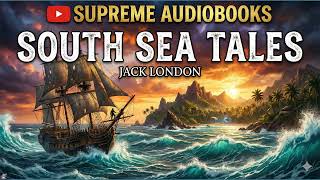
The 4K cinematic visuals accompanying this audiobook are generated by an AI image model from prompts derived from the source text. No copyrighted photos, paintings, or stock footage are used. AI generation is disclosed on every video on our YouTube channel as required by YouTube's altered/synthetic content policy.
English subtitles are transcribed from the LibriVox recording with OpenAI Whisper. Translations into the 11 other supported languages are produced by Meta's NLLB-200 neural translation model. No human translator's copyrighted translation is used.
Questions about sourcing or rights? See our DMCA & Sourcing policy or contact us.
Enjoyed this audiobook?
If you'd like to own a copy of Off to Sea: The Adventures of Jovial Jack Junker on his Road to Fame or hear a professionally produced edition, the links below help support free audiobook production at no extra cost to you.
As an Amazon Associate we earn from qualifying purchases. Audible / print links are affiliate.