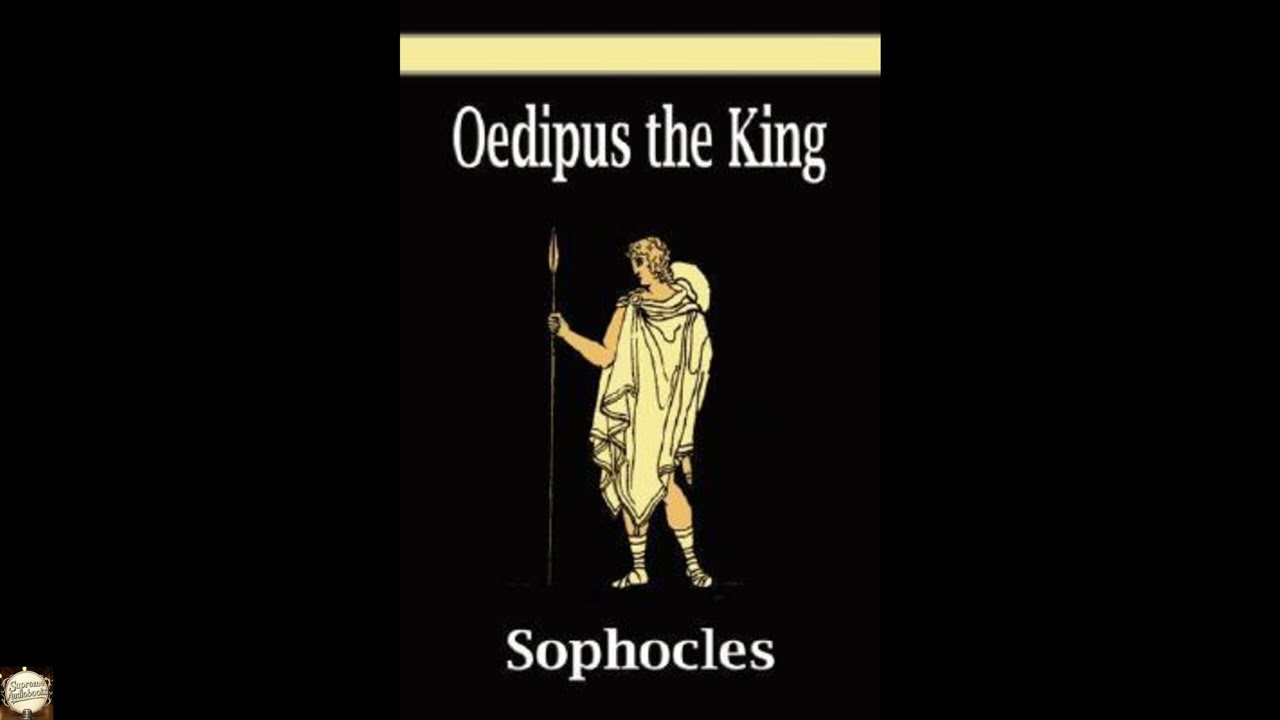
Oedipus the King By Sophocles
What happens when a man, determined to outrun his fate, instead rushes headlong toward it? When a city, ravaged by plague, demands the truth, no matter how monstrous? Sophocles’ Oedipus the King forces us to confront these primal questions, presenting a drama of profound psychological depth and relentless suspense. This ancient Greek tragedy, first performed in the Golden Age of Athens, remains a literary achievement, its power undiminished across millennia. It dissects human nature, the quest for self-knowledge, and the terrifying consequences of an inescapable destiny, resonating with startling immediacy even today. The play challenges us to consider the price of uncovering an unbearable truth. The setting is Thebes, prosperous but despairing. A terrible plague kills citizens and crops. The people appeal to their king, Oedipus, who once saved them from the Sphinx. Oedipus, a monarch of formidable will, sent his brother-in-law, Creon, to the Oracle of Apollo at Delphi. Creon returns with a chilling message: the plague is divine punishment, a pollution upon Thebes, caused by the unpunished murder of their former king, Laius. The oracle demands the murderer be found and exiled or executed to cleanse the city. Oedipus, with characteristic zeal, vows to track down the killer, pronouncing a severe curse upon the perpetrator. His investigation leads him to consult Teiresias, the blind prophet, renowned for his foresight. But Teiresias is strangely reluctant, hinting at a horrifying truth. When pressed and insulted by Oedipus, Teiresias makes oblique accusations that send Oedipus into a furious rage, convinced Creon and the prophet are conspiring against him. As the investigation continues, witnesses are called, old memories stirred, and clues coalesce, pushing Oedipus closer to a revelation that will shatter his world and his very identity. Sophocles, one of the three great tragedians of ancient Athens—along with Aeschylus and Euripides—was born in Colonus, outside Athens, around 496 or 495 BC. His long life allowed him to witness the apex of Athenian culture. Unlike Aeschylus, Sophocles was born into a wealthy but not noble family. He received an excellent education, excelling in music, dance, and athletics, and performed as an actor in his early plays before dedicating himself entirely to writing. Sophocles was not merely a playwright; he was an active and respected public figure in Athens, serving as a general alongside Pericles and holding various religious offices. His dramatic career was extraordinarily successful, winning an unprecedented 18 first prizes at the City Dionysia. Of his over 120 plays, only seven complete tragedies survive, including Antigone, Electra, and Oedipus at Colonus, a sequel to Oedipus the King, written near the end of his life. Sophocles introduced a third actor for greater character interaction and reduced the chorus's narrative role, focusing more on protagonists. Oedipus the King is a quintessential exploration of fate versus free will. From the moment the oracle declares Laius's son will kill his father and marry his mother, characters try to circumvent this prophecy. Laius and Jocasta try to eliminate their infant son; Oedipus, hearing a similar prophecy, flees his presumed parents. Yet, every action taken to avoid the prophecy only serves to fulfill it, demonstrating destiny's irresistible force. Simultaneously, the play highlights the human drive for truth and knowledge. Oedipus, despite warnings, insists on unearthing the killer, saying, "I will know the truth." This unyielding pursuit, though leading to personal devastation, underscores intellectual courage. Another prominent theme is hubris, or excessive pride and arrogance, particularly in the face of divine power. Oedipus's intelligence allowed him to defeat the Sphinx, making him believe he could conquer any problem. His quick temper and dismissive attitude towards Teiresias showcase his overconfidence. This hubris blinds him to truths the audience understands, creating profound dramatic irony. The audience knows Oedipus is the murderer he seeks, that he has unknowingly fulfilled the terrible prophecy. Every curse he pronounces, every confident assertion, lands with devastating weight, as the audience watches him unwittingly seal his own tragic fate. Oedipus the King was likely first performed around 429 BC, during the early Peloponnesian War and a devastating plague that ravaged Athens. The play's opening depiction of a city under siege by disease would have resonated deeply with its original audience, lending terrifying relevance to Oedipus's search for the "pollution." This context highlights the Greek belief in miasma, a religious pollution afflicting a community due to unpunished crimes against family or gods. The play thus reflects the deep anxieties of a society grappling with war, pestilence, and perceived divine displeasure, seeking order and justice. Listening to Oedipus the King as an audiobook transforms a classical text into an immediate and visceral experience. The drama, originally conceived for live performance, truly comes alive through the spoken word. A skilled narrator conveys the escalating tension in Oedipus's voice, the cryptic pronouncements of Teiresias, the anguish of Jocasta, and the reactions of the chorus, turning ancient Greek dialogue into a living conversation. The several hours of listening time allow for deep immersion into the intricate verbal exchanges, rapid shifts in mood, and the inexorable march toward revelation. A well-performed narration illuminates subtle layers of meaning and the chilling atmosphere.
Enjoyed Oedipus the King By Sophocles? A few ways to support us
Audible & Amazon links are affiliate; we may earn a small commission at no extra cost.
About this production
Human narration by a volunteer reader from LibriVox.org, the public-domain audiobook project. LibriVox volunteers record literary works whose copyright has expired in the United States, releasing the resulting recordings into the public domain.
Oedipus the King By Sophocles by Sophocles. The underlying text is in the U.S. public domain. We do not republish any modern copyrighted edition, translation, or commentary.
The 4K cinematic visuals accompanying this audiobook are generated by an AI image model from prompts derived from the source text. No copyrighted photos, paintings, or stock footage are used. AI generation is disclosed on every video on our YouTube channel as required by YouTube's altered/synthetic content policy.
English subtitles are transcribed from the LibriVox recording with OpenAI Whisper. Translations into the 11 other supported languages are produced by Meta's NLLB-200 neural translation model. No human translator's copyrighted translation is used.
Questions about sourcing or rights? See our DMCA & Sourcing policy or contact us.
Enjoyed this audiobook?
If you'd like to own a copy of Oedipus the King By Sophocles or hear a professionally produced edition, the links below help support free audiobook production at no extra cost to you.
As an Amazon Associate we earn from qualifying purchases. Audible / print links are affiliate.