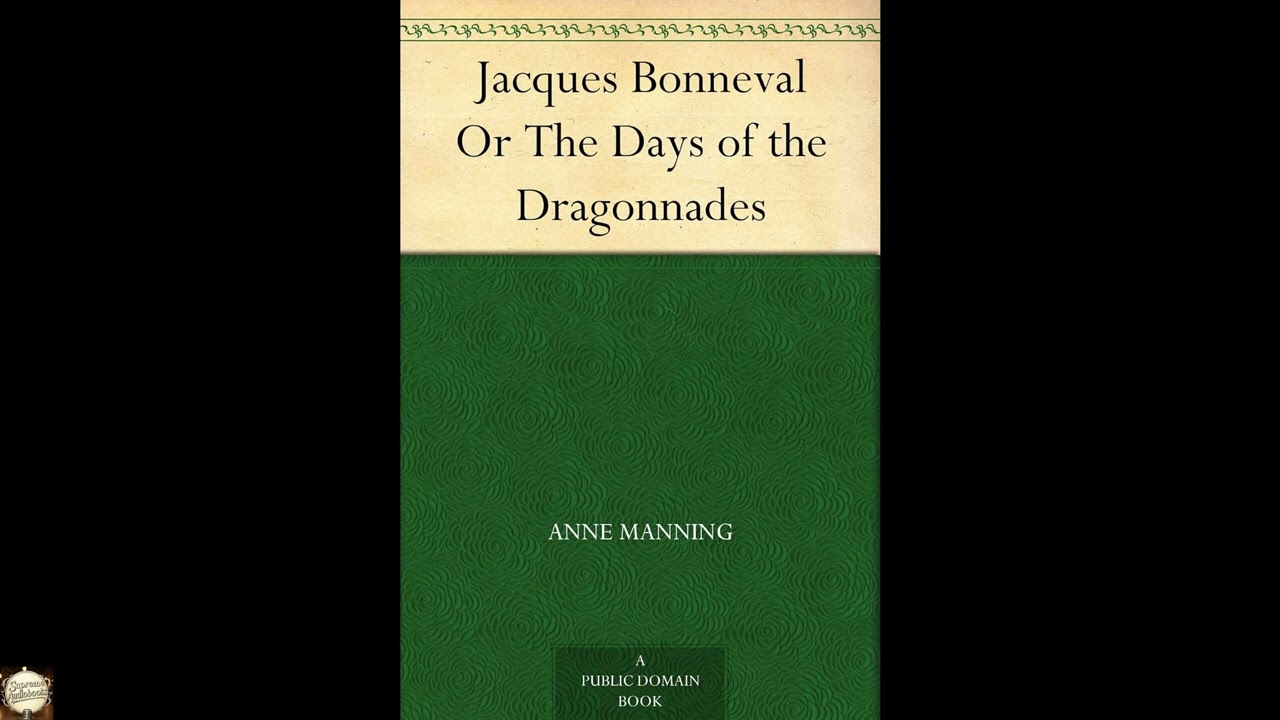
Jacques Bonneval; Or, The Days of the Dragonnades
Seventeenth-century France, under the absolute rule of King Louis XIV, saw a systematic and brutal suppression of its Protestant minority, the Huguenots. Jacques Bonneval; Or, The Days of the Dragonnades plunges listeners directly into this harrowing period, offering an intimate account of one young man’s struggle for survival and faith amidst state-sponsored terror. This classic work of historical fiction, penned by the accomplished Anne Manning, presents a vivid, human-scale perspective on a historical tragedy that resonates deeply even today, speaking to universal themes of religious freedom, the courage of conviction, and the enduring human spirit in the face of profound adversity. It asks us to consider the price of belief when the powerful demand conformity, making the distant past feel startlingly immediate and relevant to any era grappling with questions of individual liberty and systemic oppression. The story opens in the peaceful, domestic world of the Bonneval family, Huguenots living in the seemingly secure provinces of France. Jacques Bonneval, a young man on the cusp of adulthood, enjoys a life of relative tranquility, grounded in his family’s faith and community. However, this peace is violently shattered with the revocation of the Edict of Nantes in 1685. King Louis XIV, intent on religious uniformity, unleashes the "Dragonnades" — a terrifying policy where dragoons, royal soldiers, were quartered in Huguenot homes, free to loot, destroy, and inflict psychological and physical torment until the inhabitants either converted to Catholicism or fled. The narrative captures the horrifying descent from normalcy into a nightmare of fear and uncertainty, as the Bonnevals and their neighbors face agonizing choices: recant their faith, flee their homeland and all they know, or suffer unimaginable cruelty. Jacques, along with his family, must confront the stark reality of their situation. The arrival of the dragoons transforms their home into a site of oppression, their lives stripped of dignity and safety. Manning skillfully portrays the day-to-day horrors, not just the dramatic confrontations but the insidious erosion of spirit and property. The book follows Jacques as he navigates this treacherous landscape, witnessing the suffering of his loved ones and the moral compromises made by others. His personal struggle becomes a microcosm of the wider Huguenot experience, showing the desperate efforts to maintain integrity and hope against overwhelming odds. The central conflict lies in the heart-wrenching decisions forced upon ordinary people, and Jacques's determination to uphold his family's honor and his own conscience provides the driving force of this gripping narrative, a testament to the power of inner fortitude against tyranny. Anne Manning (1807-1879) was a prolific English novelist known for her historical fiction, often presented in the form of diaries, letters, or memoirs. Born in London, she spent much of her life dedicated to writing, becoming a prominent voice in Victorian literature. Her educational background, including time spent living in Germany, broadened her historical and cultural perspectives, which she masterfully integrated into her works. Manning published over 50 novels, many of which aimed to recreate past eras with painstaking accuracy and an emphasis on personal narratives within larger historical events. Among her most acclaimed works are The Household of Sir Thomas More (1851) and Mary Powell (1850), a fictional diary attributed to John Milton's first wife. These books exemplified her unique approach, blending historical research with a vivid, imaginative recreation of domestic life and personal struggles, often employing an archaic style to enhance the sense of authenticity. Manning's literary output positioned her firmly within the tradition of the historical novel, popular in the Victorian era, but distinguished by her nuanced focus on character psychology and the everyday texture of life in bygone periods. She was not merely recording history; she was making it breathe through the imagined voices of those who lived it, establishing her place as a skilled and compassionate chronicler of the past. The story of Jacques Bonneval powerfully enacts several enduring themes. Foremost among these is the theme of religious persecution and the fundamental human right to freedom of conscience. The text starkly depicts the brutality of the Dragonnades, such as the forced billeting of soldiers, who, as described in agonizing detail, would destroy property, desecrate sacred texts, and inflict constant harassment upon the Huguenots. Manning shows how this systematic oppression targeted not just beliefs but the very fabric of family life and community, forcing individuals to choose between outward conformity and deeply held faith. Another central theme is moral courage in the face of overwhelming power. Jacques's choices, whether to resist, to flee, or to maintain a quiet defiance, exemplify the extraordinary bravery of ordinary people caught in a societal maelstrom. The book also addresses the themes of loss of innocence and the enduring strength of family bonds. Jacques begins as a relatively sheltered young man, but the unfolding horrors quickly strip away his youthful naivety, forcing him to confront the harsh realities of a world turned upside down. Scenes depicting the separation of families, the anguish of parents seeing their children tortured or indoctrinated, underscore the profound impact of state-sanctioned violence on the most intimate human relationships. Yet, amidst this despair, Manning often highlights moments of profound loyalty and love, demonstrating how shared suffering can, paradoxically, forge unbreakable connections and provide a source of resilience against the forces of tyranny. Jacques Bonneval was published in the mid-nineteenth century, a period when Victorian Britain possessed a keen interest in historical narratives, particularly those that offered moral instruction or illuminated the struggles for liberty and faith. The historical novel, popularized earlier by figures like Walter Scott, remained a powerful genre, appealing to a public eager for stories that combined education with entertainment. Manning's work fit perfectly into this cultural landscape, offering readers a glimpse into a period of intense religious conflict, providing a cautionary tale against intolerance while simultaneously celebrating steadfastness and moral rectitude. The book also resonated with the prevailing Protestant ethos of Victorian England, which often looked back to periods of religious persecution as foundational to its own sense of identity and values, making the plight of the Huguenots a particularly compelling subject for British audiences. Listening to Jacques Bonneval; Or, The Days of the Dragonnades as an audiobook offers an intensely personal and immersive experience. The narrator’s voice becomes the conduit for the harrowing events and the deep emotional currents running through the story. Over its several hours of runtime, the subtle inflections and pacing can underscore the mounting tension as the Dragonnades begin, convey the quiet despair of the Bonneval family, and amplify moments of defiant strength. A skilled narrator brings a crucial layer of authenticity to the period dialogue and descriptions, transforming the written word into a spoken testimony of a dark chapter in history. The nuanced vocal performances allow the listener to feel the urgency of Jacques's predicament, to hear the echoes of fear and hope in each word, making the past feel intimately present and ensuring that the courage and suffering of the Huguenots are remembered with vivid clarity.
Enjoyed Jacques Bonneval; Or, The Days of the Dragonnades? A few ways to support us
Audible & Amazon links are affiliate; we may earn a small commission at no extra cost.
About this production
Human narration by a volunteer reader from LibriVox.org, the public-domain audiobook project. LibriVox volunteers record literary works whose copyright has expired in the United States, releasing the resulting recordings into the public domain.
Jacques Bonneval; Or, The Days of the Dragonnades by Anne Manning. The underlying text is in the U.S. public domain. We do not republish any modern copyrighted edition, translation, or commentary.
The 4K cinematic visuals accompanying this audiobook are generated by an AI image model from prompts derived from the source text. No copyrighted photos, paintings, or stock footage are used. AI generation is disclosed on every video on our YouTube channel as required by YouTube's altered/synthetic content policy.
English subtitles are transcribed from the LibriVox recording with OpenAI Whisper. Translations into the 11 other supported languages are produced by Meta's NLLB-200 neural translation model. No human translator's copyrighted translation is used.
Questions about sourcing or rights? See our DMCA & Sourcing policy or contact us.
Enjoyed this audiobook?
If you'd like to own a copy of Jacques Bonneval; Or, The Days of the Dragonnades or hear a professionally produced edition, the links below help support free audiobook production at no extra cost to you.
As an Amazon Associate we earn from qualifying purchases. Audible / print links are affiliate.
More Audiobooks


Le Collier de la Reine (The Queen's Necklace)

Memoirs of Louis XIV and his court and of the regency Volume 1

My Days of Adventure: The Fall of France, 1870-71
The Vicomte De Bragelonne: The End and Beginning of an Era