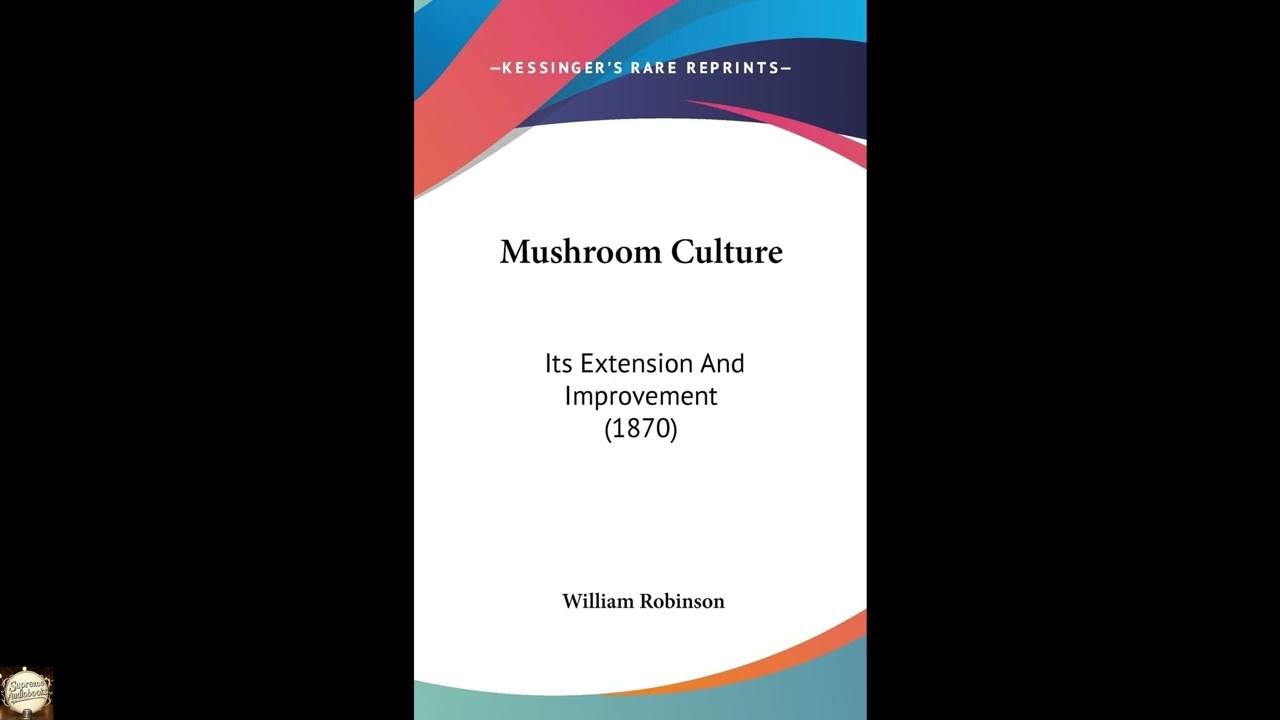
Mushroom Culture: Its Extension And Improvement
Step into a world where the earth’s hidden bounty is meticulously brought to light, where the seemingly simple act of growing a mushroom transforms into a profound study of nature, patience, and human ingenuity. William Robinson’s Mushroom Culture: Its Extension And Improvement is far more than a practical guide from a bygone era; it serves as a fascinating lens through which we can observe the Victorian mind grappling with the natural world, a testament to the enduring human desire for self-sufficiency and a deeper connection to the food we consume. Even today, as concerns about sustainable living and localized food systems grow, Robinson’s precise observations and practical wisdom resonate, offering not just instruction but a quiet inspiration for those who seek to understand and cultivate the surprising life beneath our feet. This book stands as a classic not just of horticulture, but of an era's approach to knowledge and the practical arts. The text does not unfurl a traditional narrative with characters and a central dramatic struggle, but rather guides the listener through a methodical progression of knowledge, akin to a master craftsman instructing an eager apprentice. The setting is less a geographical location and more a controlled environment—the cool, damp cellar, the specially constructed mushroom bed, the hothouse where precise conditions are maintained. Here, the primary players are the author’s authoritative voice, the aspiring cultivator receiving his guidance, and the enigmatic fungi themselves, presented as both a challenge to overcome and a reward to be reaped. Robinson initiates the reader into the fundamental principles of mushroom cultivation, dispelling myths and laying bare the precise conditions necessary for success. The arc of this instructional narrative begins with the very genesis of mushroom culture: understanding the necessary substrates, the appropriate temperatures, and the art of procuring and handling mushroom spawn. From these foundational lessons, Robinson steadily elevates the listener's understanding, moving into the preparation of specialized beds, methods for irrigation, and the delicate balance required to encourage prolific growth. The "conflict" within these pages is largely intellectual and practical: how to anticipate and mitigate the numerous pitfalls that can plague a crop, from pests and diseases to unsuitable environmental conditions. Robinson’s detailed solutions and preventive measures illustrate the triumph of careful observation and diligent application over potential failure, leading the reader towards the satisfying culmination of a bountiful harvest. William Robinson, born in County Dublin, Ireland, in 1838, blossomed into one of the most influential figures in gardening history. His early life saw him working at the famed Royal Botanic Society's gardens in Regent's Park, London, an experience that fueled his growing conviction that formal, rigid Victorian garden designs were unnatural and wasteful. Throughout his long life, which ended in 1935, Robinson became a fierce advocate for naturalistic planting and the "wild garden" movement, transforming the aesthetic of English gardens and fundamentally altering how we approach landscape design. He championed hardy plants, grouping them informally to create effects that mimicked nature rather than forcing it into geometric patterns. Beyond his hands-on gardening, Robinson was a prolific and opinionated writer. His landmark works, such as The Wild Garden (1870) and The English Flower Garden (1883), became bibles for a new generation of gardeners, articulating a philosophy that emphasized beauty through simplicity and harmony with the existing landscape. He owned and managed Gravetye Manor in Sussex, transforming it into a living laboratory for his horticultural theories, which included advocating for native plants and sustainable practices long before these terms entered common parlance. Robinson's legacy is cemented not just in the pages of his books, but in the enduring influence he exerted on garden design, moving it away from contrived artifice towards a more ecological and aesthetically pleasing naturalism. Mushroom Culture: Its Extension And Improvement enacts several compelling themes. Foremost among these is the human desire for mastery over nature, yet a mastery achieved through deep respect and understanding rather than brute force. Robinson meticulously details the ideal conditions for fungi growth, demonstrating that successful cultivation requires keen observation of environmental factors—temperature, humidity, substrate composition—and a willingness to adapt methods to nature's subtle cues. For example, his precise instructions for constructing mushroom beds from various organic materials illustrate the symbiotic relationship required, where human ingenuity provides the framework, but nature’s processes ultimately govern the outcome. This careful dance between human intervention and natural inclination is a recurring undercurrent. Another central theme is the spirit of practical self-sufficiency and scientific application. The late Victorian era valued ingenuity and the application of scientific principles to everyday life. Robinson's guide empowers individuals—whether professional growers or keen amateurs—to produce a valuable food source through methodical, evidence-based practices. His discussions around different types of mushroom spawn, their handling, and protection from pests are not mere anecdotes but distillations of empirical knowledge, showcasing a systematic approach to applied botany. The book also subtly touches upon resourcefulness, encouraging the use of readily available materials and efficient methods to achieve productive results, reflecting a broader societal value of making the most of one's surroundings. The late nineteenth century, when Robinson penned this work, was a period of immense change in Great Britain. The Industrial Revolution had transformed society, leading to significant urbanization and a burgeoning middle class with disposable income and a growing interest in domestic improvements and scientific pursuits. This era also saw an explosion in print culture, making instructional texts like Robinson's accessible to a wider audience eager for practical knowledge and sophisticated hobbies. Horticulturally, it was a time of transition; the highly formalized, often rigid garden styles of the earlier Victorian period were beginning to give way to more naturalistic approaches, largely thanks to reformers like Robinson himself. Furthermore, advances in botany and mycology were slowly demystifying the life cycles of fungi, allowing for more reliable cultivation methods to be developed and shared. Mushroom Culture: Its Extension And Improvement emerged from this confluence of societal shifts—a desire for fresh, home-grown produce, a fascination with the scientific understanding of the natural world, and a growing market for specialized, authoritative guides. It represented an effort to bring a challenging, often misunderstood crop within the reach of diligent cultivators, capitalizing on both scientific progress and an enduring interest in productive leisure. To experience Mushroom Culture: Its Extension And Improvement as an audiobook is to receive a personal tutorial from a master. A skilled narrator, with a voice that balances authority and warmth, transforms Robinson’s meticulous instructions into a compelling listening experience. The several hours of run time allow for a gradual absorption of the material, making it ideal for attentive listening during a quiet afternoon or as a thoughtful companion during gardening tasks or commutes. Listen for the methodical pacing, which mirrors the careful, step-by-step nature of cultivation itself. The clarity of the narration brings Robinson's precise language and detailed descriptions to life, painting vivid mental images of mushroom beds, subterranean environments, and the delicate process of growth. This sonic rendition creates an atmosphere of patient instruction and quiet wisdom, transporting the listener to a time when understanding the subtle rhythms of nature was considered a valuable and rewarding pursuit.
Enjoyed Mushroom Culture: Its Extension And Improvement? A few ways to support us
Audible & Amazon links are affiliate; we may earn a small commission at no extra cost.
About this production
Human narration by a volunteer reader from LibriVox.org, the public-domain audiobook project. LibriVox volunteers record literary works whose copyright has expired in the United States, releasing the resulting recordings into the public domain.
Mushroom Culture: Its Extension And Improvement by William Robinson. The underlying text is in the U.S. public domain. We do not republish any modern copyrighted edition, translation, or commentary.
The 4K cinematic visuals accompanying this audiobook are generated by an AI image model from prompts derived from the source text. No copyrighted photos, paintings, or stock footage are used. AI generation is disclosed on every video on our YouTube channel as required by YouTube's altered/synthetic content policy.
English subtitles are transcribed from the LibriVox recording with OpenAI Whisper. Translations into the 11 other supported languages are produced by Meta's NLLB-200 neural translation model. No human translator's copyrighted translation is used.
Questions about sourcing or rights? See our DMCA & Sourcing policy or contact us.
Enjoyed this audiobook?
If you'd like to own a copy of Mushroom Culture: Its Extension And Improvement or hear a professionally produced edition, the links below help support free audiobook production at no extra cost to you.
As an Amazon Associate we earn from qualifying purchases. Audible / print links are affiliate.