Acres of Diamonds
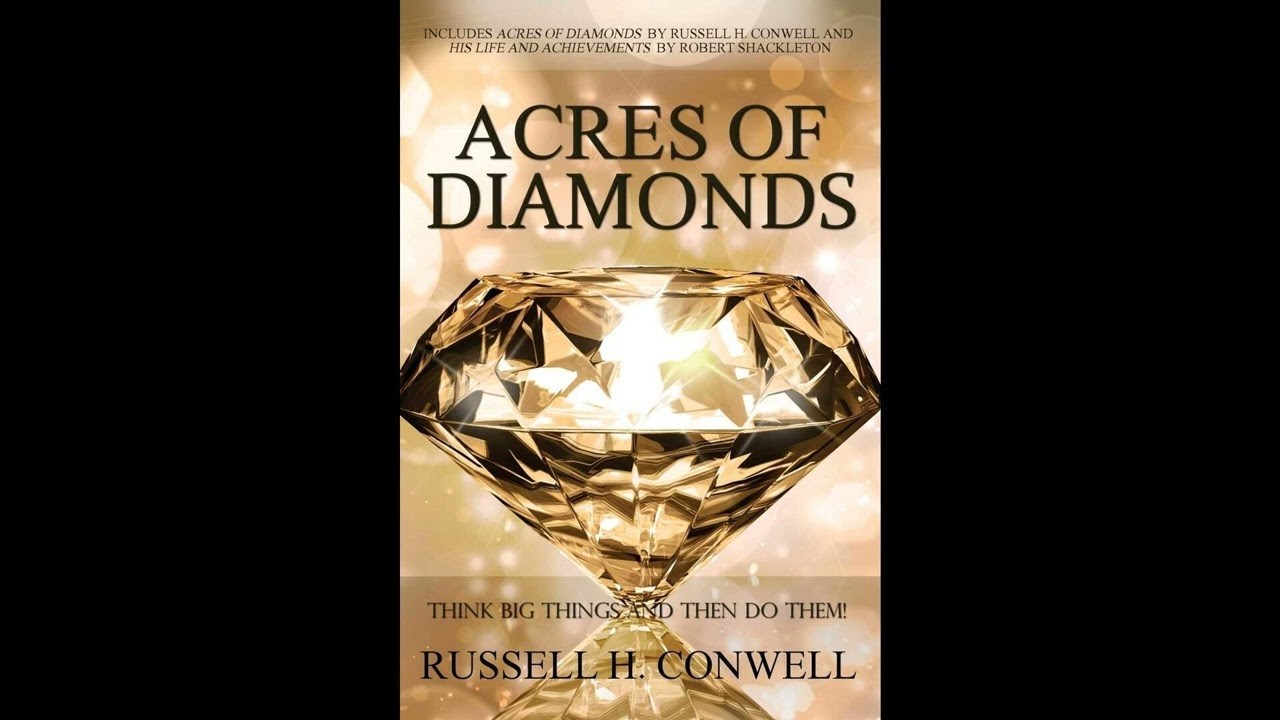
Long before the modern boom of personal development guides and entrepreneurial manifestos, there was Russell H. Conwell's "Acres of Diamonds"—a powerful, enduring message disguised as a series of inspiring anecdotes and philosophical insights. This isn't just a book; it's a profound challenge to conventional thinking, a persuasive argument that the greatest opportunities and riches often lie not in distant lands or future aspirations, but right beneath our feet, in our current circumstances. Its central premise, that we already possess the resources for success and happiness, resonates with an urgency and relevance that transcends the decades, making it a compelling listen for anyone seeking to unlock their full potential and recognize the inherent value in their immediate world. The foundational story Conwell recounts is that of Ali Hafed, an ancient Persian farmer living a life of contented prosperity. Ali Hafed possesses a vast estate, fertile land, and a loving family. His peace is shattered, however, when a traveling Buddhist priest tells him tales of diamonds—magnificent stones that represent unimaginable wealth and power. Seduced by the idea of becoming even richer, Ali Hafed grows restless and dissatisfied with his current holdings, convinced that true fortune lies elsewhere. He sells his farm, leaves his family, and sets out on an arduous search across the globe, driven by an insatiable desire for the very diamonds he believes are missing from his existence. His desperate quest takes him across continents, from the bustling markets of faraway cities to the desolate landscapes of unknown territories, always just one step behind the elusive promise of diamond mines. As years pass, Ali Hafed spends all his money, exhausts his strength, and eventually dies impoverished and alone, having never found the treasure he so ardently pursued. Meanwhile, back on the farm he sold, the new owner discovers glistening stones in a brook running through the property—stones that turn out to be the largest diamond mine known to the ancient world, the fabled Golconda. Conwell uses this potent narrative to illustrate a fundamental truth: that the very wealth and opportunity Ali Hafed sought globally had been waiting for him, unrecognized, in his own backyard. This story serves as the anchor for Conwell's broader message, drawing listeners into an examination of their own overlooked potential. Russell H. Conwell was a truly remarkable figure, an American Baptist minister, orator, lawyer, and humanitarian who lived from the mid-nineteenth century well into the early twentieth. Born in South Worthington, Massachusetts, he served as a captain in the Union Army during the Civil War, an experience that profoundly shaped his views on courage, duty, and the individual's role in society. Following the war, he practiced law for a time before dedicating his life to ministry and philanthropy. His most enduring legacy, beyond the thousands of times he delivered "Acres of Diamonds" as a lecture, is the founding of Temple University in Philadelphia. What began as a night school for working-class citizens in 1884 eventually grew into a major research institution, built on Conwell's belief that everyone, regardless of background, deserved access to higher education. He was known for his energetic delivery and his unwavering commitment to using his platform for social good. "Acres of Diamonds" was his signature piece, which he delivered an estimated 6,000 times, using the lecture fees to fund Temple University and aid countless individuals in need. Conwell’s prolific speaking career made him one of the most recognized voices of his era, placing him firmly in the tradition of American self-improvement advocates and moral philosophers. While he didn't pen numerous conventional "books," his spoken words, transcribed and published, served as powerful guides for personal and societal advancement. "Acres of Diamonds" enacts several core themes, perhaps none more central than the proximity of opportunity. The anecdote of Ali Hafed vividly demonstrates how the greatest potential for wealth and fulfillment often lies hidden in plain sight, within our existing circumstances or communities. Conwell illustrates this by pointing out that many successful individuals he knew achieved their fortunes not by abandoning their roots, but by recognizing and developing the needs and resources unique to their local environments. Another powerful theme is individual agency and self-reliance. Conwell continually stresses that personal success is not dependent on external factors or luck, but on one's willingness to perceive and cultivate opportunities through hard work, ingenuity, and a service-oriented mindset. He implores listeners to look inward, to their skills, passions, and immediate surroundings, rather than waiting for external validation or distant prospects. A third significant theme is the dignity of labor and service. Conwell frequently links true wealth not just to monetary gain, but to the value one provides to others. He argues that by diligently serving one's community and addressing its needs, financial prosperity naturally follows. This is epitomized by his recounting of individuals who became successful by solving local problems—a neighbor needing a specific tool, a community requiring better transport, or a business seeking improved efficiency—all leading to unforeseen fortunes. Finally, the lecture cautions against insatiable avarice and unfulfilled seeking, using Ali Hafed's tragic fate as a stark reminder of the perils of perpetually chasing something perceived as better, only to overlook the genuine riches already possessed. Conwell's work thus serves as both a motivational guide and a moral parable, underscoring that true contentment and success arise from recognizing and cultivating what is already at hand. The late nineteenth and early twentieth centuries in America—the period when Conwell delivered and refined "Acres of Diamonds"—was a time of immense social and economic upheaval. Following the Civil War, the nation experienced rapid industrialization, unprecedented urbanization, and the rise of massive corporations. This era, often dubbed the Gilded Age, was characterized by both incredible technological advancement and stark economic inequalities. Many Americans, particularly immigrants and those migrating from rural areas, were grappling with new challenges and opportunities in a rapidly changing world. Belief in the "American Dream" was fervent, but the path to achieving it often felt obscure. Conwell's message emerged as a powerful counter-narrative to the idea that success required moving to a big city, striking gold, or inheriting wealth. It resonated deeply with a population eager for guidance on how to thrive amidst the churning forces of progress and change, offering an accessible philosophy that empowered individuals to find their own "acres of diamonds" wherever they happened to be. Listening to "Acres of Diamonds" as an audiobook is perhaps the most authentic way to experience Conwell's impactful message. Given that it originated as a public lecture delivered thousands of times, the work's inherent oratorical style shines through in audio. You can hear the rhythmic pacing, the persuasive cadences, and the direct, almost intimate address that Conwell crafted for his live audiences. The "several hours" run length makes it ideal for sustained, reflective listening, perhaps during a commute, while working around the house, or on a long walk. A skilled narrator can bring Conwell's earnest conviction to life, emphasizing the storytelling quality of the Ali Hafed anecdote and the practical, encouraging tone of the broader advice. The atmospheric quality of a well-performed reading allows listeners to feel as though Conwell himself is speaking directly to them, distilling complex ideas into clear, memorable lessons and offering a powerful, accessible path to recognizing the wealth of opportunity in their own lives.
Enjoyed Acres of Diamonds? A few ways to support us
Audible & Amazon links are affiliate; we may earn a small commission at no extra cost.
About this production
Human narration by a volunteer reader from LibriVox.org, the public-domain audiobook project. LibriVox volunteers record literary works whose copyright has expired in the United States, releasing the resulting recordings into the public domain.
Acres of Diamonds by Russell H. Conwell. The underlying text is in the U.S. public domain. We do not republish any modern copyrighted edition, translation, or commentary.
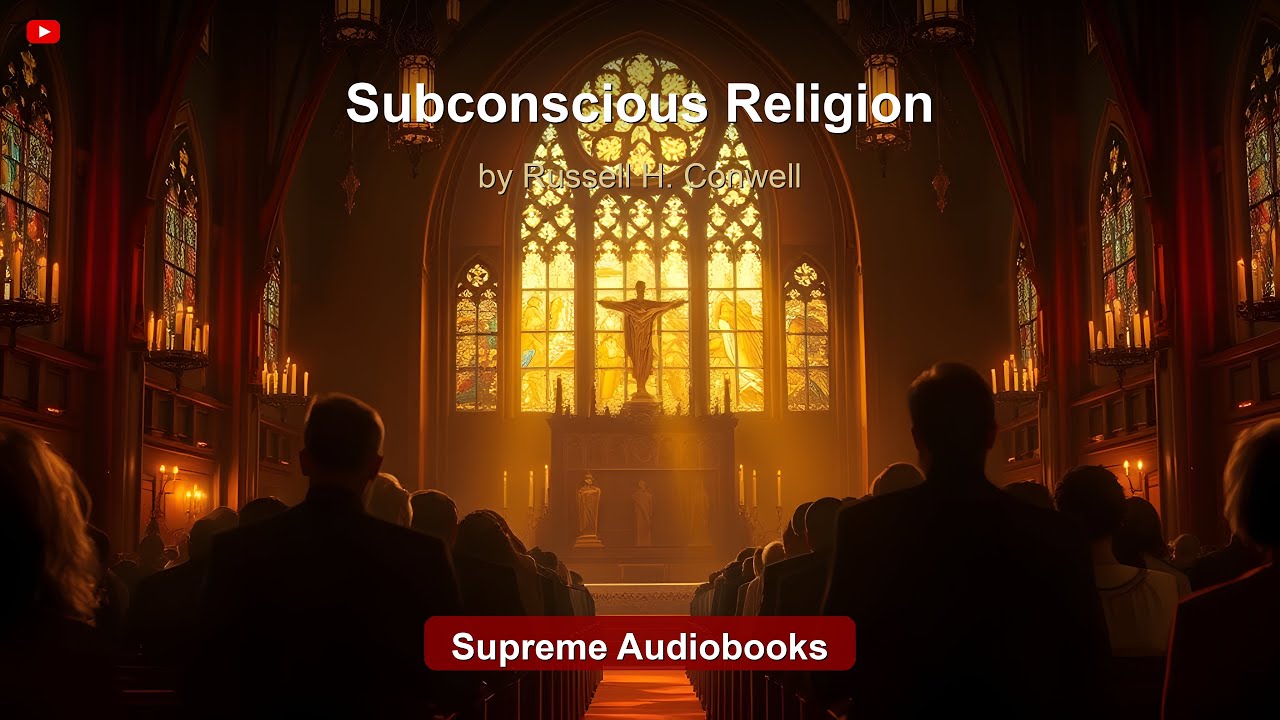
The 4K cinematic visuals accompanying this audiobook are generated by an AI image model from prompts derived from the source text. No copyrighted photos, paintings, or stock footage are used. AI generation is disclosed on every video on our YouTube channel as required by YouTube's altered/synthetic content policy.
English subtitles are transcribed from the LibriVox recording with OpenAI Whisper. Translations into the 11 other supported languages are produced by Meta's NLLB-200 neural translation model. No human translator's copyrighted translation is used.
Questions about sourcing or rights? See our DMCA & Sourcing policy or contact us.
Enjoyed this audiobook?
If you'd like to own a copy of Acres of Diamonds or hear a professionally produced edition, the links below help support free audiobook production at no extra cost to you.
As an Amazon Associate we earn from qualifying purchases. Audible / print links are affiliate.