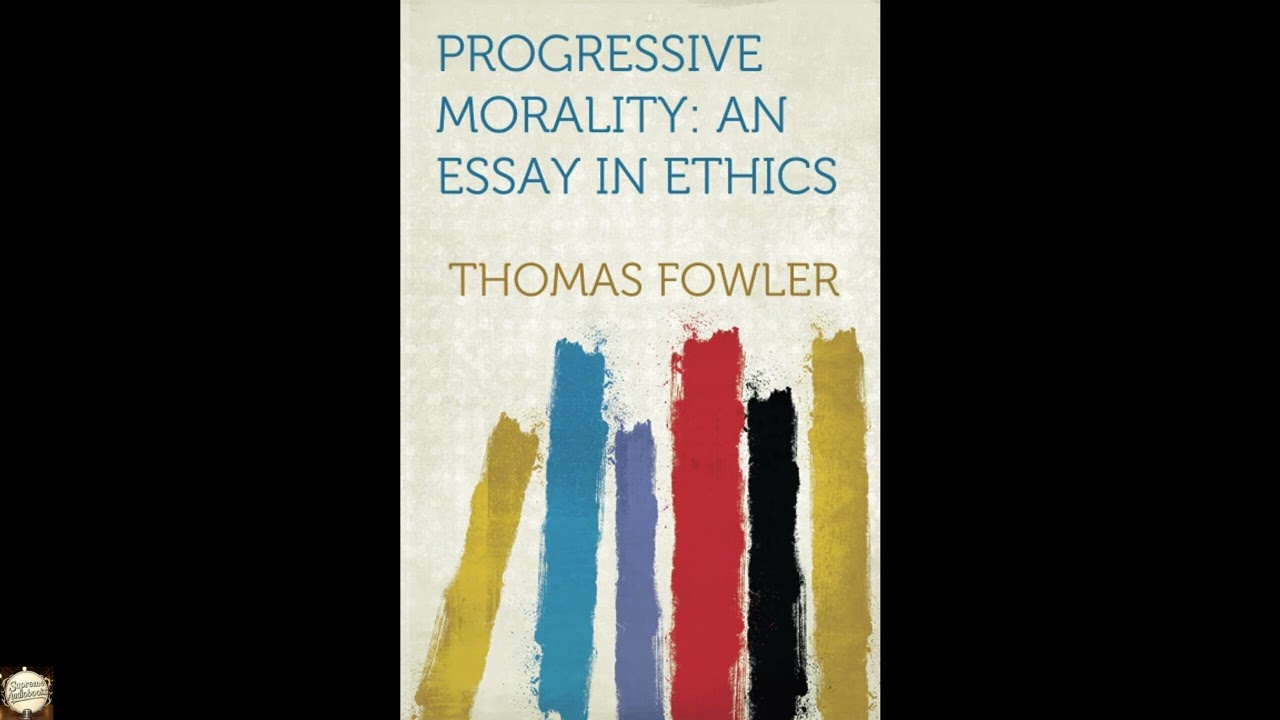
Progressive Morality: An Essay in Ethics
What does it mean for morality to progress? Can ethical principles, often held as immutable and universal, truly evolve alongside human society and understanding? Thomas Fowler’s Progressive Morality: An Essay in Ethics confronts these profound questions, inviting listeners into a rigorous examination of the very foundations of right and wrong. Far from a dry academic exercise, Fowler’s work is a vital conversation starter, as relevant today in an era of rapid social and technological change as it was upon its original appearance. It is a sustained argument for a dynamic understanding of human ethics, challenging us to consider how our moral frameworks are shaped, refined, and ultimately pushed forward by reason, experience, and collective striving. This isn't merely a historical curiosity; it is a blueprint for rethinking our individual and collective ethical responsibilities in an ever-shifting world. Fowler’s essay unfolds with the precision of a carefully constructed argument, beginning by establishing the initial premise that moral understanding is not static but subject to development. He sets the stage by first dissecting prevailing ethical theories of his time, identifying their strengths and—more critically—their limitations when confronted with the complex realities of human conduct. His central conflict is intellectual: the tension between absolute, unyielding moral codes and the demonstrable human capacity for moral growth and adaptation. Fowler systematically dismantles the notion that morality is solely a matter of divine dictate or purely subjective sentiment, instead proposing a framework where ethical principles are cultivated through rational inquiry and a nuanced appreciation of human nature and societal needs. The arc of Fowler's exposition moves from a critical survey of past and contemporary thought to the articulation of his own "progressive" model. He introduces the idea that moral truths, while not arbitrary, are nevertheless apprehended and applied with increasing clarity over time, much like scientific understanding. Listeners will encounter his careful distinctions between various forms of ethical reasoning, observing how he builds his case for a morality rooted in a comprehensive understanding of human flourishing. He doesn't simply advocate for change; he provides a philosophical rationale for why and how moral principles can and should advance, addressing potential objections and misunderstandings along the way, always pushing towards a more encompassing and adaptable ethical vision without ever losing sight of fundamental human values. Thomas Fowler, as a figure in intellectual history, stands as a notable example of a thinker dedicated to systematizing and advancing philosophical thought, particularly in the realm of ethics. His scholarship reflects a period when moral philosophy was engaged in significant self-examination, moving beyond traditional theological moorings towards more secular and humanistic frameworks. Though precise biographical details can sometimes blur with the passage of centuries, Fowler represents the tradition of the moral philosopher who sought to establish ethical principles on a foundation of reason and empirical observation, rather than dogma alone. His body of work, of which Progressive Morality is a prime example, places him within a lineage of philosophers concerned with the practical application of ethics to daily life and societal organization. While his specific contributions might be understood in the context of Victorian or late 19th-century thought, his commitment to intellectual rigor and the development of coherent philosophical systems marks him as a significant voice. He was not merely a commentator but an active participant in the ongoing philosophical discourse, striving to clarify and refine humanity's understanding of its moral obligations. Such thinkers often served as educators, shaping the minds of future generations, and their writings continued to influence academic and public conversations for decades. One of the central themes running through Progressive Morality is the distinction between conventional morality and a more reasoned, adaptive ethics. Fowler skillfully illustrates this by contrasting acts performed out of mere habit or social pressure with those stemming from conscious deliberation and a genuine grasp of moral principles. For instance, he might present a scenario where a widely accepted custom, once considered ethical, is re-evaluated in light of new knowledge or changing social conditions, demonstrating how true moral progress involves questioning the status quo and striving for principles that better serve justice and human welfare. He shows how external rules, without internal conviction and understanding, remain superficial. Another significant theme is the role of empathy and rational benevolence in shaping ethical conduct. Fowler argues that genuine moral action extends beyond self-interest, requiring an imaginative leap into the perspectives of others and a commitment to their well-being. He might offer concrete illustrations of how an individual’s moral scope expands as their capacity for understanding and sympathy grows, moving from narrow self-concern to a broader identification with humanity. This development, he contends, is not a given but a cultivation, a key indicator of moral progression in both the individual and society. He argues that the conscious effort to understand others' needs is fundamental to ethical growth. The emergence of Progressive Morality can be understood against a backdrop of profound intellectual and social upheaval. The scientific revolutions of earlier centuries had begun to challenge traditional religious explanations for the natural world, leading thinkers to seek similar rational foundations for human behavior and morality. The era was also marked by rapid industrialization, urbanization, and the rise of new social problems, which necessitated a re-evaluation of existing ethical frameworks. Philosophers like Fowler were grappling with the implications of evolutionary theory, which suggested that even human nature and institutions were subject to change and development. In this atmosphere, the concept of "progress" was a powerful idea, permeating fields from science to politics. It was a time when reason was increasingly seen as the primary tool for societal improvement and moral advancement. Fowler's essay, therefore, likely resonated with an audience keen to reconcile traditional ethical concerns with a modern, scientific worldview, offering a pathway for morality to maintain its authority and relevance in an age of skepticism and transformation. It was a response to the perceived need for an ethical system that could adapt without losing its moorings. Listening to Progressive Morality as an audiobook offers a unique advantage for engaging with its complex arguments. The narrator's voice becomes a guide through Fowler’s meticulous reasoning, allowing the listener to absorb the nuances of his philosophical distinctions and follow the thread of his intellectual progression without the visual distraction of dense text. The run length, several hours, provides ample time to settle into the cadence of his thought, making it ideal for contemplative listening sessions, perhaps during a commute or a quiet evening. The carefully chosen pacing in the narration allows the listener to digest challenging concepts, making the intellectual process less intimidating. Hearing the logical unfolding of Fowler's ideas through clear, articulate enunciation helps clarify his sometimes subtle points, transforming a rigorous academic work into an accessible and thought-provoking experience, inviting deeper reflection on the nature of ethical understanding itself.
Enjoyed Progressive Morality: An Essay in Ethics? A few ways to support us
Audible & Amazon links are affiliate; we may earn a small commission at no extra cost.
About this production
Human narration by a volunteer reader from LibriVox.org, the public-domain audiobook project. LibriVox volunteers record literary works whose copyright has expired in the United States, releasing the resulting recordings into the public domain.
Progressive Morality: An Essay in Ethics by Thomas Fowler. The underlying text is in the U.S. public domain. We do not republish any modern copyrighted edition, translation, or commentary.
The 4K cinematic visuals accompanying this audiobook are generated by an AI image model from prompts derived from the source text. No copyrighted photos, paintings, or stock footage are used. AI generation is disclosed on every video on our YouTube channel as required by YouTube's altered/synthetic content policy.
English subtitles are transcribed from the LibriVox recording with OpenAI Whisper. Translations into the 11 other supported languages are produced by Meta's NLLB-200 neural translation model. No human translator's copyrighted translation is used.
Questions about sourcing or rights? See our DMCA & Sourcing policy or contact us.
Enjoyed this audiobook?
If you'd like to own a copy of Progressive Morality: An Essay in Ethics or hear a professionally produced edition, the links below help support free audiobook production at no extra cost to you.
As an Amazon Associate we earn from qualifying purchases. Audible / print links are affiliate.