Missionary Survey As An Aid To Intelligent Co-Operation In Foreign Missions
On supremeaudiobooks.com, we encounter texts that challenge our understanding of history, belief, and the forces that shape human endeavor. Among them stands Missionary Survey As An Aid To Intelligent Co-Operation In Foreign Missions, a seminal work by Rola that, despite its seemingly specialized title, offers profound insights into the mechanics of large-scale organization, cross-cultural interaction, and the pursuit of collective purpose. Far from being a mere historical curiosity, this text invites listeners to consider the enduring questions of how diverse groups can work together effectively, how grand ideals translate into practical action, and what it truly means to understand and serve a global community. For anyone interested in the foundational principles of international aid, organizational psychology, or the evolution of altruistic movements, Rola’s systematic approach provides a framework that remains strikingly relevant. Rola's foundational treatise unfolds not as a conventional narrative of characters and events, but as a meticulously constructed argument, an intellectual panorama of a vast and complex enterprise. The setting is the global stage of foreign missions, where countless dedicated individuals and organizations sought to extend their reach and influence across continents. The central concern Rola brings into focus is the pervasive challenge of disunity and inefficiency that often plagued these earnest endeavors. Instead of a unified front, Rola reveals a landscape characterized by isolated efforts, duplicated resources, and sometimes, even counterproductive competition among groups with fundamentally similar aims. The "main characters" of this analytical drama are, therefore, the various missionary societies, their workers in distant fields, and the diverse local populations they sought to engage. Rola, as the guiding voice, acts as an incisive observer and a compassionate strategist, methodically laying bare the shortcomings of the existing structures. The arc of Rola’s argument begins with a comprehensive "survey"—a dispassionate but deeply informed assessment of the existing state of foreign missions. The author systematically examines the geographical spread, the demographic focus, the methodologies employed, and the resources allocated by numerous independent agencies. This detailed mapping serves to illuminate the central conflict: the widespread lack of "intelligent co-operation." Rola demonstrates how this fragmentation leads to squandered potential, missed opportunities, and a diluted impact on the ground. From this exposition of the problem, the text transitions into a constructive phase, proposing a philosophical shift and a series of practical mechanisms designed to foster greater unity and strategic collaboration. Rola builds a compelling case for interdependence, suggesting that by sharing knowledge, coordinating efforts, and specializing roles, missionary endeavors could achieve far greater efficacy and sustainability. The narrative of ideas progresses from diagnosis to prescription, charting a path toward a future where shared goals are pursued with a clear-sighted, coordinated approach. Of the author, Rola, we gather that they were a figure of considerable intellectual acumen and practical experience, possessing an intimate familiarity with the workings of global outreach. Though specific biographical dates are not widely recorded, the clarity and authority of their writing suggest a life deeply committed to the principles of organized benevolence and effective service. It is evident that Rola moved within circles where the challenges of large-scale human organization were keenly felt and debated, whether among theological scholars, administrators of charitable trusts, or those directly engaged in overseas work. Their insights point to someone who spent considerable time observing, analyzing, and perhaps even participating in the very activities they sought to improve. Rola’s ability to systematize complex information and articulate a cohesive vision places them as an important, if perhaps understated, voice in a particular intellectual tradition—one focused on the practical application of moral and religious imperatives. While not a novelist or poet in the conventional sense, Rola’s work contributes to the canon of classic literature by offering a definitive example of rigorous analytical prose applied to a significant societal concern. It stands alongside other influential tracts and treatises that have shaped thought and action in various fields, demonstrating how thoughtful organization can transform idealistic aspirations into tangible results. Several specific themes animate Rola's rigorous analysis. Central among them is the theme of organizational efficiency and strategic planning. Rola repeatedly highlights instances where overlapping jurisdictions or competitive attitudes among different groups lead to wasted effort. For example, the author might describe a hypothetical region where three distinct missions from different sending bodies target the same small population with identical services, each unaware of the others’ presence or lacking a mechanism to coordinate their efforts, leading to unnecessary expenditures and diminished collective reach. This concrete observation underscores the pressing need for a unified strategy. Another significant theme is cross-cultural communication and understanding. While not directly a manual on linguistics or ethnography, Rola’s insistence on "intelligent co-operation" implicitly demands a deeper understanding of local contexts and the nuances of interaction. The author shows how a lack of shared data or preconceived notions about local needs can lead to the deployment of inappropriate resources, or the failure to adapt methods that genuinely resonate with the receiving culture. Rola also addresses the profound theme of ethical stewardship and accountability. The author suggests that those who commit resources—whether human, financial, or spiritual—to a cause have a moral obligation to ensure those resources are deployed with maximum effectiveness and integrity. This isn't just about saving money; it's about honoring the trust placed in the organizations and maximizing the positive impact on those they aim to assist. Finally, the text enacts the theme of the power of collective action and shared vision. Rola's ultimate argument is a testament to the idea that when individuals and groups transcend their parochial interests for a greater good, the potential for transformative change expands exponentially. The very concept of "co-operation" is celebrated as a higher form of engagement, one that demands humility, foresight, and a dedication to something larger than any single entity. The historical period in which Rola's work emerged was one of profound global transformations, marked by expanding networks of communication and transportation that facilitated unprecedented levels of international exchange. It was an era where the concept of "foreign outreach"—whether for commerce, colonial expansion, or philanthropic and religious purposes—was becoming increasingly systematized, often operating on scales previously unimagined. The challenges of coordinating efforts across vast distances and diverse cultures were becoming acutely apparent to those involved in such large-scale endeavors. As various movements gained momentum and established their presence in distant lands, the inherent logistical and organizational complexities began to create friction and inefficiencies. Rola's work arose as a direct response to these burgeoning practical difficulties, a call for order and discernment amidst a burgeoning field of activity. It speaks to a moment when earnest idealism began to confront the stark realities of execution, prompting thinkers to seek more effective models for achieving their global aspirations. Listening to Missionary Survey As An Aid To Intelligent Co-Operation In Foreign Missions as an audiobook offers a singular experience of intellectual engagement. The narrator’s clear, measured pacing allows the listener to fully absorb Rola's carefully constructed arguments, giving space to ponder the implications of each observation and proposal. Over several hours, this allows for a deep immersion into a systematic line of thought, making the potentially dense subject matter accessible and compelling. The authoritative yet thoughtful voice guiding the listener through Rola's survey and subsequent recommendations creates an atmosphere of serious inquiry, perfect for extended listening sessions during a commute or quiet reflection. Listen for the logical flow of ideas, the precision in Rola’s language, and the way complex organizational problems are distilled into understandable principles, revealing why this text remains a benchmark for understanding how noble intentions can be translated into intelligent, coordinated action.
Enjoyed Missionary Survey As An Aid To Intelligent Co-Operation In Foreign Missions? A few ways to support us
Audible & Amazon links are affiliate; we may earn a small commission at no extra cost.
About this production
Human narration by a volunteer reader from LibriVox.org, the public-domain audiobook project. LibriVox volunteers record literary works whose copyright has expired in the United States, releasing the resulting recordings into the public domain.
Missionary Survey As An Aid To Intelligent Co-Operation In Foreign Missions by Rola. The underlying text is in the U.S. public domain. We do not republish any modern copyrighted edition, translation, or commentary.
The 4K cinematic visuals accompanying this audiobook are generated by an AI image model from prompts derived from the source text. No copyrighted photos, paintings, or stock footage are used. AI generation is disclosed on every video on our YouTube channel as required by YouTube's altered/synthetic content policy.
English subtitles are transcribed from the LibriVox recording with OpenAI Whisper. Translations into the 11 other supported languages are produced by Meta's NLLB-200 neural translation model. No human translator's copyrighted translation is used.
Questions about sourcing or rights? See our DMCA & Sourcing policy or contact us.
Enjoyed this audiobook?
If you'd like to own a copy of Missionary Survey As An Aid To Intelligent Co-Operation In Foreign Missions or hear a professionally produced edition, the links below help support free audiobook production at no extra cost to you.
As an Amazon Associate we earn from qualifying purchases. Audible / print links are affiliate.
More Audiobooks
History of the Missions of the American Board Of Commissioners For Foreign Missions
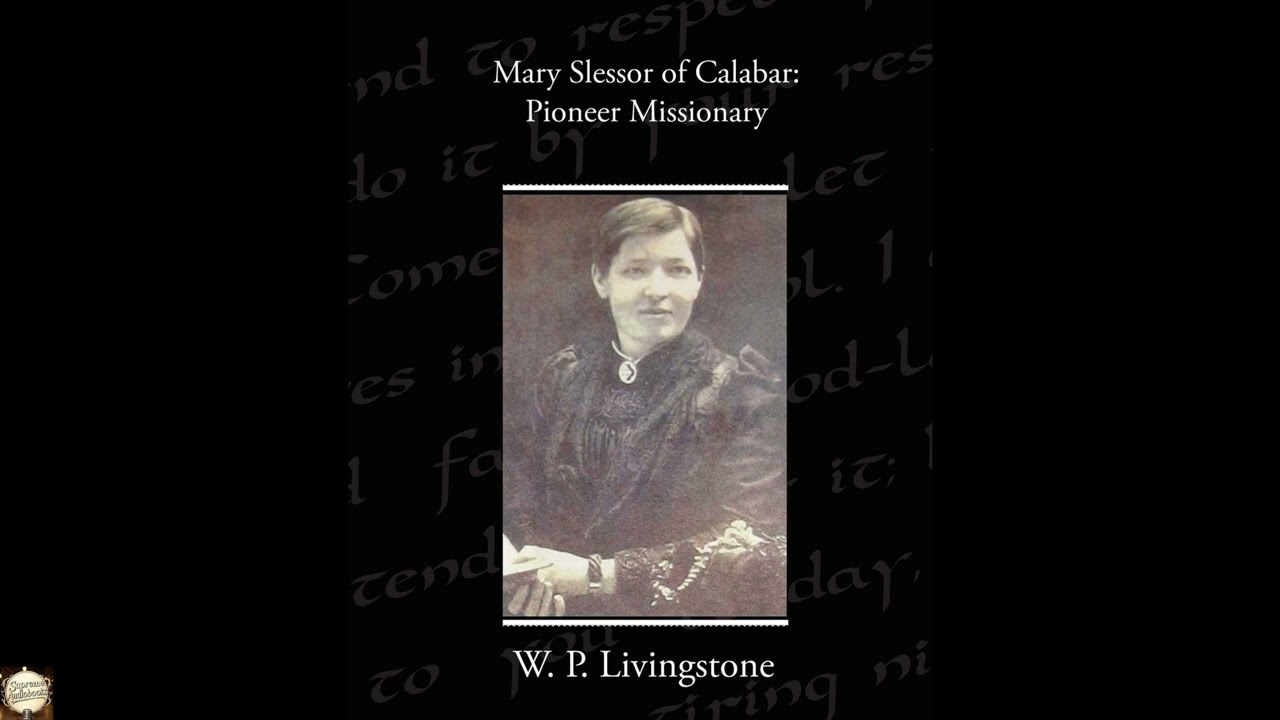
Mary Slessor of Calabar: Pioneer Missionary

About the Holy Bible: A Lecture
Oriental Religions And Christianity: A Course Of Lectures Delivered On The Ely Foun