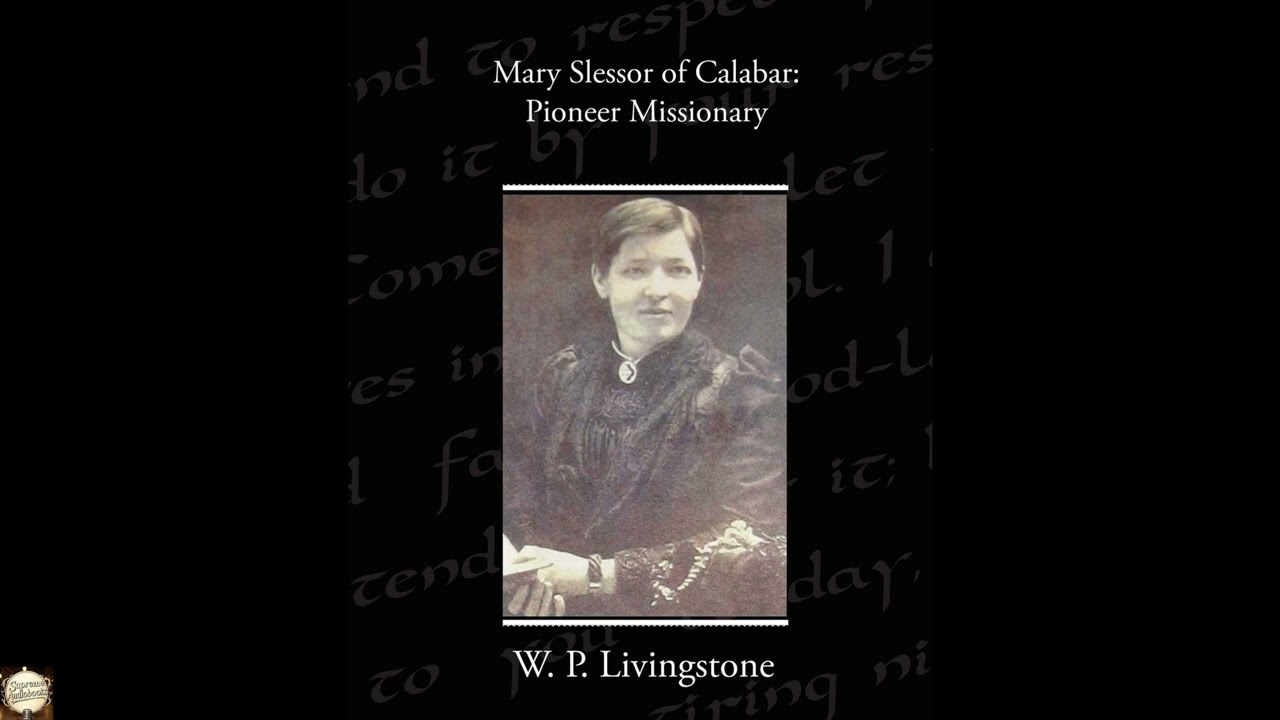
Mary Slessor of Calabar: Pioneer Missionary
Imagine a world where courage wasn't just a virtue, but a daily necessity for survival; where one woman dared to stand against centuries of entrenched tradition, risking her life not for glory, but for the voiceless and vulnerable. Such is the extraordinary tale preserved within W. P. Livingstone's Mary Slessor of Calabar: Pioneer Missionary. This isn't merely a historical account; it’s an enduring testament to the power of conviction, a stirring biography of a Scottish mill girl who became an unlikely titan of humanitarianism in the heart of West Africa. Her story continues to resonate today, offering profound insights into cultural clash and connection, the fight for social justice, and the relentless pursuit of one's calling, even in the face of unimaginable adversity. It challenges us to consider the limits of our own resilience and the depths of our compassion. The story begins in the late nineteenth century, transporting the listener to the dense jungles and vibrant communities of Calabar, in what is now Nigeria. This was a land shaped by ancient customs, where spiritual beliefs held powerful sway, and the devastating legacy of the slave trade still cast a long shadow. Into this complex and often perilous landscape stepped Mary Slessor, a young woman from Dundee, Scotland, whose upbringing in poverty instilled in her both grit and a profound sense of purpose. Initially assigned to a mission station, Slessor quickly found herself chafing against the conventional practices of her European colleagues, sensing that true connection and understanding lay beyond the compounds. Her resolve led her to venture far deeper into the Okoyong territory, a region notorious for its hostility towards outsiders and its deeply rooted, often brutal, traditions. Slessor's central conflict became a daily struggle against practices that horrified her, particularly the widespread infanticide of twins, who were believed to be an evil omen, and the brutal "trial by ordeal" that often condemned innocent people. She stood virtually alone, a single European woman adopting local dress, learning the Efik language with remarkable fluency, and establishing herself as a mediator, healer, and advocate. The narrative follows her extraordinary efforts to build trust with suspicious chiefs and communities, to rescue abandoned children—many of whom she adopted as her own—and to slowly, painstakingly, introduce principles of justice and mercy. Her arc is one of relentless perseverance, demonstrating how one individual, through sheer force of will and a profound connection to the people she served, could begin to dismantle deeply ingrained superstitions and violence, forging a path towards more humane practices and understanding. W. P. Livingstone, the author, was a significant figure in Scottish journalism and religious literature during the early 20th century. Born in 1864, Livingstone made a name for himself as an editor and writer whose sympathetic biographies brought the lives of missionaries and other figures of faith to a wide audience. He served as the editor of the influential magazine The Life of Faith and dedicated much of his career to chronicling tales of spiritual heroism and social impact. Livingstone’s connection to the missionary movement was not merely academic; he was deeply embedded in its narratives and understood the motivations and challenges faced by individuals like Mary Slessor. Livingstone’s writing style, as exemplified in this book, is characterized by its clarity, narrative drive, and a deep respect for his subjects. He possessed a journalist's eye for detail and a biographer's commitment to presenting a compelling, human story. While not part of the literary avant-garde, Livingstone’s work occupied an important place in the popular non-fiction of his era, appealing to readers who sought inspiration and moral uplift. His carefully researched accounts, often drawing on letters, journals, and eyewitness testimonies, became definitive portrayals of figures whose lives exemplified courage and conviction, solidifying his reputation as a master of the biographical form. He passed away in 1928, leaving behind a body of work that continues to inform and inspire. This biography enacts several powerful themes. Foremost among them is unwavering conviction in the face of overwhelming odds. Slessor's deep spiritual beliefs were not a passive comfort but an active engine driving her extraordinary actions. An example can be seen in her consistent choice to live among the local communities, far from the relative safety of the mission station, despite recurring bouts of malaria and constant threats. Her determination to personally intervene in moments of crisis—such as rushing to save infants abandoned in the bush—showcases a faith that translated directly into courageous, selfless action. Another prominent theme is the challenging of gender norms. In an era when women, particularly single women, were expected to adhere to strict societal roles, Slessor defied every convention. She was not merely a teacher or a nurse but a magistrate, a peacekeeper, and a spiritual leader, often operating with more authority and practical impact than many colonial administrators or male missionaries. Her singular independence and direct engagement with tribal chiefs presented a radical model for female empowerment, even if not framed in those terms at the time. The book also powerfully portrays the complexities of cultural encounter and adaptation. While Slessor arrived with a distinct Western perspective and a desire to alter practices she deemed inhumane, she was unique in her willingness to deeply immerse herself in Efik culture. She learned their language, ate their food, and understood their spiritual frameworks, allowing her to negotiate and influence far more effectively than those who remained aloof. This intimate knowledge enabled her to introduce a rudimentary justice system that blended local traditions with Christian ethics, demonstrating a nuanced approach to cross-cultural work that was decades ahead of its time. Finally, the theme of social justice and advocacy for the vulnerable permeates every chapter. Slessor's life was a ceaseless battle against the cruelty of infanticide, slavery, and tribal warfare, always with a specific focus on protecting children and women. Her consistent efforts to establish orphanages, negotiate peace between warring factions, and educate new generations served as a direct challenge to the brutal status quo, leaving an enduring legacy of compassion and legal reform. The book emerged during a period of profound global change in the early 20th century, particularly around the time of its initial publication in 1915. The British Empire was at its zenith, and the "Scramble for Africa" had solidified European colonial claims across the continent. While Slessor often operated on the fringes of formal colonial administration, her work was undeniably intertwined with the larger narrative of European engagement with Africa. This era also saw a surge in missionary zeal, fueled by both religious revivalism and a paternalistic sense of "civilizing" missions. Livingstone’s biography tapped into a public appetite for inspiring tales of self-sacrifice and spiritual triumph in distant lands. Culturally, the early 1900s also witnessed a growing awareness of women's capabilities beyond the domestic sphere, making Slessor’s story particularly resonant as an example of female fortitude and leadership in an unconventional role. The book’s success reflected a desire for heroic narratives that combined adventure, moral purpose, and the indomitable human spirit. To hear Mary Slessor of Calabar as an audiobook is to gain an immediate, intimate connection to a truly remarkable life. The run length, several hours, makes it perfect for extended listening sessions, whether during long commutes, household tasks, or quiet reflective moments. A skilled narrator brings Livingstone’s thoughtful prose to life, allowing the listener to truly appreciate the dramatic shifts in atmosphere—from the grim poverty of industrial Dundee to the humid, challenging beauty of the West African jungle. The pacing of the narration can highlight Slessor’s unflagging determination, the poignant moments of her interactions with local people, and the intense suspense of her interventions in dangerous situations. Listen for the subtle inflections that convey her quiet authority, her deep empathy, and the sheer audacity of her vision. The spoken word allows Slessor’s courage and the profound impact of her work to echo in the imagination, giving her story a vibrancy that moves far beyond the printed page and makes her extraordinary experiences palpably immediate.
Enjoyed Mary Slessor of Calabar: Pioneer Missionary? A few ways to support us
Audible & Amazon links are affiliate; we may earn a small commission at no extra cost.
About this production
Human narration by a volunteer reader from LibriVox.org, the public-domain audiobook project. LibriVox volunteers record literary works whose copyright has expired in the United States, releasing the resulting recordings into the public domain.
Mary Slessor of Calabar: Pioneer Missionary by W. P. Livingstone. The underlying text is in the U.S. public domain. We do not republish any modern copyrighted edition, translation, or commentary.
The 4K cinematic visuals accompanying this audiobook are generated by an AI image model from prompts derived from the source text. No copyrighted photos, paintings, or stock footage are used. AI generation is disclosed on every video on our YouTube channel as required by YouTube's altered/synthetic content policy.
English subtitles are transcribed from the LibriVox recording with OpenAI Whisper. Translations into the 11 other supported languages are produced by Meta's NLLB-200 neural translation model. No human translator's copyrighted translation is used.
Questions about sourcing or rights? See our DMCA & Sourcing policy or contact us.
Enjoyed this audiobook?
If you'd like to own a copy of Mary Slessor of Calabar: Pioneer Missionary or hear a professionally produced edition, the links below help support free audiobook production at no extra cost to you.
As an Amazon Associate we earn from qualifying purchases. Audible / print links are affiliate.