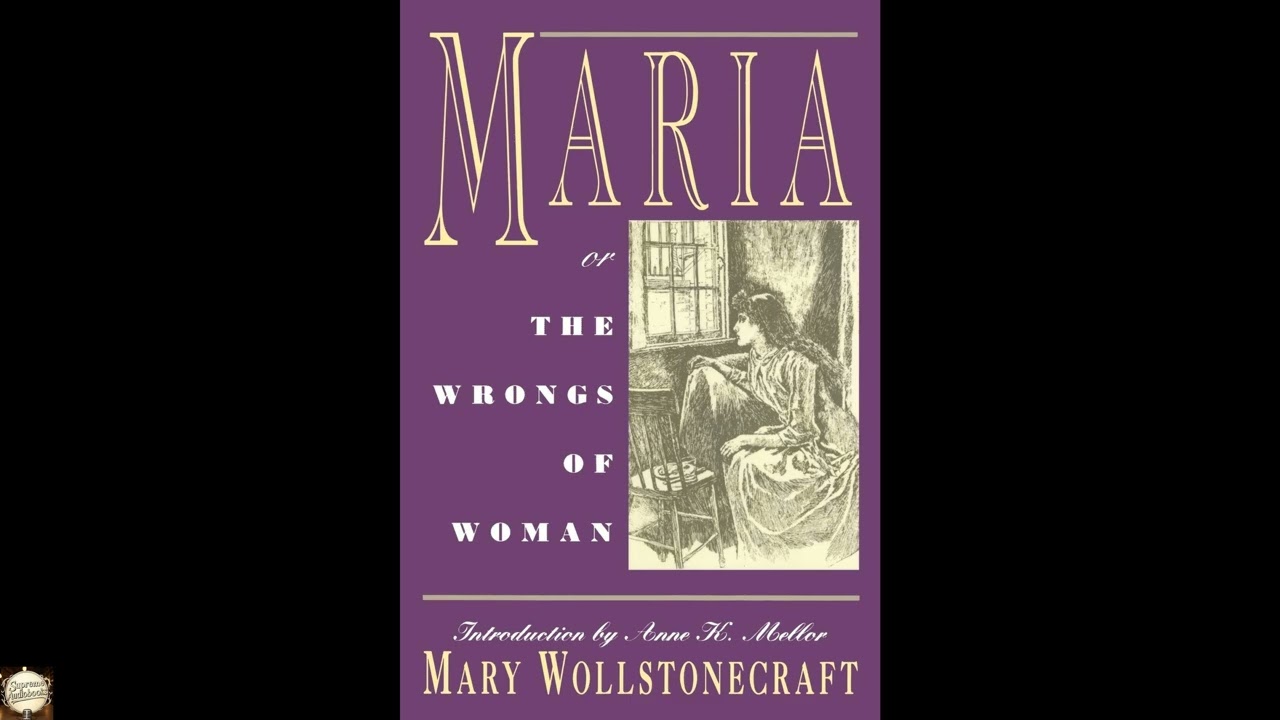
Maria: or, The Wrongs of Woman
Imagine a world where a woman could be stripped of her child, her property, and her very sanity, all by the decree of a husband and the indifferent hand of the law. This isn't a dystopian fantasy, but the stark reality Mary Wollstonecraft confronts in Maria: or, The Wrongs of Woman, a searing, unfinished novel that remains as urgent and heartbreaking today as it was in the late 18th century. It is a story of profound injustice, yes, but also of defiance, of the search for connection, and of the enduring struggle for personal autonomy against overwhelming societal and legal oppression. Wollstonecraft’s final, powerful testament demands a reckoning with the systems that still seek to control women's bodies, minds, and destinies, inviting listeners to hear the passionate plea for equality that echoes across centuries. The story opens with Maria, a young woman confined against her will in a private asylum, a setting that immediately establishes a mood of claustrophobia and psychological distress. Her supposed "madness" is merely a convenient label slapped upon her by a cruel and self-serving husband, George Venables, who seeks to control her inheritance and sever her from their daughter, the child she desperately longs to reclaim. Within the asylum's oppressive walls, Maria meets other marginalized figures: Jemima, a hardened but insightful attendant who has suffered her own parade of misfortunes, and Henry Darnford, a fellow patient whose presence offers Maria a glimmer of intellectual and emotional solace. As Maria slowly recounts the events that led to her imprisonment – a disastrous marriage, Venables's debauchery, her attempts to escape and protect her child – the narrative peels back layers of deceit and legal entanglement, revealing the profound vulnerability of women under the prevailing laws of the time. Her relationship with Darnford deepens, a complex bond formed in adversity, challenging conventional morality and offering Maria a fleeting sense of companionship and understanding. Yet, even within the supposed sanctuary of their shared confinement, the specter of society's judgment and Venables's insidious power looms. Maria’s fight extends beyond the asylum, as she strives to secure her freedom, reclaim her daughter, and assert her rights in a legal system rigged against her. The narrative, though incomplete, traces her valiant efforts to navigate a world that denies women agency, property, and even the right to determine their own sanity, leaving the reader with a powerful, unresolved question about justice and the fate of those who dare to challenge its injustices. Mary Wollstonecraft, born in 1759 in Spitalfields, London, was a truly revolutionary figure whose ideas reshaped the conversation about women's rights and education. Her early life was marked by instability, with her father's financial mismanagement forcing her to seek independence as a governess and schoolmistress. These experiences, alongside her keen observations of societal inequalities, fueled her intellectual development and ignited her passion for social reform. She became part of a radical intellectual circle in London, publishing her first major philosophical work, A Vindication of the Rights of Men, in 1790 as a response to Edmund Burke's critique of the French Revolution. This was quickly followed by her most famous work, A Vindication of the Rights of Woman, published in 1792, which laid out a powerful argument for women's access to education and their rational equality with men, making her a foundational figure in feminist thought. Wollstonecraft's personal life was as unconventional and challenging as her ideas. She lived independently, traveled widely, and engaged in passionate, often tumultuous, relationships. She had a daughter, Fanny, with American businessman Gilbert Imlay, and later married the philosopher William Godwin, giving birth to another daughter, Mary, who would go on to write Frankenstein. Tragically, Wollstonecraft died in 1797 from complications following Mary's birth, at the young age of thirty-eight. Her unfinished novel, Maria: or, The Wrongs of Woman, was published posthumously by Godwin, serving as a powerful fictional complement to the philosophical arguments she advanced in A Vindication of the Rights of Woman, demonstrating through narrative the real-world consequences of the inequalities she railed against. Among the many vital threads woven through Maria, the theme of legal and social injustice is perhaps the most prominent. Wollstonecraft meticulously details the legal framework of coverture, under which a married woman's legal identity was subsumed by her husband's, leaving her without rights to property, earnings, or even her own children. Maria's situation, where her husband can legally declare her insane and imprison her to gain control of her finances, vividly illustrates this profound lack of agency. Her repeated, fruitless attempts to secure justice through the courts highlight the systemic nature of her oppression, making it clear that her individual suffering is a product of deeply ingrained societal norms and laws. Another significant theme is the solidarity and friendship among women, particularly evident in the relationship between Maria and Jemima. Though from vastly different social strata and backgrounds, their shared experience of male exploitation and societal marginalization forges a powerful, if at times cynical, bond. Jemima's stories of survival, her practical wisdom, and her eventual empathy for Maria stand in stark contrast to the betrayal and indifference Maria experiences from men. This connection suggests that despite the pervasive "wrongs of woman," there exists a vital source of strength and understanding when women recognize their shared plight and offer one another support. The novel also powerfully interrogates the societal perception of "madness," arguing that often, what is labeled as female hysteria or insanity is merely a woman's rational response to an irrational and oppressive world. When Wollstonecraft was writing Maria in the late 1790s, Europe was in the throes of radical political and intellectual upheaval. The French Revolution, with its ideals of liberty, equality, and fraternity, had profoundly shaken monarchical systems and ignited debates about human rights and the nature of government. The Enlightenment, a philosophical movement emphasizing reason and individualism, had laid much of the groundwork for these revolutionary ideas. Yet, despite this broader call for human rights, the legal and social status of women remained largely unchanged and incredibly restrictive. In England, the common law doctrine of coverture meant that upon marriage, a woman's legal identity was effectively absorbed by her husband's, rendering her a dependent with no independent legal standing. This glaring inconsistency—the universal ideals of freedom championed by the Enlightenment and the Revolution, juxtaposed with the continued subjugation of women—was a central focus for Wollstonecraft. Maria did not emerge in a vacuum; it was a direct literary response to these historical currents, a fictionalized polemic designed to expose the hypocrisy and cruelty of a society that claimed to value reason and liberty while denying both to half its population. It built upon her earlier philosophical arguments, translating them into a deeply personal and emotionally resonant narrative, demonstrating the devastating human cost of patriarchal laws and conventions at a moment when the world seemed poised for change, but only for certain segments of humanity. Listening to Maria: or, The Wrongs of Woman as an audiobook offers an intensely immersive and moving experience. The spoken word breathes life into Maria's internal monologues and her impassioned pleas, allowing the listener to truly inhabit her confined world and feel the weight of her oppression. A skilled narrator can convey the subtle nuances of Maria's intellectual defiance, the despair of her situation, and the flickering hope she finds in unexpected alliances, making her voice a potent echo against the silence of injustice. The pacing of the narration can highlight the slow, agonizing passage of time within the asylum, interspersed with the urgency of Maria's flashbacks and her desperate quest for her child. The careful rendering of dialogue, particularly the exchanges between Maria and Jemima, illuminates their contrasting perspectives and their eventual bond. Through this auditory lens, the philosophical arguments embedded within Wollstonecraft's prose become more immediate and accessible, transforming a foundational text of feminist thought into a compelling human drama that resonates with every emotional beat and intellectual challenge.
Enjoyed Maria: or, The Wrongs of Woman? A few ways to support us
Audible & Amazon links are affiliate; we may earn a small commission at no extra cost.
About this production
Human narration by a volunteer reader from LibriVox.org, the public-domain audiobook project. LibriVox volunteers record literary works whose copyright has expired in the United States, releasing the resulting recordings into the public domain.
Maria: or, The Wrongs of Woman by Mary Wollstonecraft. The underlying text is in the U.S. public domain. We do not republish any modern copyrighted edition, translation, or commentary.
The 4K cinematic visuals accompanying this audiobook are generated by an AI image model from prompts derived from the source text. No copyrighted photos, paintings, or stock footage are used. AI generation is disclosed on every video on our YouTube channel as required by YouTube's altered/synthetic content policy.
English subtitles are transcribed from the LibriVox recording with OpenAI Whisper. Translations into the 11 other supported languages are produced by Meta's NLLB-200 neural translation model. No human translator's copyrighted translation is used.
Questions about sourcing or rights? See our DMCA & Sourcing policy or contact us.
Enjoyed this audiobook?
If you'd like to own a copy of Maria: or, The Wrongs of Woman or hear a professionally produced edition, the links below help support free audiobook production at no extra cost to you.
As an Amazon Associate we earn from qualifying purchases. Audible / print links are affiliate.