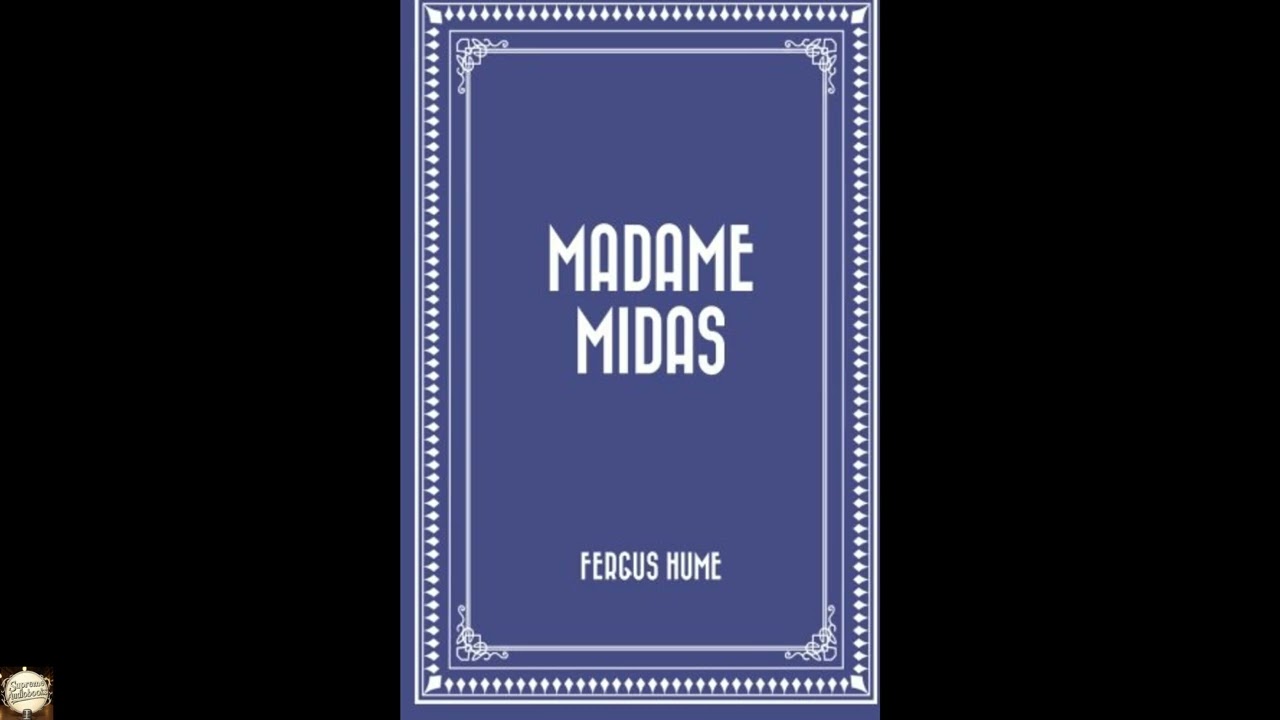
Madame Midas
Step into a world where vast wealth emerges from mysterious origins, where social standing is as fluid as a gold rush river, and where the shadows of a hidden past stretch long across the sun-drenched Australian landscape. Fergus Hume's Madame Midas invites listeners to unravel the secrets of an enigmatic woman whose sudden arrival and immense fortune ignite a powder keg of suspicion, ambition, and danger in a booming frontier town. This classic of sensation fiction, penned by the author of one of the bestselling detective novels of its era, continues to resonate today, offering a gripping tale that speaks to enduring fascinations with money, identity, and the lengths people will go to protect or uncover a truth. It's a story that asks: can a person truly escape their past, especially when they carry the weight of a Midas-like fortune? The story transports us to Ballarat, Victoria, during the exhilarating and chaotic height of the Australian gold rush in the late 1880s. This isn't the genteel drawing rooms of London, but a rugged, striving community, swollen with prospectors, opportunists, and dreamers from every corner of the globe. Into this vibrant, yet often lawless, milieu arrives the utterly striking and immensely wealthy Mrs. Villiers. She quickly earns the moniker "Madame Midas" not just for her seemingly bottomless coffers, but for her almost preternatural ability to turn everything she touches into gold, investing shrewdly and amassing a fortune that puts even the most successful miners to shame. Yet, her lavish lifestyle and shrewd business acumen are overshadowed by an air of impenetrable mystery. Where did she come from? Who is she, really? Her past is a closely guarded secret, a wall of silence that intrigues and frustrates the town's gossips and power brokers alike. As Madame Midas establishes herself, she becomes a focal point for the town's diverse cast of characters. There's the ambitious young barrister, desperate to make a name for himself, who finds himself drawn into her orbit, oscillating between admiration and suspicion. A local doctor, a pillar of the community, observes her with a keen, professional eye, perhaps sensing more beneath the surface than others. Various miners, business rivals, and society figures circle her like moths to a flame, some seeking alliance, others opportunity, and still others, to pry open the lid on her concealed history. The central conflict soon solidifies around the relentless pressure to uncover the truth of Mrs. Villiers' origins and the source of her wealth, with escalating stakes that threaten to unravel the fragile social fabric of Ballarat itself and expose the dangerous undercurrents lying just beneath its glittering surface. The mind behind Madame Midas was Fergus Hume, a writer whose meteoric rise to fame was almost as dramatic as the plots he conceived. Born in England in 1859, Hume trained as a lawyer and emigrated to Melbourne, Australia, in the early 1880s, hoping to establish a successful practice. However, finding little success in the legal world, he turned his hand to fiction, a decision that would unexpectedly catapult him into literary celebrity. Frustrated by the lack of local Australian novels in bookshops, he penned The Mystery of a Hansom Cab in 1886. This gripping tale of murder and detection, set in Melbourne's bustling streets, became an immediate and unprecedented sensation, selling hundreds of thousands of copies and, for a time, outselling every other detective novel, including the early Sherlock Holmes stories. It was a publishing phenomenon, cementing Hume's reputation as a master of popular crime fiction. Following the success of Hansom Cab, Hume released Madame Midas in 1888, capitalising on the public's appetite for his particular brand of suspense and social drama. While not achieving the same monumental sales as its predecessor, it nonetheless solidified his standing and further showcased his ability to craft compelling narratives rooted in the unique environment of colonial Australia. He continued to write prolifically after returning to England, producing over 130 novels before his death in 1932, though none quite recaptured the initial glory of his first two major works. Hume stands as a significant figure in the development of sensation fiction and the early detective novel, proving that compelling popular fiction could emerge from the burgeoning literary landscape of Australia, and influencing the conventions of the genre that would flourish into the twentieth century. The novel deftly enacts several enduring themes, beginning most overtly with the corrupting and isolating power of immense wealth. The very nickname "Madame Midas" foreshadows the paradoxical nature of Mrs. Villiers' fortune: while it grants her immense power and influence, it also sets her apart, making her a target of envy, suspicion, and opportunism. Every interaction she has is colored by her financial status, and the town's eager pursuit of her secrets is driven as much by greed as by genuine curiosity. For instance, the constant stream of hopeful prospectors and dubious businessmen who seek her investment or charity illustrates how money can act as a magnet for both legitimate need and outright exploitation. Another central theme is the precariousness of identity and the pervasive influence of social perception. Mrs. Villiers meticulously cultivates a public image of an elegant, self-possessed woman, but this facade barely conceals the questions swirling around her true self. Ballarat, as a frontier town, represents a place where people come to reinvent themselves, to escape past lives and forge new destinies. Yet, Hume shows us that such reinvention is rarely complete, and the past, like a stubborn ghost, always threatens to resurface. The whispers and conjectures about her origins, the conflicting theories about who she truly is, highlight how fragile a newly constructed identity can be when subjected to intense public scrutiny and the relentless prying of a small, interconnected community. The narrative also touches on themes of justice and morality in a rough-and-ready society, where the pursuit of gold often blurs the lines between right and wrong, and where official law might compete with a more brutal, frontier justice. Published in 1888, Madame Midas emerged at a fascinating juncture in both Australian and global history. The late nineteenth century was a period defined by rapid industrialization, social change, and the expanding reach of the British Empire. In Australia, the gold rushes of the latter half of the century had fundamentally reshaped the continent, transforming isolated colonies into bustling centers of migration and economic activity. Towns like Ballarat experienced explosive growth, drawing a diverse population from across the globe, all seeking their fortune. This created a dynamic yet often volatile social environment, ripe for stories of ambition, class conflict, crime, and the struggle for respectability amidst newfound wealth. Hume's novel perfectly captured this specific socio-economic moment, using the unique setting of a colonial gold rush town as a crucible for human drama. Simultaneously, the genre of sensation fiction was at its peak in the Victorian era, thrilling readers with tales of dark secrets, hidden identities, shocking crimes, and scandalous pasts. These novels often tapped into widespread anxieties about social mobility, the changing roles of women, and the perceived moral decay of society. Madame Midas resonated deeply with its audience precisely because it expertly blended these elements, offering a thrilling narrative against a backdrop that felt both exotic and intimately familiar to the preoccupations of the time. Listening to Madame Midas as an audiobook allows for a truly immersive experience, inviting you to inhabit the bustling streets and whispered secrets of Ballarat. The novel's length, spanning several hours, gives ample room for the unfolding mystery to breathe, building suspense slowly and surely, much like the gradual accumulation of gold in the mines. A skilled narrator can bring to life the varied voices of the gold rush era – the eager prospectors, the shrewd entrepreneurs, the gossiping townswomen, and of course, the composed yet enigmatic Mrs. Villiers herself. Pay attention to the subtle shifts in pacing as the story moves from quiet contemplation to moments of intense drama, and how the narrator's interpretation of dialogue can convey unspoken tensions and hidden motives. The atmospheric descriptions of the Australian landscape and the clamor of the goldfields are particularly well-suited to the audio format, painting vivid pictures with sound and allowing you to feel fully transported to this bygone era of ambition, intrigue, and glittering, dangerous wealth.
Enjoyed Madame Midas? A few ways to support us
Audible & Amazon links are affiliate; we may earn a small commission at no extra cost.
About this production
Human narration by a volunteer reader from LibriVox.org, the public-domain audiobook project. LibriVox volunteers record literary works whose copyright has expired in the United States, releasing the resulting recordings into the public domain.
Madame Midas by Fergus Hume. The underlying text is in the U.S. public domain. We do not republish any modern copyrighted edition, translation, or commentary.
The 4K cinematic visuals accompanying this audiobook are generated by an AI image model from prompts derived from the source text. No copyrighted photos, paintings, or stock footage are used. AI generation is disclosed on every video on our YouTube channel as required by YouTube's altered/synthetic content policy.
English subtitles are transcribed from the LibriVox recording with OpenAI Whisper. Translations into the 11 other supported languages are produced by Meta's NLLB-200 neural translation model. No human translator's copyrighted translation is used.
Questions about sourcing or rights? See our DMCA & Sourcing policy or contact us.
Enjoyed this audiobook?
If you'd like to own a copy of Madame Midas or hear a professionally produced edition, the links below help support free audiobook production at no extra cost to you.
As an Amazon Associate we earn from qualifying purchases. Audible / print links are affiliate.