Authors and Friends
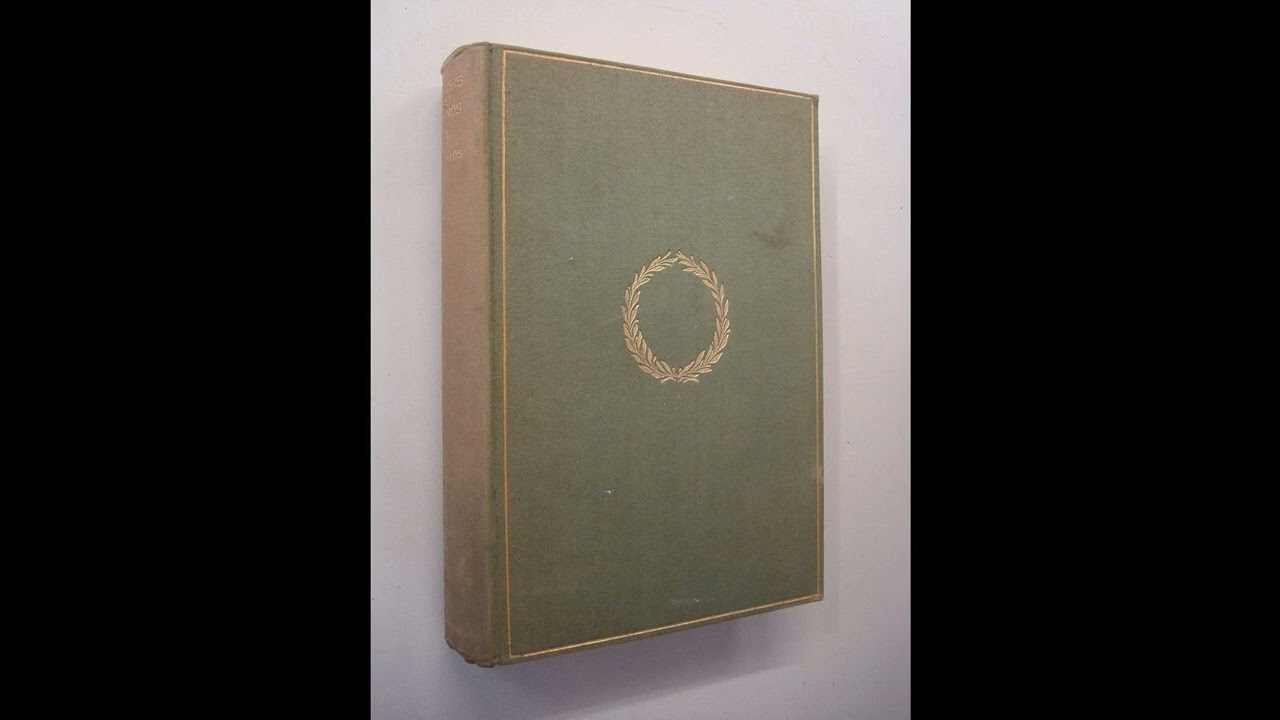
Step into a world where literary titans shed their public personas and reveal their private selves, where the warmth of friendship illuminates the genius that shaped a nation's literature. Annie Fields' "Authors and Friends," penned in 1896, is more than a mere collection of anecdotes; it is a precious window into the heart of the American literary renaissance, a personal testament from a woman who not only witnessed but actively nurtured the friendships and conversations of an extraordinary era. For anyone who has ever wondered about the human behind the hallowed pages, who sought to understand the domestic rhythms and personal quirks of giants like Charles Dickens, Ralph Waldo Emerson, or Nathaniel Hawthorne, this audiobook offers an unparalleled intimacy, a direct invitation into the drawing-rooms and minds of a bygone age. This delightful collection invites listeners to take a seat beside Annie Fields in her famous Boston salon, often at her home at 148 Charles Street, a celebrated hub for intellectuals and artists. Fields, with her keen powers of observation and remarkable memory, sketches vivid portraits of the literary luminaries who frequented her home and became her closest confidantes. The structure unfolds not as a single linear narrative, but as a series of affectionate reminiscences, each chapter dedicating itself to a different figure or a shared experience. We meet a playful and energetic Charles Dickens during his American tours, observing his delight in social gatherings and his meticulous attention to detail even in casual conversation. We spend quiet moments with Ralph Waldo Emerson, gleaning insights from his thoughtful pronouncements and his profound connection to nature. The narrative arc of "Authors and Friends" is less about a developing plot and more about the deepening understanding of a particular literary circle. Fields places herself as the central lens through which these figures are viewed, offering not dry biographical facts but living impressions. She recounts the intellectual sparring between Oliver Wendell Holmes and James Russell Lowell, the quiet intensity of Nathaniel Hawthorne, and the domestic routines of Henry Wadsworth Longfellow. Through her eyes, these celebrated authors transform from formidable public figures into flesh-and-blood individuals grappling with their art, their families, and their own humanity. Her warm, respectful tone ensures that even when revealing a foible or a moment of vulnerability, her subjects retain their dignity, allowing listeners to feel a genuine connection to them. Annie Adams Fields (1834-1915) was a pivotal figure in the American literary scene of the late nineteenth century, though often remembered more for her connections than her own literary output. As the wife of James T. Fields, a hugely influential publisher (first of Ticknor and Fields, then Fields, Osgood & Co.), she naturally became the hostess of one of Boston's most celebrated literary salons. Her home at 148 Charles Street was a magnet for writers, poets, and thinkers, drawing figures from both sides of the Atlantic, including Longfellow, Emerson, Holmes, Lowell, Stowe, Whittier, Mark Twain, Matthew Arnold, and of course, Charles Dickens. She cultivated these relationships not merely out of social obligation, but from a genuine intellectual curiosity and a deep capacity for friendship. Beyond her role as a literary facilitator, Annie Fields was also a writer in her own right. She published poetry, essays, and several biographical works that illuminated the lives of her friends and contemporaries. "Authors and Friends" stands as one of her most significant contributions, offering an invaluable primary source for understanding the social dynamics and intellectual currents of the period. After her husband's death, Fields continued to be a literary force and formed a deep, lifelong bond with author Sarah Orne Jewett, with whom she shared her home and literary pursuits. Fields also dedicated herself to philanthropy and social reform, particularly advocating for women's and children's welfare, demonstrating a compassion and commitment that extended beyond the literary world. Among the central themes running through "Authors and Friends" is the power of friendship and camaraderie in fostering artistic genius. Fields’ accounts frequently emphasize the supportive, stimulating environment shared by these authors, often gathered around her dinner table. For instance, her descriptions of Dickens are imbued with a deep personal warmth, showing how his boisterous humor and magnetic personality captivated not just his public, but his closest companions, transforming mere acquaintances into lasting friends who shared laughter and deep conversation. Another prominent theme is the nature of memory and legacy. Fields consciously writes to preserve the personal qualities and conversational nuances of these great figures, many of whom were already deceased or in their twilight years when she wrote the book. She painstakingly recreates scenes, like Emerson’s quiet pronouncements during a walk, ensuring that the spirit of the individual, not just their published works, endures for future generations. The book also grapples with the interplay between public persona and private reality. Fields, having witnessed these authors in their most intimate settings, offers glimpses that humanize their often-mythologized public images. We see, for example, the struggles and domesticities of authors like Longfellow, or the quiet thoughtfulness of Hawthorne away from the demands of celebrity. This contrast reveals the human element behind literary production, reminding us that even the most celebrated minds wrestled with everyday concerns and private moments of reflection. Finally, the book illustrates the crucial role of the hostess and the literary salon in nurturing intellectual exchange. Fields’ home was not merely a social venue; it was a crucible for ideas, a place where minds could meet, debate, and find inspiration, underscoring how vital these informal gatherings were to the intellectual life of the era. "Authors and Friends" emerged at a significant historical juncture, published in 1896. This was a period when the sun was setting on the celebrated New England literary renaissance, the "Golden Age" of American letters that had given rise to transcendentalism, abolitionist literature, and enduring classics. Many of the figures Fields writes about – Emerson, Hawthorne, Longfellow, Dickens – were either long passed or elderly, their legacies firmly established. Fields’ work can be seen as a conscious act of remembrance, a looking back at a foundational era from the perspective of its latter days. The cultural landscape was shifting, with the rise of realism and naturalism in literature beginning to challenge the romantic and idealistic sensibilities of the preceding generation. Fields' gentle, anecdotal style, therefore, stands as a loving elegy to a particular mode of literary life and a personal tribute to the individuals who defined it, preserving their essence just as the world around them began to change rapidly with industrialization and evolving social norms in post-Civil War America. Listening to "Authors and Friends" as an audiobook allows for a deeply immersive and contemplative experience. The narrative unfolds at a gentle, unhurried pace, perfect for focused listening during a quiet afternoon or as a companion on a reflective stroll. The narrator’s voice should evoke the warmth and perceptiveness of Annie Fields herself—a blend of intelligence, affection, and respectful observation. Pay close attention to the nuanced inflections when passages recount direct quotes or reconstructed dialogues from the literary figures; these are moments where their unique personalities shine through the narrator’s skilled interpretation. The "several hours" run length is ideal, providing enough time to settle into Fields' world without feeling rushed. It's an opportunity to absorb the quiet atmosphere of her Boston drawing-room, to hear the echoes of conversations with giants, and to feel, for a precious time, like one of their cherished friends.
Enjoyed Authors and Friends? A few ways to support us
Audible & Amazon links are affiliate; we may earn a small commission at no extra cost.
About this production
Human narration by a volunteer reader from LibriVox.org, the public-domain audiobook project. LibriVox volunteers record literary works whose copyright has expired in the United States, releasing the resulting recordings into the public domain.
Authors and Friends by Annie Fields 1896 by Annie Fields. The underlying text is in the U.S. public domain. We do not republish any modern copyrighted edition, translation, or commentary.
The 4K cinematic visuals accompanying this audiobook are generated by an AI image model from prompts derived from the source text. No copyrighted photos, paintings, or stock footage are used. AI generation is disclosed on every video on our YouTube channel as required by YouTube's altered/synthetic content policy.
English subtitles are transcribed from the LibriVox recording with OpenAI Whisper. Translations into the 11 other supported languages are produced by Meta's NLLB-200 neural translation model. No human translator's copyrighted translation is used.
Questions about sourcing or rights? See our DMCA & Sourcing policy or contact us.
Enjoyed this audiobook?
If you'd like to own a copy of Authors and Friends or hear a professionally produced edition, the links below help support free audiobook production at no extra cost to you.
As an Amazon Associate we earn from qualifying purchases. Audible / print links are affiliate.