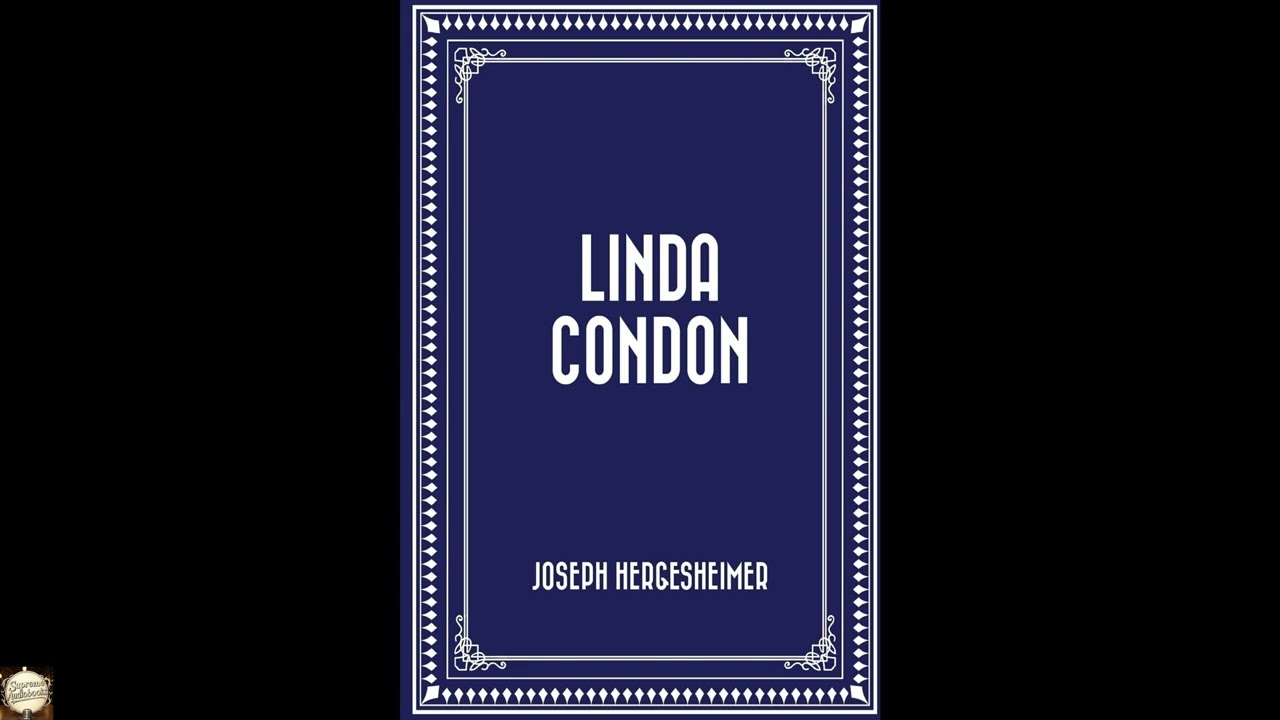
Linda Condon
What if a moment of pure, transcendent beauty, glimpsed in youth, were to define the entire arc of a life? Joseph Hergesheimer’s Linda Condon, a novel first published in 1919, invites listeners to consider just such a profound question. It is a story about the enduring power of an ideal, the elusive nature of happiness, and the silent, often hidden, devotion of a woman’s heart across decades. More than a century after its debut, this introspective tale still resonates, speaking to our contemporary fascinations with appearance, the search for authentic connection amidst superficiality, and the often-unseen struggles of identity beneath a polished surface. It’s a compelling look at how early experiences can cast a long, beautiful shadow over every subsequent choice and relationship. The story introduces us to Linda Condon as a young girl, adrift in a world of transient beauty and casual affections, largely due to her glamorous but flighty mother. From a nomadic early life moving between European resorts and American cities, Linda develops a unique sensitivity to aesthetics and a certain detached observation of human behavior. Her understanding of love and beauty, however, transforms irrevocably during an encounter in adolescence with Arrell Greene, a man who, to Linda, embodies a perfect, almost spiritual, ideal of masculine grace and nobility. This fleeting connection plants an indelible image in her mind, becoming the measure against which all future relationships, and indeed her very perception of self, will be judged. As Linda matures into a woman of striking beauty herself, she finds herself drawn into a marriage of convenience, not passion, with Pleasants Condon, a wealthy older man whose stable practicality offers a stark contrast to her youthful, idealized vision. Their life together, while comfortable and socially respectable, is marked by a quiet emotional distance, fueled by Linda’s unwavering internal fidelity to the memory of Arrell Greene. She raises her children, navigates society, and embodies a certain elegant composure, yet beneath this polished exterior, her heart remains a sanctuary for an image of perfect love. The novel follows her as she grapples with the passage of time, the fading of her own physical beauty, and the challenges to her deeply held ideals, culminating in a poignant reflection on whether an ideal, however pure, can truly sustain a lifetime. Joseph Hergesheimer, born in 1880 in West Chester, Pennsylvania, was a distinctive voice in American letters during the early decades of the twentieth century. Initially training as an artist, he turned to writing after finding limited success with painting, a shift that perhaps explains the keen aesthetic sensibility that permeates his fiction. Hergesheimer achieved considerable fame and commercial success in the 1910s and 1920s, becoming one of the highest-paid authors of his time. His prose, often characterized by its lush descriptions and precise, almost jewel-like quality, set him apart from the burgeoning naturalism and realism that dominated much of American literature during this period. His works, including The Three Black Pennys (1917), Java Head (1919), and Cytherea (1922), frequently focused on themes of beauty, sensuality, and the conflict between human desires and societal constraints, often set against richly detailed historical or exotic backdrops. Hergesheimer’s writing style and thematic concerns often placed him in a unique position, bridging the gap between late Victorian aestheticism and the emerging modernism. While his popularity waned somewhat after the 1920s, Linda Condon remains a testament to his unique literary artistry and his enduring fascination with the pursuit of ideal beauty and love. The enduring appeal of Linda Condon lies in its delicate but powerful rendering of several profound human themes. Foremost among these is the theme of beauty itself—its presence, its transience, and its capacity to both inspire and isolate. Linda’s own exquisite beauty is a central motif, a gift that brings her attention and comfort, yet also sets her apart, making true, uncompromised connection difficult. When Arrell Greene observes her, his gaze does not simply acknowledge her physical attributes; it seems to recognize an inner quality, an essence she rarely feels others perceive. This idealization of beauty extends to the central conflict between idealism and reality, where Linda’s unwavering devotion to the perfect love she felt with Greene stands in sharp contrast to the practical, emotionally restrained reality of her marriage to Pleasants. Her loyalty is not to a person, but to a feeling, a memory, a vision that time and everyday life perpetually challenge. Additionally, the novel deeply explores the theme of memory and the past’s profound hold on the present. Linda's formative encounter with Arrell Greene acts as a prism through which she interprets all subsequent experiences. Her refusal to let this memory fade is not a weakness, but a conscious, almost sacred act of preserving her most cherished ideal. This quiet internal life, lived parallel to her external existence as wife and mother, illustrates the various forms love can take—from the passionate and idealized to the steadfast and practical, yet perhaps unfulfilling. The narrative also touches on the societal expectations placed upon women in the early 20th century, where a woman’s beauty could be her currency, yet her inner world remained largely unacknowledged. Linda Condon emerged into a world still reeling from the Great War and on the cusp of the Roaring Twenties, a period of immense social and cultural upheaval. Published in 1919, the novel reflects a moment when traditional values were being questioned, and a new era of materialism and shifting social norms was beginning to take hold. While many contemporary writers were turning towards grittier realism or the experimental forms of modernism, Hergesheimer maintained a style rooted in aestheticism and a preoccupation with beauty and emotional nuance. His work, therefore, offers a fascinating counterpoint, a voice that resisted the full embrace of a rapidly modernizing, often disillusioning, world, instead seeking a more enduring, if ultimately elusive, sense of grace and meaning through individual devotion to an ideal. The novel’s quiet examination of internal lives against a backdrop of external change would have resonated with readers seeking solace or reflection amidst the clamor of a transforming society. Listening to Linda Condon as an audiobook offers a unique opportunity to immerse oneself in Hergesheimer's evocative prose and the delicate nuances of Linda's inner world. The descriptive passages, with their precise observations of fashion, interiors, and fleeting emotions, truly come alive when spoken by a skilled narrator. The novel is not one of dramatic action, but rather of sustained mood and psychological depth, making the aural experience particularly fitting. A good narration can bring out the elegant pacing, the subtle shifts in atmosphere, and the unspoken feelings that lie beneath the surface of Linda’s composed existence. The listener can savor the lyrical sentences, allow the contemplative rhythm of the story to unfold, and appreciate the distinct voices of the characters, even as Linda’s own quiet strength resonates most profoundly. At several hours in length, it is an ideal companion for focused listening, inviting introspection and a deeper connection to this unusual and compelling character study.
Enjoyed Linda Condon? A few ways to support us
Audible & Amazon links are affiliate; we may earn a small commission at no extra cost.
About this production
Human narration by a volunteer reader from LibriVox.org, the public-domain audiobook project. LibriVox volunteers record literary works whose copyright has expired in the United States, releasing the resulting recordings into the public domain.
Linda Condon by Joseph Hergesheimer. The underlying text is in the U.S. public domain. We do not republish any modern copyrighted edition, translation, or commentary.
The 4K cinematic visuals accompanying this audiobook are generated by an AI image model from prompts derived from the source text. No copyrighted photos, paintings, or stock footage are used. AI generation is disclosed on every video on our YouTube channel as required by YouTube's altered/synthetic content policy.
English subtitles are transcribed from the LibriVox recording with OpenAI Whisper. Translations into the 11 other supported languages are produced by Meta's NLLB-200 neural translation model. No human translator's copyrighted translation is used.
Questions about sourcing or rights? See our DMCA & Sourcing policy or contact us.
Enjoyed this audiobook?
If you'd like to own a copy of Linda Condon or hear a professionally produced edition, the links below help support free audiobook production at no extra cost to you.
As an Amazon Associate we earn from qualifying purchases. Audible / print links are affiliate.