Life of Columbus
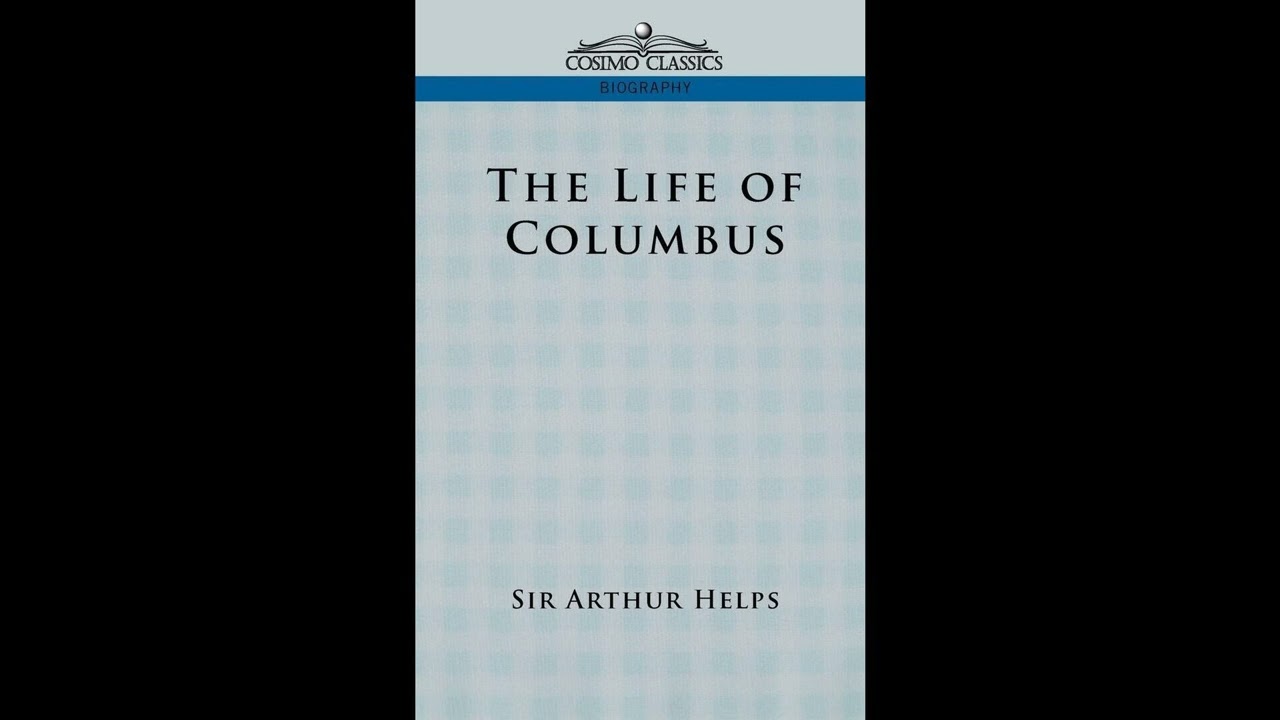
The name Christopher Columbus evokes a complex legacy: a figure of immense resolve, often celebrated for opening new worlds, yet increasingly viewed through the lens of profound historical consequence for indigenous peoples. Sir Arthur Helps’s "Life of Columbus" offers a window into this pivotal individual, not merely as a chronicler of events, but as a thoughtful observer from the Victorian era, seeking to understand the man behind the myth. This work invites listeners to reconsider the foundational narratives of the Americas, presenting Columbus’s aspirations, struggles, and the grand, often tragic, sweep of his endeavors with a perspective that, while dated by modern standards, remains an essential part of the historical conversation surrounding one of history’s most impactful figures. It’s a book that grapples with ambition, faith, and the collision of worlds, elements that resonate with human experience across centuries. Helps introduces us to the young Columbus, a Genoese sailor and mapmaker possessed by an audacious idea: to reach the Spice Islands of the East by sailing west across the uncharted Atlantic. From his humble beginnings, we follow his education in navigation and cartography, disciplines that fueled his growing conviction in the earth's spherical nature and the feasibility of his grand design. This wasn’t a mere theory for Columbus; it was a deeply held belief, almost a divine calling, that consumed his every waking thought. We witness his tireless efforts to secure patronage, traversing European courts, presenting his calculations and petitions to skeptical monarchs and their cautious advisors. The narrative details his years of frustration and rejection, particularly from the Portuguese, before he finally finds a sympathetic ear in the Spanish monarchs, Ferdinand and Isabella, whose recently unified kingdom and victorious Reconquista might offer the resources and ambition for such an undertaking. The story intensifies as Columbus finally gains the support and funding for his first voyage. Helps meticulously recounts the preparations, the assembly of the small fleet — the Niña, the Pinta, and the Santa María — and the departure from Palos in August of 1492. The long, perilous crossing of the Atlantic is depicted with a focus on the anxieties of the crew, the challenges of unknown currents, and Columbus’s steadfast leadership in the face of dwindling morale and murmurs of mutiny. The profound relief and exultation upon sighting land—a small island in the Bahamas which he named San Salvador—mark a dramatic turning point. The initial encounters with the indigenous Taíno people are portrayed, describing a period of wary curiosity, exchange of goods, and attempts at communication, before Columbus's return voyage to Spain, bringing with him evidence of a "New World" and a paradigm shift in global understanding. The book continues through his subsequent expeditions, showing how each venture further cemented the link between Europe and the Americas, though not without escalating complications and unforeseen consequences. Sir Arthur Helps, born in 1813, was a prominent English writer, historian, and civil servant of the Victorian era. Educated at Trinity College, Cambridge, he distinguished himself early with intellectual prowess that would shape a long career of public service and literary output. His most notable public role was as Clerk of the Privy Council, a position he held from 1860 until his death in 1875, bringing him into close contact with Queen Victoria, for whom he acted as an advisor and edited her published works. Helps was known for his thoughtful, morally engaged historical writing, often infused with a desire to illuminate the human condition and advocate for ethical governance. His earlier, multi-volume work, "The Spanish Conquest in America and its Relation to the History of Slavery and to the Government of Colonies" (1855–1861), established his deep interest in Spanish colonial history and his progressive, for the time, views on indigenous rights and the moral failures of conquest. "The Life of Columbus," published in 1868, can be seen as a concentrated biographical offshoot of this larger historical project, leveraging his extensive research and nuanced understanding of the period. He was a respected figure within the literary circles of his day, blending his administrative duties with a prolific writing schedule that included essays, plays, and other biographies, securing his place as a humane and insightful chronicler of history. "Life of Columbus" enacts several profound themes. One central theme is that of unwavering faith and conviction. Columbus’s belief in his westward route was not merely scientific calculation; it was imbued with a fervent religious conviction, a sense of being divinely chosen to fulfill a prophetic destiny. Helps illustrates this repeatedly, showing how Columbus interpreted biblical passages and astronomical signs as confirmations of his mission, which often sustained him through the long years of rejection and doubt. Another significant theme is the allure and perils of ambition. The book details Columbus’s single-minded pursuit of his goal, demonstrating the extraordinary willpower and perseverance required to bring such a monumental vision to fruition. Yet, it also hints at the darker side of this ambition – the thirst for fame, wealth, and power that, while driving him, also set the stage for later conflicts and tragedies, particularly in his dealings with both the Spanish crown and the native populations. A third theme is the initial encounter and subsequent cultural clash. Helps meticulously describes the first meetings between Europeans and the inhabitants of the Caribbean islands, often portraying an initial period of wonder and mutual curiosity. The narrative, however, subtly foreshadows the profound and often brutal misunderstandings that would follow, as European notions of land ownership, resource extraction, and religious conversion came into direct conflict with existing indigenous societies. This sets up a profound examination of how two vastly different worlds, separated by millennia, reacted to their sudden convergence, highlighting both the hope and the tragedy inherent in such contact. Sir Arthur Helps wrote and published "The Life of Columbus" in 1868, a time of immense change and introspection in Victorian Britain. The British Empire was at its zenith, and there was a widespread interest in the history of exploration and empire-building, both as sources of pride and as subjects of moral debate. The late 19th century saw a burgeoning of historical scholarship, with an increased focus on primary sources and a more critical approach to historical narratives. Helps's work emerged from this environment, differing from earlier, more hagiographic accounts of Columbus by introducing a more balanced, albeit still largely Eurocentric, perspective. His engagement with the ethical dimensions of conquest, particularly regarding the treatment of indigenous peoples and the institution of slavery (as seen in his earlier "Spanish Conquest"), reflected a growing humanitarian consciousness within certain segments of Victorian society, even as the empire continued its expansion. His writing thus serves as a valuable artifact, showcasing how a prominent Victorian intellectual grappled with the complex legacy of European expansion and its foundational figures. Listening to "Life of Columbus" as an audiobook offers a uniquely immersive experience, perfectly suited to Sir Arthur Helps's measured and considered prose. The several hours of narration allow the listener to settle into the historical moment, absorbing the details of Columbus’s life and the events that shaped his destiny without interruption. A skilled narrator can bring forth the gravitas and the human drama inherent in Helps’s writing, translating the archival research and the moral observations into a compelling spoken account. Imagine a voice that captures the author's thoughtful cadence, allowing the intricate political maneuverings, the vastness of the ocean crossings, and the initial interactions with new cultures to unfold with clarity and a sense of historical weight. It’s an opportunity to engage with a classic historical biography not merely as a collection of facts, but as an unfolding narrative, letting the atmosphere of ambition, uncertainty, and epochal change wash over you.
Enjoyed Life of Columbus? A few ways to support us
Audible & Amazon links are affiliate; we may earn a small commission at no extra cost.
About this production
Human narration by a volunteer reader from LibriVox.org, the public-domain audiobook project. LibriVox volunteers record literary works whose copyright has expired in the United States, releasing the resulting recordings into the public domain.
Life of Columbus by Sir Arthur Helps. The underlying text is in the U.S. public domain. We do not republish any modern copyrighted edition, translation, or commentary.
The 4K cinematic visuals accompanying this audiobook are generated by an AI image model from prompts derived from the source text. No copyrighted photos, paintings, or stock footage are used. AI generation is disclosed on every video on our YouTube channel as required by YouTube's altered/synthetic content policy.
English subtitles are transcribed from the LibriVox recording with OpenAI Whisper. Translations into the 11 other supported languages are produced by Meta's NLLB-200 neural translation model. No human translator's copyrighted translation is used.
Questions about sourcing or rights? See our DMCA & Sourcing policy or contact us.
Enjoyed this audiobook?
If you'd like to own a copy of Life of Columbus or hear a professionally produced edition, the links below help support free audiobook production at no extra cost to you.
As an Amazon Associate we earn from qualifying purchases. Audible / print links are affiliate.